Central government employees are pressing New Delhi to rewrite the bonus formula before the 8th Pay Commission, a move that could lift festive payouts sharply if the government replaces the current ₹7,000 cap with sector-specific minimum basic pay.
India central employees seek higher festive bonus cap

The demand matters because the bonus base determines how much money lands in millions of government workers’ accounts before the festival season, and any increase would feed directly into household spending at a time when Indian consumers remain under pressure. The proposal would also set a precedent for how the state links productivity-linked bonuses and ad-hoc festive payments to pay bands rather than a decades-old private-sector floor.
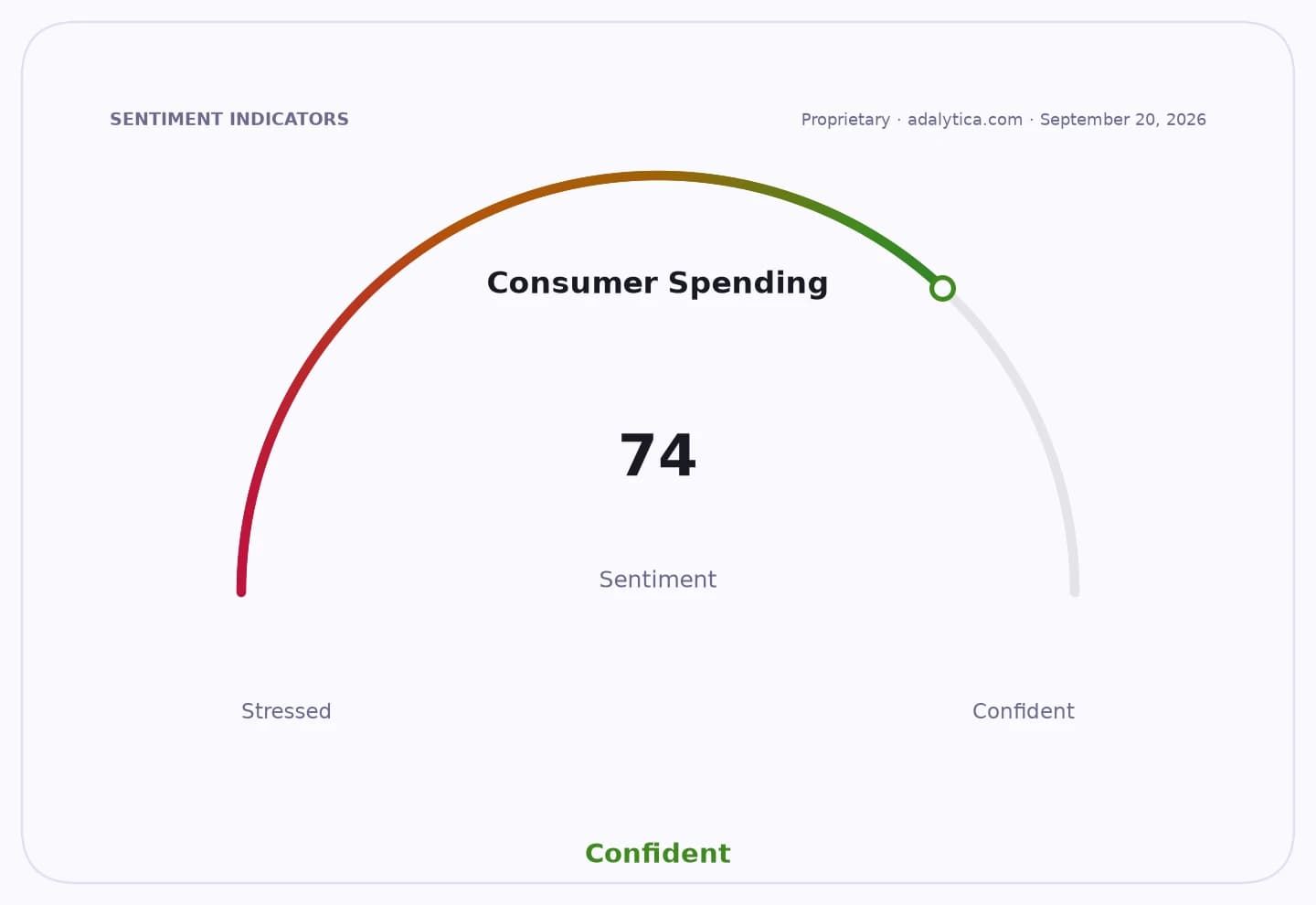
Sentiment IndicatorsⓘProprietary · adalytica.com · September 5, 2026
This is a snapshot — live sentiment, awareness and momentum for 130+ markets update continuously in the dashboard.Open AlphaPulse
Under a Labour and Employment Ministry notification issued Aug. 25 under the Code on Wages, 2019, bonus for eligible workers with monthly pay above ₹7,000 is calculated on ₹7,000 or the government-notified minimum wage, whichever is higher. Employee federations now want that reference point lifted to the minimum basic salary for each pay level, arguing the current formula understates payouts for central staff.
All India NPS Employees Federation chief Manjit Singh Patel said on X that if the government used a ₹18,000 minimum basic pay as the base, the bonus would work out at about ₹17,763. He also said a pay-level 6 employee with a ₹35,400 basic pay could receive about ₹34,934 under the same formula, underscoring how much larger payouts would be if the base is reset.
The National Council (Staff Side) JCM has separately urged the government to raise the bonus ceiling from ₹7,000 to ₹21,000 and issue orders before Dussehra, calling for PLB, bonus or ad-hoc bonus payments ahead of the festive period. A higher ceiling would favor employees and their unions, while increasing the fiscal bill for the government and leaving less room for discretionary restraint in near-term spending.
For investors, the immediate read-through is modest but real: higher bonus payments would support consumption-led sectors such as retail, consumer goods and discretionary services, while also adding a small inflationary impulse if payouts are broad-based. The main risk is that any delay or rejection could disappoint workers and dull the festive spending lift that many domestic-demand plays typically count on.
The next catalyst is whether the government accepts the revised base or only tweaks the ceiling, with employee groups pushing for a decision before the festive season and the 8th Pay Commission still the wider backdrop for future wage and benefit revisions.
| Entity | Gains | Losses |
|---|---|---|
| Central government employees | ▲Larger festive bonuses | ▼Current ₹7,000 cap |
| Government unions/federations | ▲Stronger bargaining outcome | ▼Delay in policy decision |
| Indian consumer sectors | ▲Higher festive spending | ▼Weak payout growth |
| Government finances | ▲— | ▼Higher bonus bill |