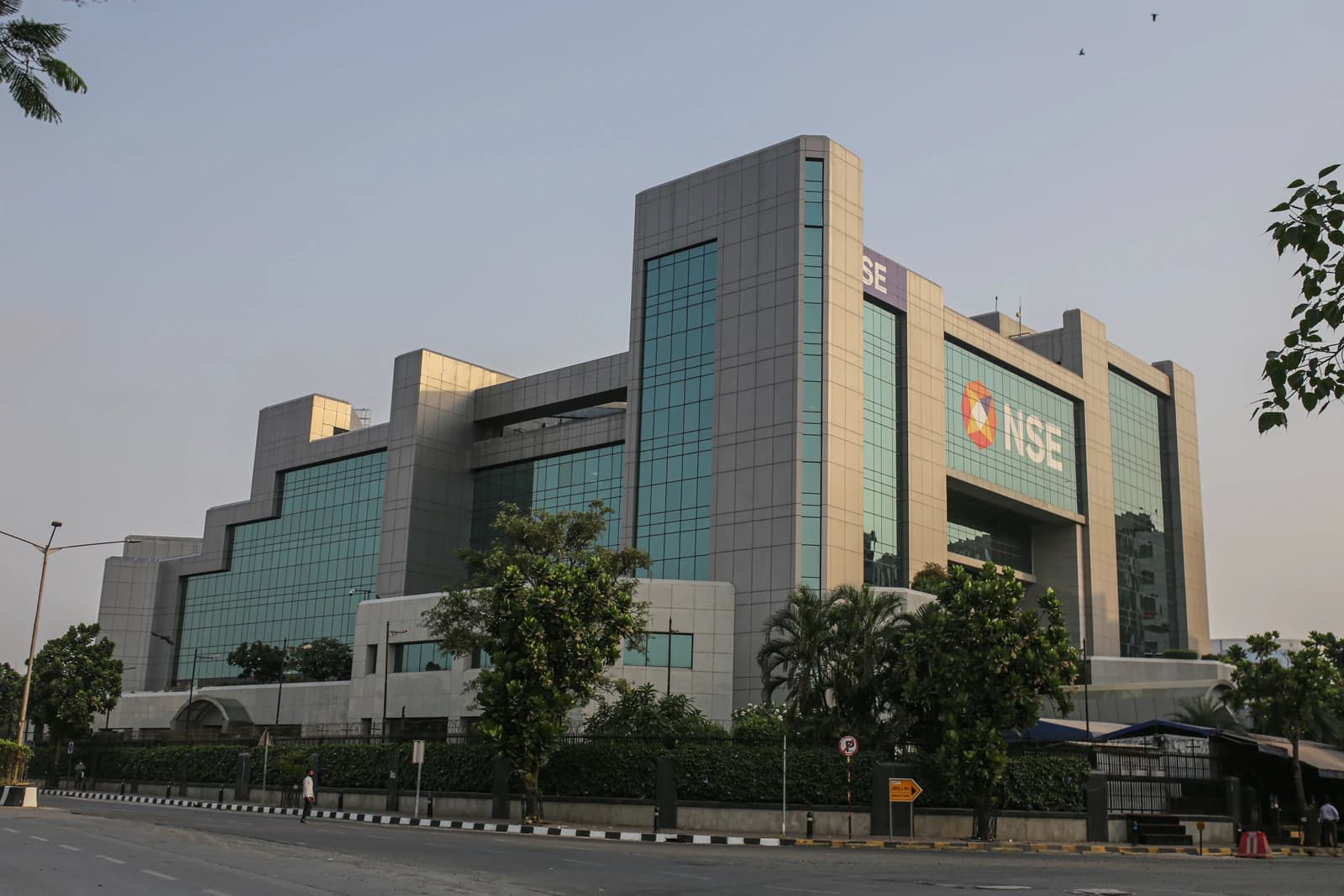
India’s economy is set to grow faster than many peers next year, with Moody’s lifting its FY27 gross domestic product forecast to 7% on the back of resilient private consumption and investment spending.
India GDP Forecast Raised to 7% by Moody's
The upgrade matters because India is increasingly carrying the growth premium among major economies at a time when much of the developed world is slowing and global rates remain restrictive. A 7% expansion would reinforce India’s role as a rare large market still capable of generating broad-based demand growth, supporting corporate revenues, credit quality and capital spending even if external demand softens.
Sentiment IndicatorsⓘProprietary · adalytica.com · September 20, 2026
This is a snapshot — live sentiment, awareness and momentum for 130+ markets update continuously in the dashboard.Open AlphaPulse
Moody’s revised the outlook after stronger-than-expected industrial output, steady labor market conditions and continued appetite for capex pointed to an economy with more momentum than earlier assumed. Forecasts for real growth in the 6.5% to 7% range and nominal growth around 11%-12% imply a combination that is supportive for tax collections, bank lending and corporate earnings, especially in domestic-facing sectors.
That is important for policymakers as well. Faster nominal growth typically gives the government more room to fund infrastructure and welfare priorities without the same degree of fiscal strain, while still helping to keep debt ratios manageable. For investors, it also helps explain why India remains a favored destination for long-term capital despite pockets of valuation pressure: earnings can compound even in a mixed global backdrop when consumption, manufacturing and services are all expanding at once.
The market has already been treating India as a structural growth story. The iShares MSCI India ETF has outperformed broader emerging-market gauges over the past year, though recent price action shows that even bullish narratives can become stretched. INDA closed at $48.02 on Sept. 18, below its 50-day moving average of $49.24 and 200-day average of $50.16, with the relative strength index at 33.4, suggesting the fund has recently cooled after a stronger run. By contrast, the broader MSCI emerging markets ETF EEM was firmer at $67.03, underscoring that India is not moving in isolation but still trades with a premium growth profile.
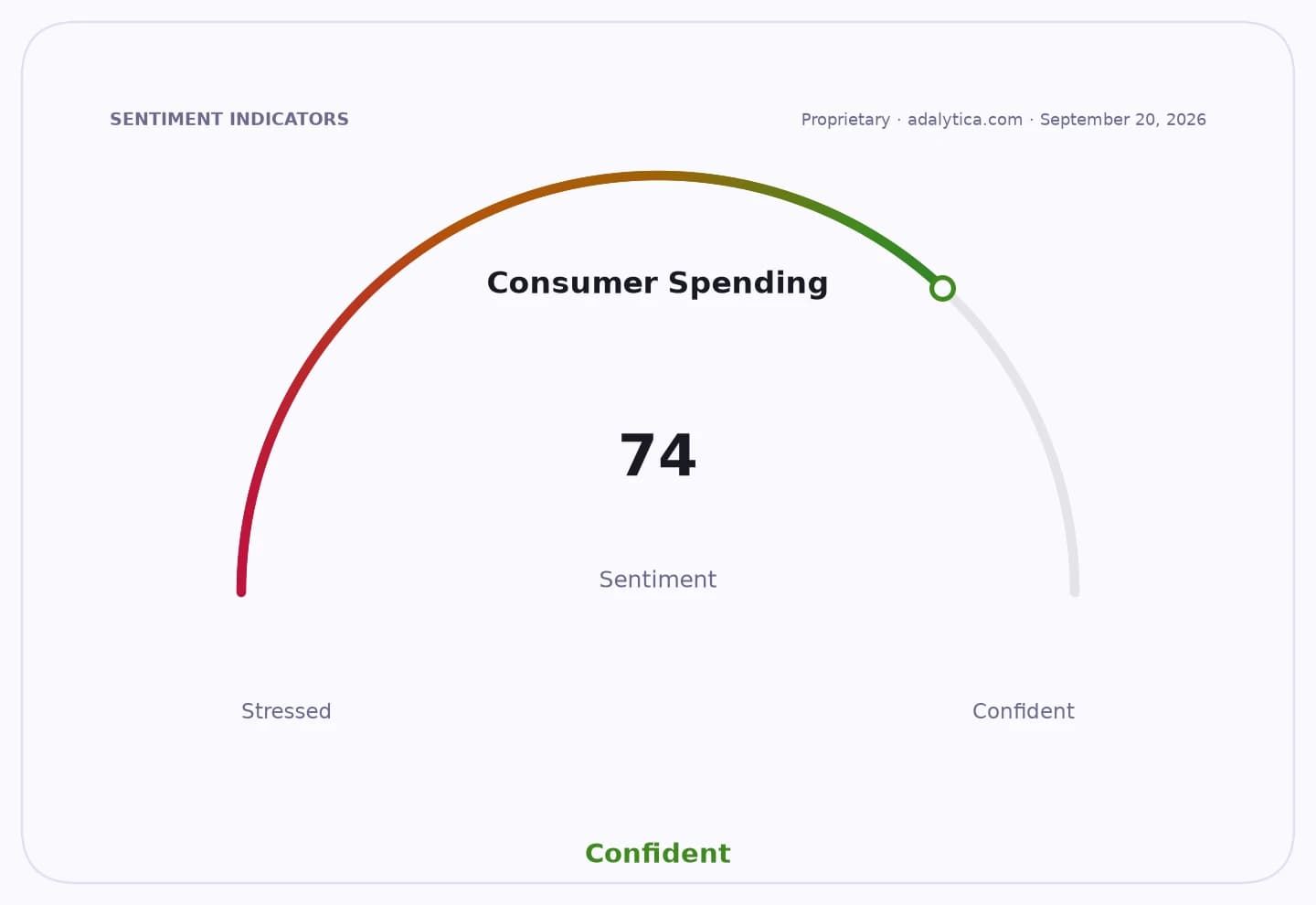
The domestic demand backdrop is also more supportive than it looked earlier in the year. Adalytica’s consumer spending sentiment gauge is at 74, in “Greed” territory, while retail-goods spending sentiment remains weak at 20, showing that households are still selective even as overall spending appetite improves. That split fits the current macro picture: broad consumption is holding up, but discretionary categories remain more uneven, which could favor staples, autos, building materials and financials over higher-beta consumer names.
The bull case is that India is entering a multi-year capex and consumption cycle, helped by formalization of the economy, a young labor force and continued public infrastructure spending. The bear case is that growth may be more uneven than headline forecasts suggest, with elevated valuations, patchy urban demand and external risks — including oil prices and weaker global trade — able to slow momentum quickly.
For investors, the key question is not whether India is growing quickly, but whether earnings growth can keep pace with elevated expectations. If consumption stays firm and private investment broadens beyond a handful of sectors, Moody’s 7% forecast could prove conservative. If not, the market may continue rewarding only the highest-quality domestic compounders while punishing cyclicals exposed to any demand miss.
| Entity | Gains | Losses |
|---|---|---|
| India domestic companies | ▲Stronger revenue growth | ▼Harder valuation bar |
| Banks and lenders | ▲Loan demand, credit growth | ▼Asset-quality risk if growth slows |
| Consumers | ▲Job and income momentum | ▼Higher import-cost pressure |
| Global EM peers | ▲Benchmark halo from India growth | ▼Capital may stay tilted to India |