India’s inflation fight just got more expensive, and the market underestimates how fast that can tighten financial conditions. With the landed cost of crude oil for India rising to $130-$140 a barrel — far above December Brent futures near $106 — Kotak Neo’s Anindya Banerjee says the Reserve Bank of India may still need to lift rates by another 50 basis points this fiscal year as fuel and food inflation seep deeper into the economy.
India inflation and RBI rate outlook on higher crude

That matters because India is not just dealing with a headline oil spike; it is absorbing a full landed-cost shock. Freight, insurance and handling charges have roughly doubled for oil sourced outside the Gulf, Banerjee said, turning a commodity move into a broader import bill problem. In a country that relies heavily on energy imports, every extra dollar in crude feeds directly into the current account, the rupee and eventually consumer prices. The pressure is already visible in the currency, which has been trading in the 94-97 range against the dollar, while policymakers have had to lean on measures to curb speculative hedging and support inflows.
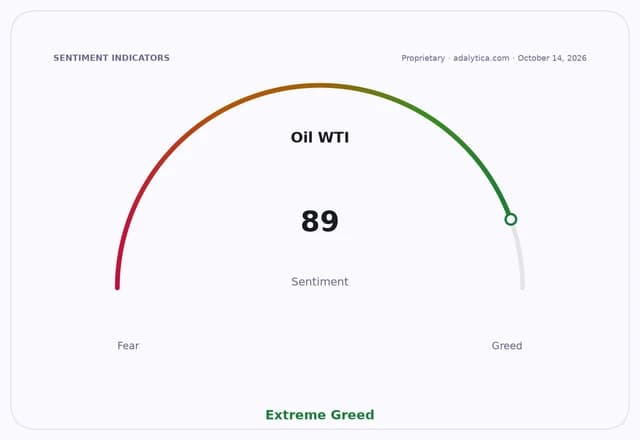
Sentiment IndicatorsⓘProprietary · adalytica.com · October 14, 2026
This is a snapshot — live sentiment, awareness and momentum for 130+ markets update continuously in the dashboard.Open AlphaPulse

The macro setup is increasingly uncomfortable for the RBI. Banerjee expects headline consumer inflation, now around 5.4%, to rise above 6% by December even if core prices stay relatively contained. That would leave the central bank with little room to relax, especially if elevated food costs continue alongside energy. For investors, that combination usually means higher bond yields, a stickier discount rate for equities and renewed pressure on rate-sensitive sectors such as banks, autos and real estate. It also raises the risk that the RBI keeps policy tighter for longer than the market currently prices.
Crude itself remains the central transmission channel. Banerjee warned that if oil flows do not normalize by the middle of next year, Brent could surge above $120 a barrel, a level that would not just worsen India’s import math but also weaken demand globally and raise recession risk. That view lines up with broader market tension: oil has already moved from a supply-driven rally to an inflation-sensitive macro trade, and conventional technical indicators on oil-linked vehicles show the trend remains elevated. In the near term, the winners are upstream producers and oil-service names; the losers are importers, refiners with weak pass-through power and economies running large energy deficits.
For investors, the message is straightforward: the real trade is not the spot oil move, but the second-order effects. A sustained crude shock can force the RBI to keep policy restrictive, cap rupee recovery and keep pressure on domestic growth expectations. That creates an asymmetric setup in favor of energy, shipping and select commodity beneficiaries, while Indian consumer and rate-sensitive stocks remain exposed to margin compression and slower demand. If West Asian supply disruptions deepen, this is the kind of inflation impulse that can reshape asset prices well beyond the oil patch.
| Entity | Gains | Losses |
|---|---|---|
| Global oil producers | ▲Higher realized prices | ▼Demand destruction risk |
| Oil importers in India | ▲— | ▼Bigger landed-cost shock |
| RBI | ▲Policy credibility if it stays ahead of inflation | ▼Tighter growth backdrop |
| Indian banks and rate-sensitive stocks | ▲— | ▼Higher yields, slower credit demand |