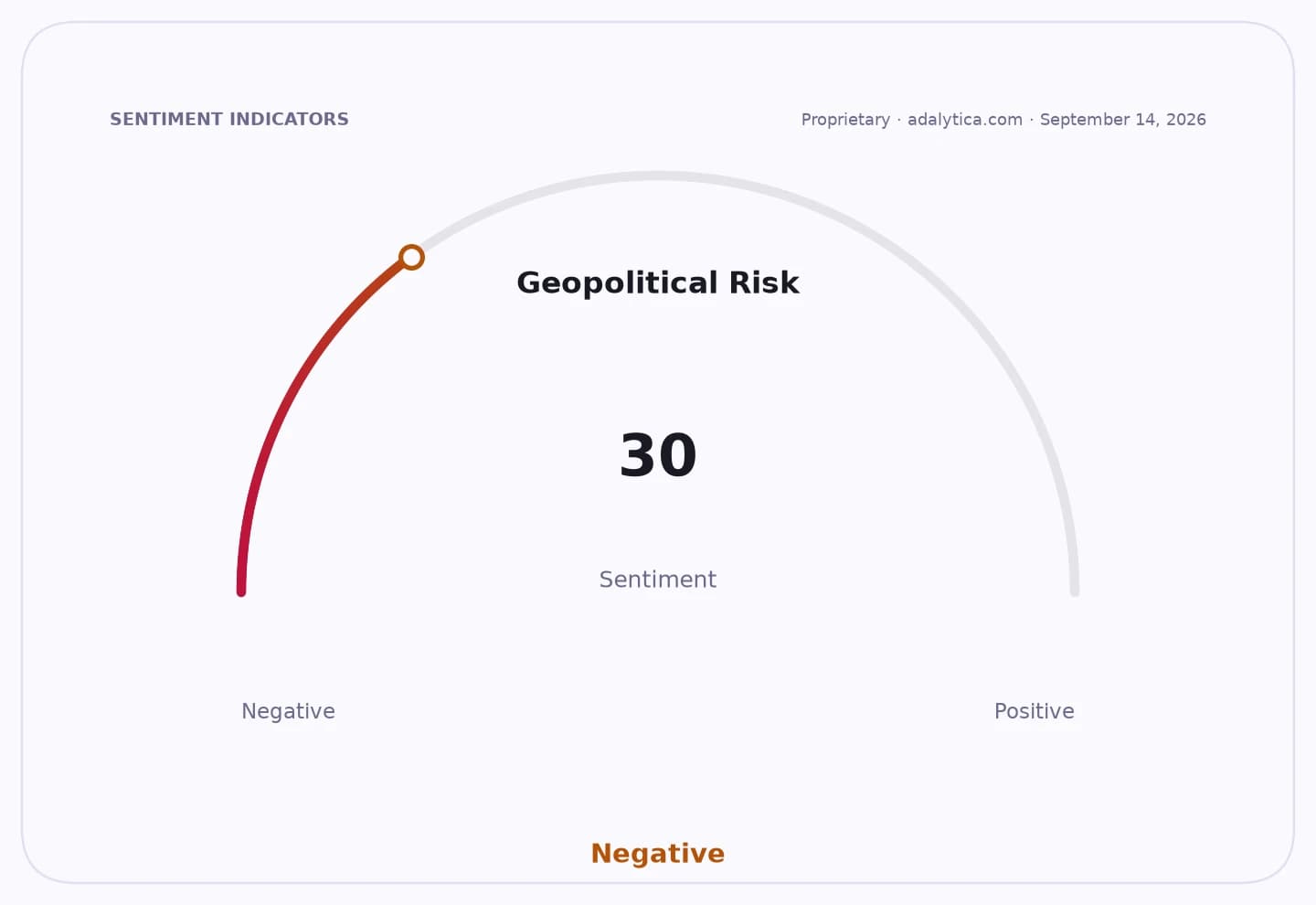
A full stoppage of Middle East oil and gas would not just lift crude prices — it would expose how little spare energy capacity the world has and quickly push inflation, shipping and industrial activity higher.
Middle East Oil and Gas Shock Hits Prices
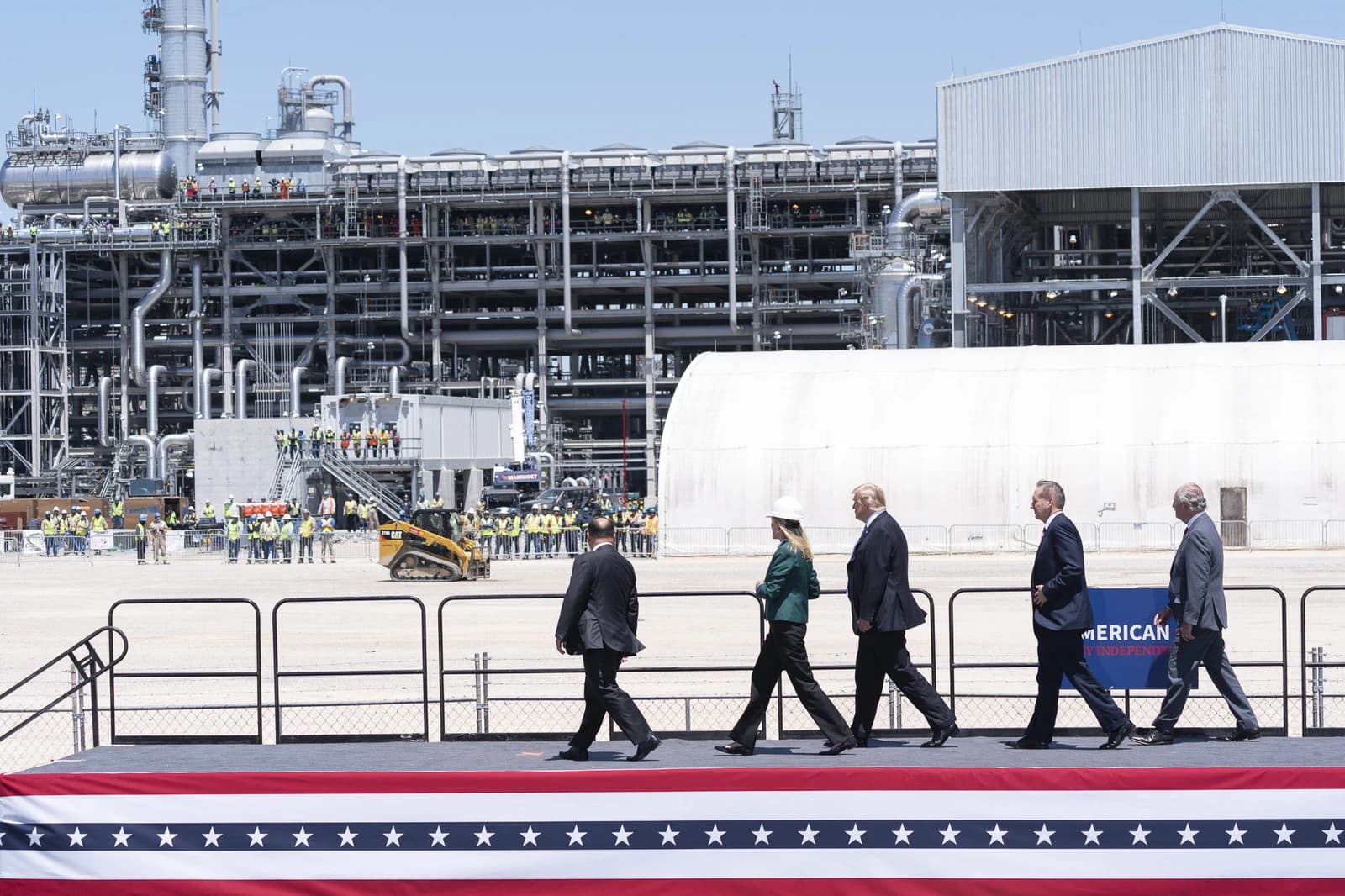
The most immediate economic shock would come from natural gas, not oil. The Middle East accounts for roughly 20% of global LNG trade through the Strait of Hormuz, and the International Energy Agency says that route carried about 76 million barrels a day equivalent of oil in August, down sharply from more than 20 million barrels a day before the war-related disruptions. With most LNG plants already running near capacity, there is no quick substitute if Qatar’s shipments are interrupted, leaving Asian importers to compete with Europe for a shrinking pool of cargoes.
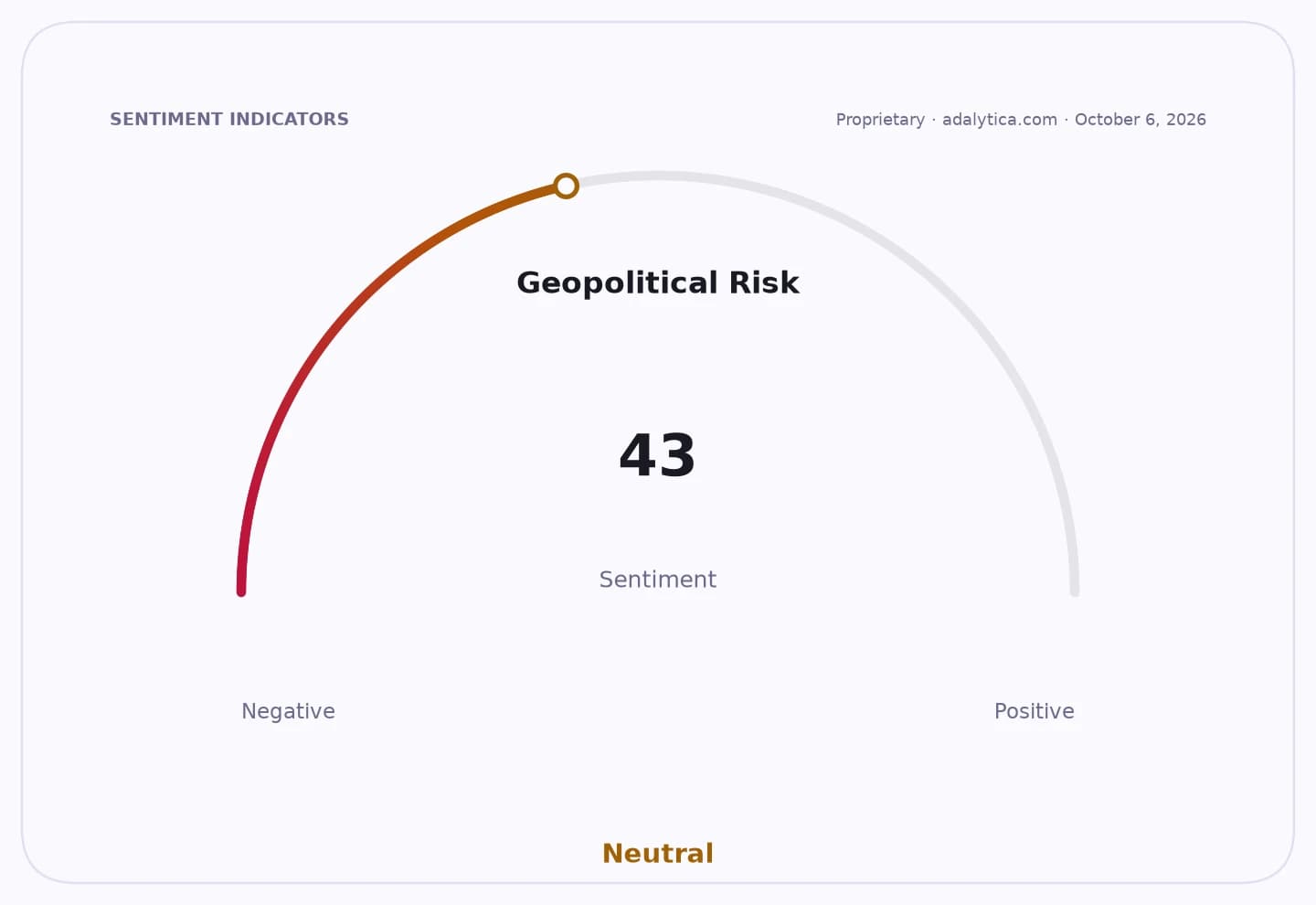
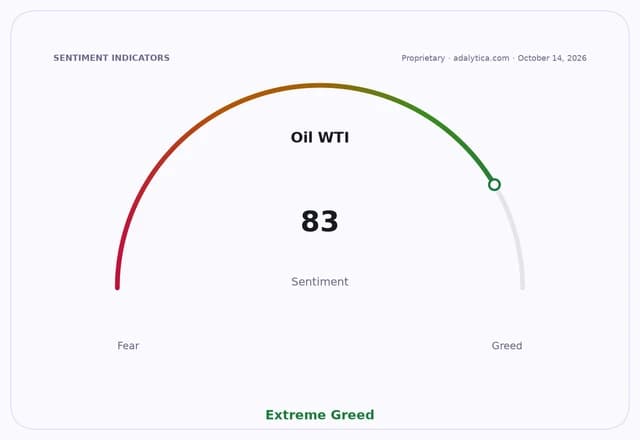
Sentiment IndicatorsⓘProprietary · adalytica.com · October 14, 2026
This is a snapshot — live sentiment, awareness and momentum for 130+ markets update continuously in the dashboard.Open AlphaPulse
That would matter far beyond energy markets. Gas is a critical input for power generation, fertiliser production, industrial heat and transport costs, so a prolonged squeeze would ripple into electricity bills, food inflation and factory output. Bangladesh, India and Pakistan are especially exposed: the IEA says the three countries received about two-thirds of their LNG imports through Hormuz in 2025, and Bangladesh relied on gas for about half of its electricity supply in 2024. A supply shock would therefore hit power generation first, then manufacturing and agriculture, while forcing governments to spend more to subsidise fuel and electricity.
Oil markets have more buffers, but they are not enough to neutralise a sustained outage. Saudi Arabia and the UAE can bypass Hormuz through pipelines and Red Sea terminals, yet the IEA says those alternate routes handled 7.8 million barrels a day at best in June, before slipping to 5.5 million in August. Outside the region, producers including the US, Brazil, Kazakhstan, Venezuela and Nigeria have added about 2.3 million barrels a day since February, and the IEA says emergency stockpiles have been tapped heavily, with visible global inventories down 500.7 million barrels over six months. That helps explain why the market can absorb a partial disruption, but not replace the Middle East at scale.
Oil WTI — 30-day sentimentadalytica.com
Explore this data interactively — full history, time series and cross-market comparisons.Open AlphaPulse
For investors, the implications are two-sided. Higher crude and LNG prices tend to support energy producers, tanker owners and select service companies, while squeezing airlines, chemicals, utilities, industrials and emerging-market importers. US energy shares have already reflected that tension: the XLE ETF has climbed to the high $60s, while oil near $95 a barrel and elevated geopolitical risk keep earnings momentum intact for integrated majors and producers with low-cost barrels. But the same dynamic is a tax on growth elsewhere, especially in economies that import most of their fuel.
The strategic response is already visible in the market. Asia is cutting gas use, switching some demand to coal and nuclear power, and accelerating efficiency measures. Europe is leaning more heavily on US LNG. Over time, that points to a deeper shift away from single-route dependence, more investment in storage, pipelines, regasification and alternative power sources, and slower growth in oil demand as electrification spreads.
The bull case for energy markets is that years of underinvestment and geopolitical risk keep prices supported whenever the Middle East flares. The bear case is that every spike also speeds substitution, demand destruction and policy change. For now, the lesson for investors and policymakers is the same: the world can survive a partial Middle East supply shock, but a prolonged shutdown would force rationing by price, not by planning.
| Entity | Gains | Losses |
|---|---|---|
| Oil producers | ▲Higher prices | ▼Demand erosion |
| LNG exporters outside Mideast | ▲Stronger cargo demand | ▼Capacity strain |
| Importing economies | ▲Fuel switching leverage | ▼Inflation pressure |
| Energy consumers | ▲Few immediate gains | ▼Higher power and transport costs |