India’s iron ore and pellet exports collapsed in September to their weakest level in four years, a sharp reminder that Chinese demand and weather-driven supply shocks can quickly erase trade flows in one of the world’s most important bulk commodity markets.
India Iron Ore Exports Fall on Monsoon Flooding
Total outbound shipments fell 67.2% from August to just 0.70 million tonnes, with exports to Chinese ports plunging 88.3% as monsoon flooding hit India’s open-cast mines and choked the availability of fines and lumps. For the market, that matters because India is not a marginal player: when its export volumes shrink this abruptly, it tightens seaborne supply, distorts freight flows and reinforces volatility in benchmark iron ore pricing.
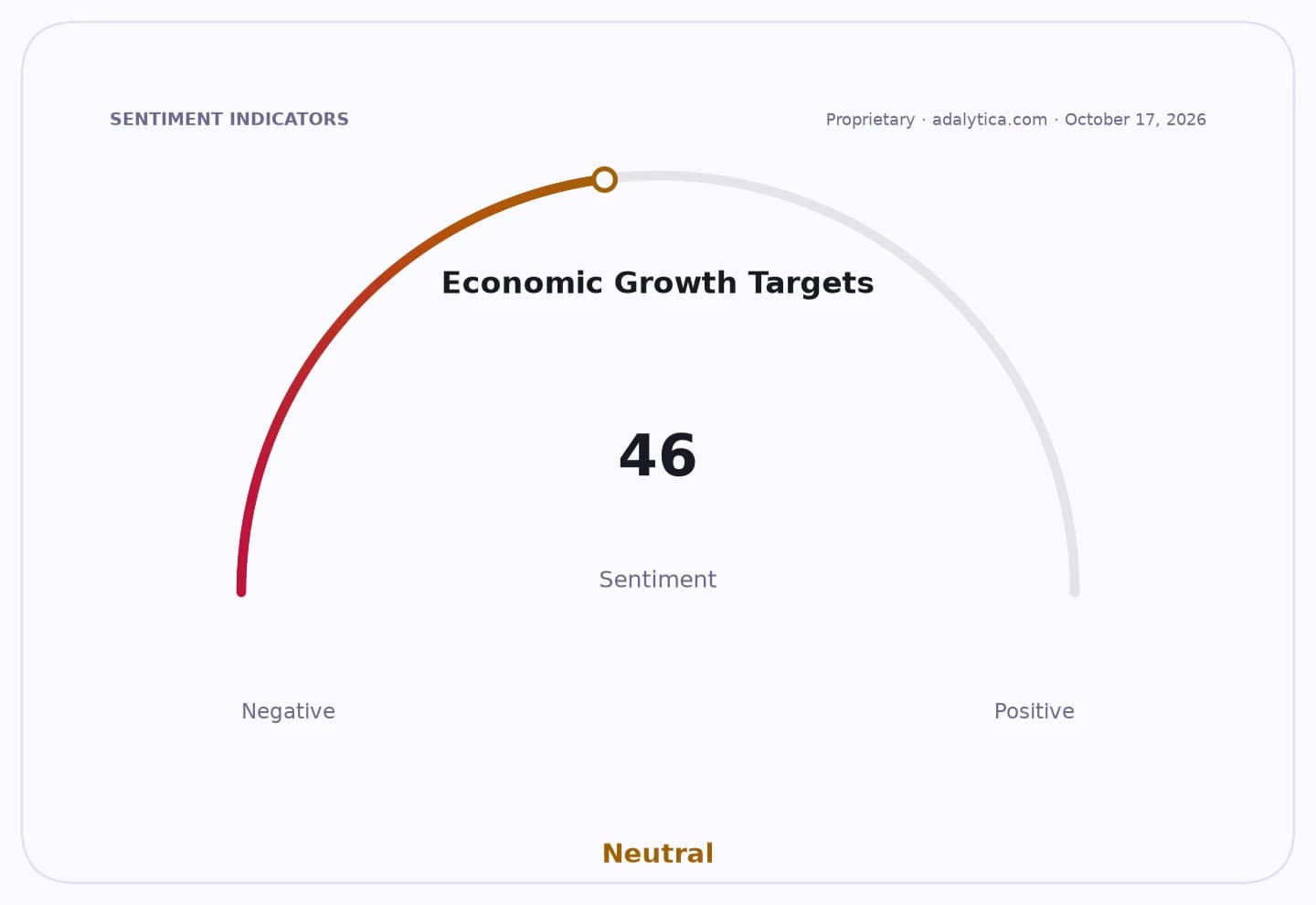
Sentiment IndicatorsⓘProprietary · adalytica.com · October 17, 2026
This is a snapshot — live sentiment, awareness and momentum for 130+ markets update continuously in the dashboard.Open AlphaPulse
The more important signal for investors is that the weakness is being driven by both demand and supply, not just one. Chinese steel demand remains fragile, and that has already pushed iron ore prices to the lowest levels in more than two years. At the same time, India’s monsoon disruption has removed a swing supplier from the market just as buyers are already cautious. That combination is rarely friendly to miners, but it can be unevenly bullish for low-cost producers with scale and diversified sales channels.
That is why the read-through matters for Rio Tinto, BHP and Vale. The big miners are still positioned to absorb weaker spot pricing better than higher-cost producers, but the latest data argues against any quick rebound in the broader iron ore complex. Rio Tinto’s shares have slipped back toward their 50-day moving average, while BHP remains below its 50- and 200-day averages and Vale has also lost altitude, reflecting a market that is no longer paying up for near-term iron ore exposure. The technical backdrop reinforces what the commodity data is saying: momentum has turned lower.
The bigger narrative is that iron ore is entering a softer, more selective phase. China’s stimulus signal has been uneven, steel futures are under pressure and export disruptions in India are now colliding with weak end-user demand. That leaves the market underestimating how quickly pricing power can swing back to the lowest-cost names while punishing anyone exposed to a prolonged volume slowdown.
For investors, the takeaway is clear: this is not the setup for chasing a broad iron ore recovery. It is the setup for owning quality over quantity — the majors with balance-sheet strength, low-cost assets and copper or other diversification — while staying cautious on the rest of the iron ore supply chain until Chinese demand stabilizes and India’s mining weather normalizes.
| Entity | Gains | Losses |
|---|---|---|
| Low-cost majors | ▲Relative margin resilience | ▼Less pricing leverage |
| Chinese steel mills | ▲Cheaper feedstock if prices stay weak | ▼Higher supply uncertainty |
| Indian exporters | ▲— | ▼Lost volumes, weaker sales |
| Spot iron ore bulls | ▲— | ▼Broken rebound thesis |