India’s government on Friday blasted U.S. Vice President J.D. Vance’s comments on Indian IT professionals as “deeply offensive” after Washington suspended labour certification processing for eight technology groups, escalating a dispute that now cuts across trade talks, immigration policy and the business model of India’s largest outsourcing firms.
India IT firms face U.S. PERM suspension
The confrontation matters because it directly targets the pipeline that has helped Indian IT companies win U.S. contracts, place engineers onshore and eventually secure green cards for skilled staff. It also raises the risk that visa restrictions and harsher political rhetoric could squeeze margins, slow revenue conversion and force clients to rethink staffing models at a time when bilateral economic ties are already under strain.
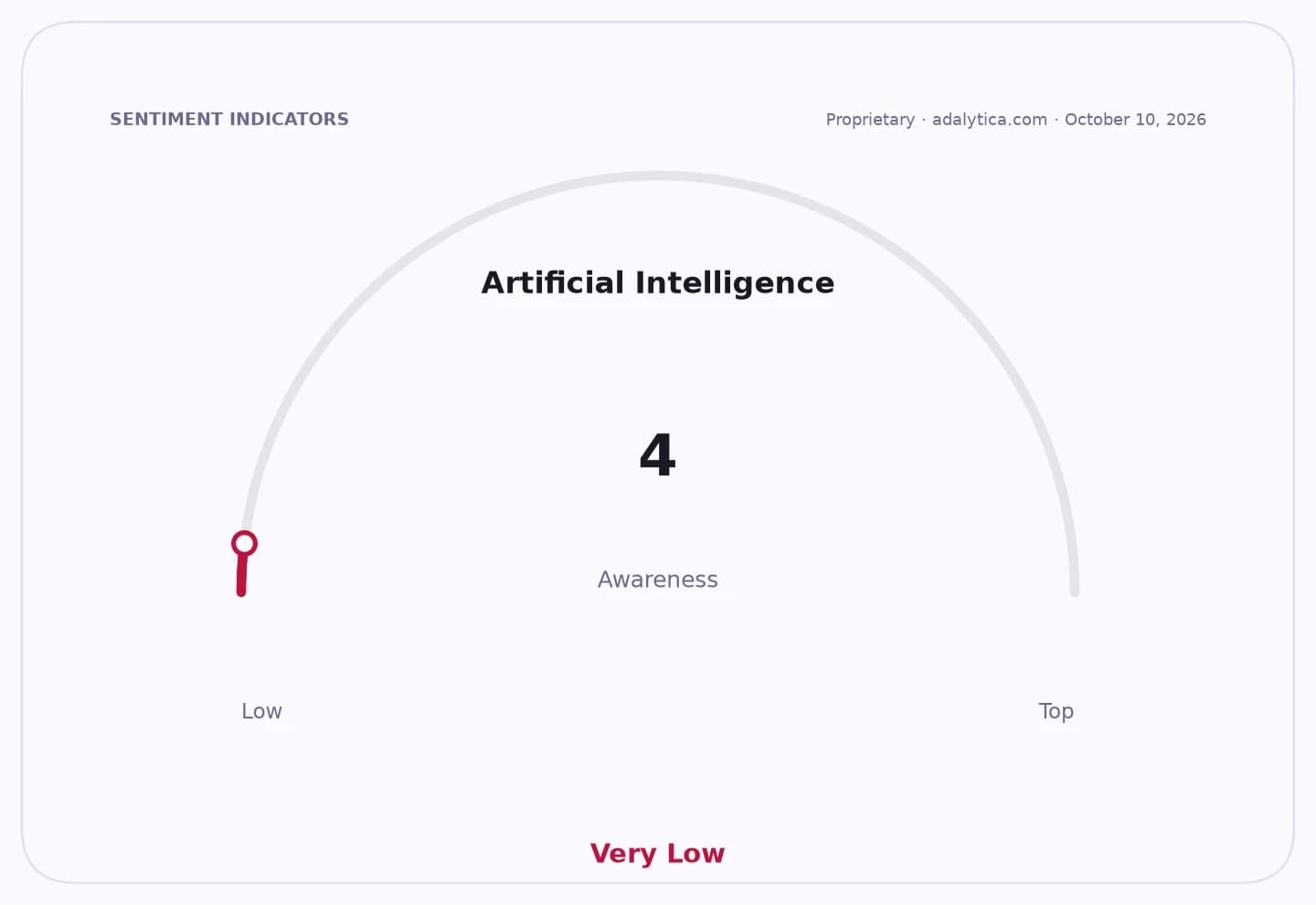
Sentiment IndicatorsⓘProprietary · adalytica.com · October 12, 2026
This is a snapshot — live sentiment, awareness and momentum for 130+ markets update continuously in the dashboard.Open AlphaPulse
The Ministry of External Affairs said the remarks “ignore the fact that Indian professionals in the United States are highly educated and skilled contributors to its economy and innovation ecosystem,” pushing back against a narrative that foreign workers are displacing Americans. It said the terminology carried “painful historical and colonial legacy connotations” and warned that the steps would not advance the “shared ambitions” of India and the U.S.
Vance and Labour Secretary Keith Sonderling said the Permanent Labour Certification, or PERM, programme had been suspended for eight firms, including Infosys, Tata Consultancy Services, Wipro, Cognizant, HCL, Capgemini, Microsoft and Adobe, as part of an effort to crack down on alleged visa fraud. The labour certification process is a key step in sponsoring foreign employees for U.S. permanent residency, and officials said the companies had benefited from a system that undercut American wages.
The political damage could prove more consequential than the immediate operational hit. Indian IT companies derive a large share of their North American revenue from onsite delivery, and the ability to move engineers into the U.S. has long supported contract wins, execution and client retention. Any tightening of the labour pathway raises costs and could accelerate a shift toward offshoring and automation, but it also risks making Indian vendors less competitive in projects that still demand a heavy onsite presence.
Investors have already been treating the sector cautiously. Infosys shares have fallen to 10.73, down from 17.33 in late November, and remain below both the 50-day moving average of 11.51 and the 200-day average of 13.10, with relative strength readings in the mid-40s and MACD still below its signal line. Wipro has also weakened, trading at 1.70 versus 2.89 at the start of the year and below both its 50-day and 200-day averages. Those moves suggest markets are pricing not just slower growth but also a more difficult operating environment for Indian outsourcing names.
The backdrop is broader than immigration alone. New Delhi said the episode comes as trade talks with Washington have “plateaued,” while the U.S. administration is also weighing sanctions-linked tariffs on countries importing large volumes of Russian oil. That leaves India exposed on multiple fronts: tariff risk, technology visa policy and a colder tone in a relationship that had been built around strategic convergence.
For investors, the key question is whether this becomes another cyclical flare-up or a structural reset in how Indian IT firms access the U.S. market. A prolonged clampdown would favour companies with deeper domestic delivery, stronger automation and less dependence on long-term onsite staffing, while pressuring the traditional Big Five outsourcing model. The next catalyst is whether Washington expands enforcement beyond the eight named firms and whether the tariff decision due on Oct. 18 compounds the strain on the wider India-U.S. economic relationship.
| Entity | Gains | Losses |
|---|---|---|
| U.S. administration | ▲Political cover on wages and visas | ▼Relations with India |
| Indian IT firms | ▲Incentive to shift to offshore delivery | ▼Onsite staffing model |
| U.S. workers | ▲Less competition for some roles | ▼Higher project costs |
| Infosys/Wipro sector peers | ▲Long-term automation push | ▼Near-term market sentiment |