Germany’s political drift to the far right is becoming more than a European domestic story for India: it could harden migration policy, complicate trade ties and force New Delhi to rethink how it sells itself as a reliable alternative manufacturing hub.
India, Germany politics and trade ties

For investors, that matters because India’s bull case depends in part on global companies shifting production away from China and into politically stable, labor-rich markets. If Germany’s politics — and by extension Europe’s broader center-right tilt — produces tighter immigration rules and more defensive industrial policy, the effect could be two-sided: Indian exporters may gain from companies seeking diversification, but India’s much-touted access to skilled workers, services demand and smoother cross-border mobility could become less certain.
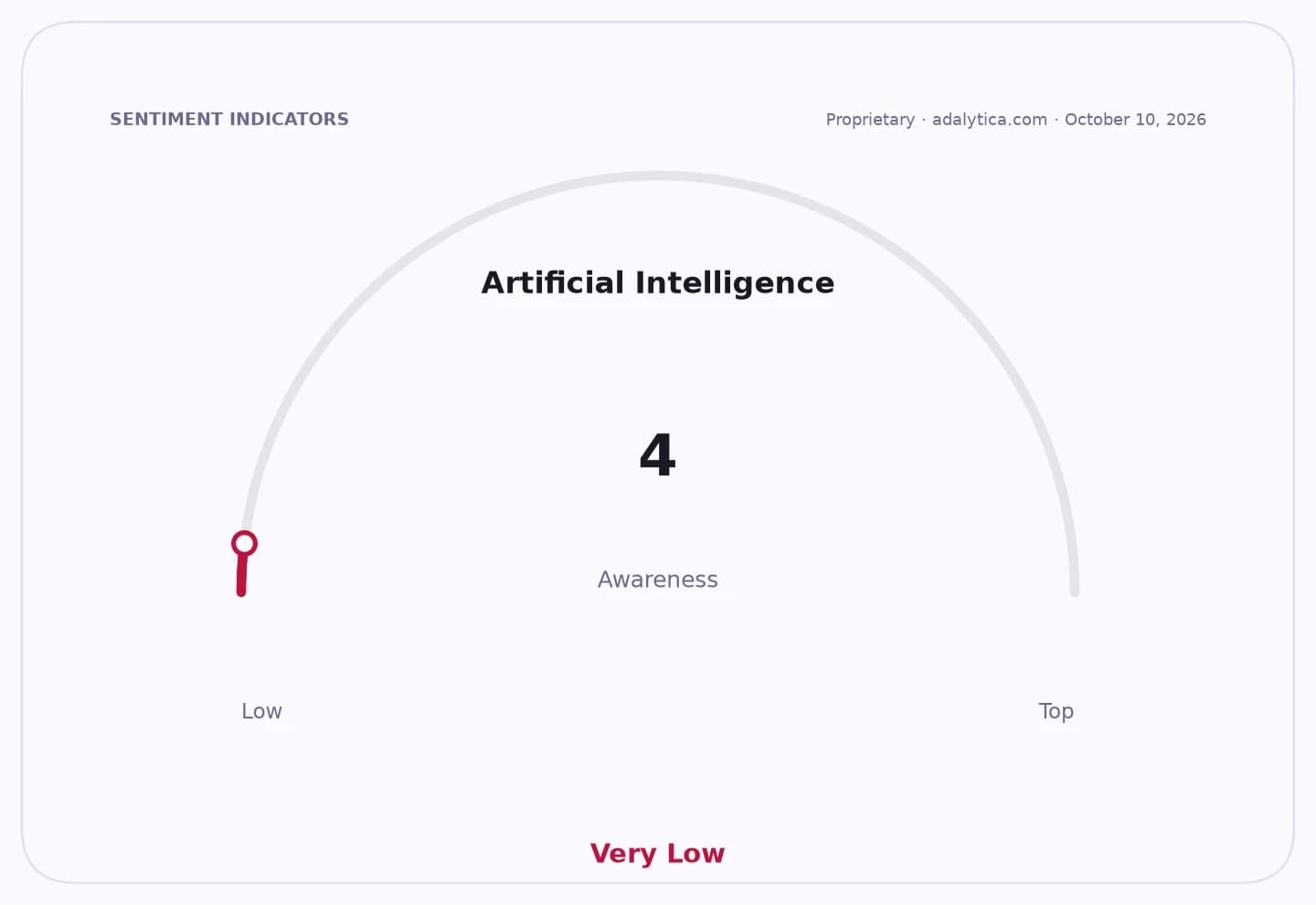
Sentiment IndicatorsⓘProprietary · adalytica.com · October 12, 2026
This is a snapshot — live sentiment, awareness and momentum for 130+ markets update continuously in the dashboard.Open AlphaPulse
That tension helps explain why the market has been so sensitive to Europe-linked risk even as Indian assets have held up relative to peers. India’s main US-listed tracker, INDA, has slid to 46.40 from above 53 in February, with its 50-day moving average still above the price and RSI readings around 30, a sign the fund remains technically weak rather than fully washed out. Germany’s EWG, meanwhile, has recovered only modestly to about 41.02, still below its 50-day average near 42.97, suggesting investors are not pricing a clean political resolution.
The market backdrop is also telling. Adalytica’s S&P 500 trade-signal gauge shows “Extreme Greed” in sentiment while awareness remains in “Extreme Fear,” a classic setup for crowded positioning to snap back hard if geopolitical stress rises. The dollar, by contrast, has strengthened sharply, with Adalytica flagging greed rising to 75 and awareness in neutral territory, which usually tightens financial conditions for emerging markets and makes India’s external financing story more demanding.
The real investment narrative is not that Germany’s far right directly changes India overnight. It is that Europe’s political turn can accelerate a world of bloc economics, where labor mobility, supply chains and capital flows are increasingly shaped by domestic politics rather than pure efficiency. That is bad news for the old globalization playbook, but it may be a major tailwind for India if New Delhi can capture more manufacturing and back-office work that leaves a more protectionist Europe behind.
Still, the opportunity is asymmetric only if India pairs geopolitics with execution. The winners are the companies that benefit from supply-chain relocation, digital services demand and domestic infrastructure buildout; the losers are firms reliant on frictionless labor movement, easy European market access or a weaker dollar. My view is that investors should keep leaning into India’s industrial and digital infrastructure themes, but with an eye on policy risk in Europe that could make the next phase of globalization less about open borders and more about strategic redundancy.
| Entity | Gains | Losses |
|---|---|---|
| India manufacturers | ▲Supply-chain shift inflows | ▼Slower Europe demand |
| Indian IT/services firms | ▲Digital relocation demand | ▼Easier labor mobility |
| Germany export sector | ▲Defensive reshoring themes | ▼Higher political friction |
| Emerging-market assets | ▲Selective diversification flows | ▼Stronger dollar pressure |