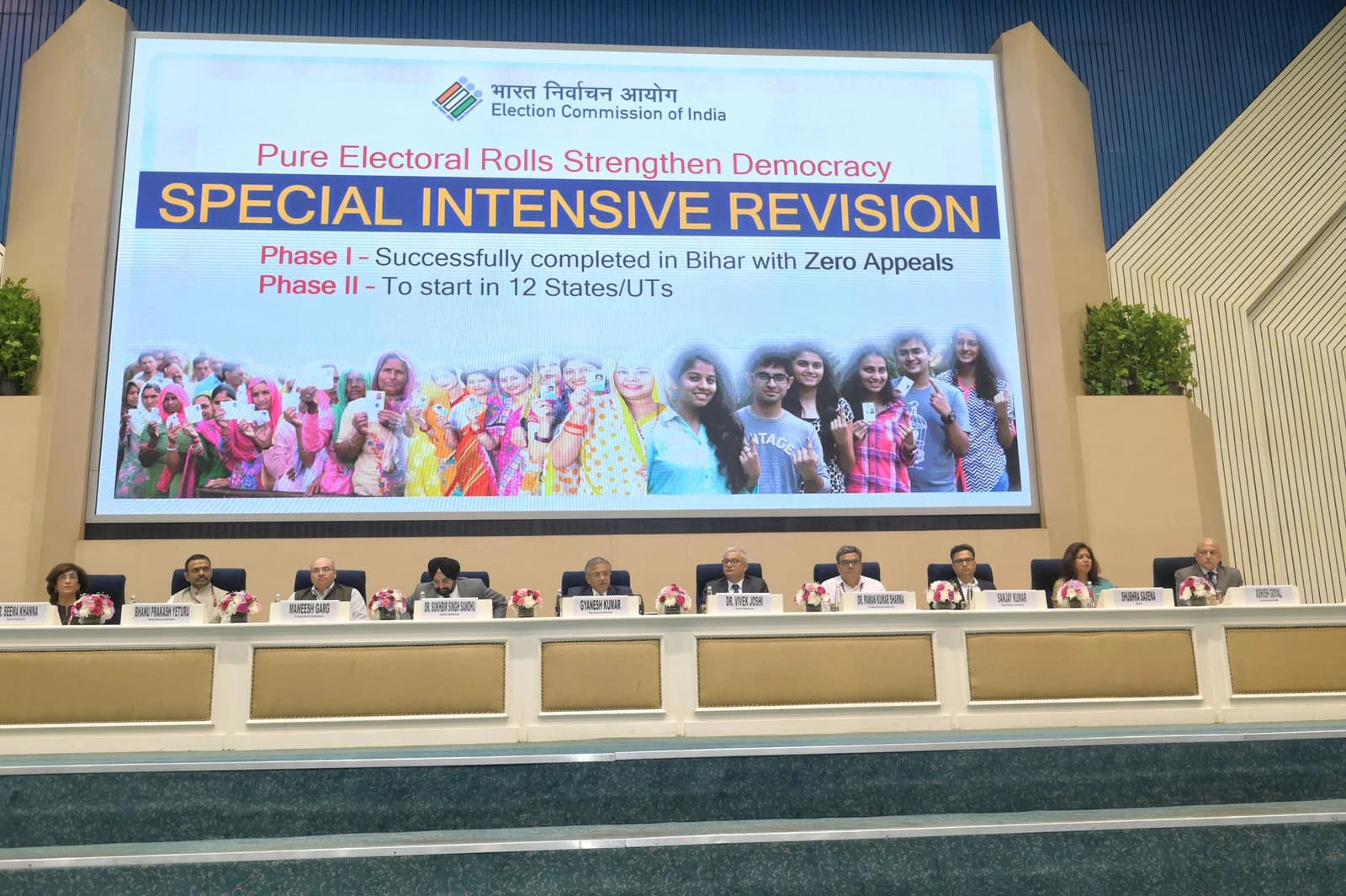
India’s main opposition bloc descended on New Delhi on Monday to protest what it says are serious problems in the election process, turning a technical dispute over voter rolls and election administration into a broader political confrontation that could unsettle markets already wary of policy drift and institutional friction.
India Opposition Protest Election Process in New Delhi
The immediate issue is the INDIA alliance’s demand for the resignation of Chief Election Commissioner Gyanesh Kumar, a move that signals how far the row has escalated. Police blocked the march by lawmakers, and the possibility of arrests involving Rahul Gandhi, Priyanka Gandhi and Akhilesh Yadav underscores that the dispute is no longer just rhetorical. For investors, that matters because political instability in the world’s fastest-growing major economy can slow reform momentum, complicate policymaking and increase headline risk for domestic assets.
Sentiment IndicatorsⓘProprietary · adalytica.com · October 7, 2026
This is a snapshot — live sentiment, awareness and momentum for 130+ markets update continuously in the dashboard.Open AlphaPulse
The market impact is not about a single day’s selloff so much as the widening gap between India’s growth story and its political noise. India has been one of the strongest emerging-market destinations for capital on the back of infrastructure spending, manufacturing incentives and resilient services activity. But when the opposition and the government’s institutions are locked in a public confrontation, the risk premium can rise around sectors tied to regulation, elections and state-led capex. Foreign investors do not need a full-blown crisis to turn cautious; they only need evidence that political uncertainty is becoming a recurring feature.
That is why the story matters beyond Delhi. India’s equity market has been priced for continuity: policy support, consumption resilience and a long runway in manufacturing, digital infrastructure and defense. Any perception that election legitimacy or institutional independence is being contested can dent confidence in that premium, even if only temporarily. In the near term, the biggest losers are likely to be sentiment-sensitive domestic cyclicals and politically exposed names, while beneficiaries are harder to spot — mainly the usual safe-haven pockets and companies with limited policy dependence.
The broader narrative is one of a democracy in which politics remains a live market variable. India’s structural growth case is intact, but investors should not ignore the second-order effects of confrontation between the ruling establishment and the opposition. If this dispute spreads from protest politics into prolonged institutional friction, it could keep a lid on multiples and slow the pace at which capital is willing to pay for India’s secular growth story. For now, the actionable takeaway is to stay invested in India’s long-term megatrend, but favor balance-sheet strength, policy insulation and export earnings over names that need political calm to work.
| Entity | Gains | Losses |
|---|---|---|
| Opposition INDIA bloc | ▲Visibility, mobilization | ▼Risk of arrests, political backlash |
| BJP-led government | ▲Institutional leverage | ▼Accusations of pressure on opposition |
| India equities with policy insulation | ▲Relative safety | ▼Less headline exposure |
| Politically sensitive domestic sectors | ▲Limited upside | ▼Higher volatility, higher risk premium |