India’s opposition has escalated its fight over the Election Commission’s Special Intensive Revision, turning a procedural voter-roll exercise into a bigger test of institutional trust, electoral fairness and the government’s political credibility.
India Election Commission Dispute Over Voter Rolls
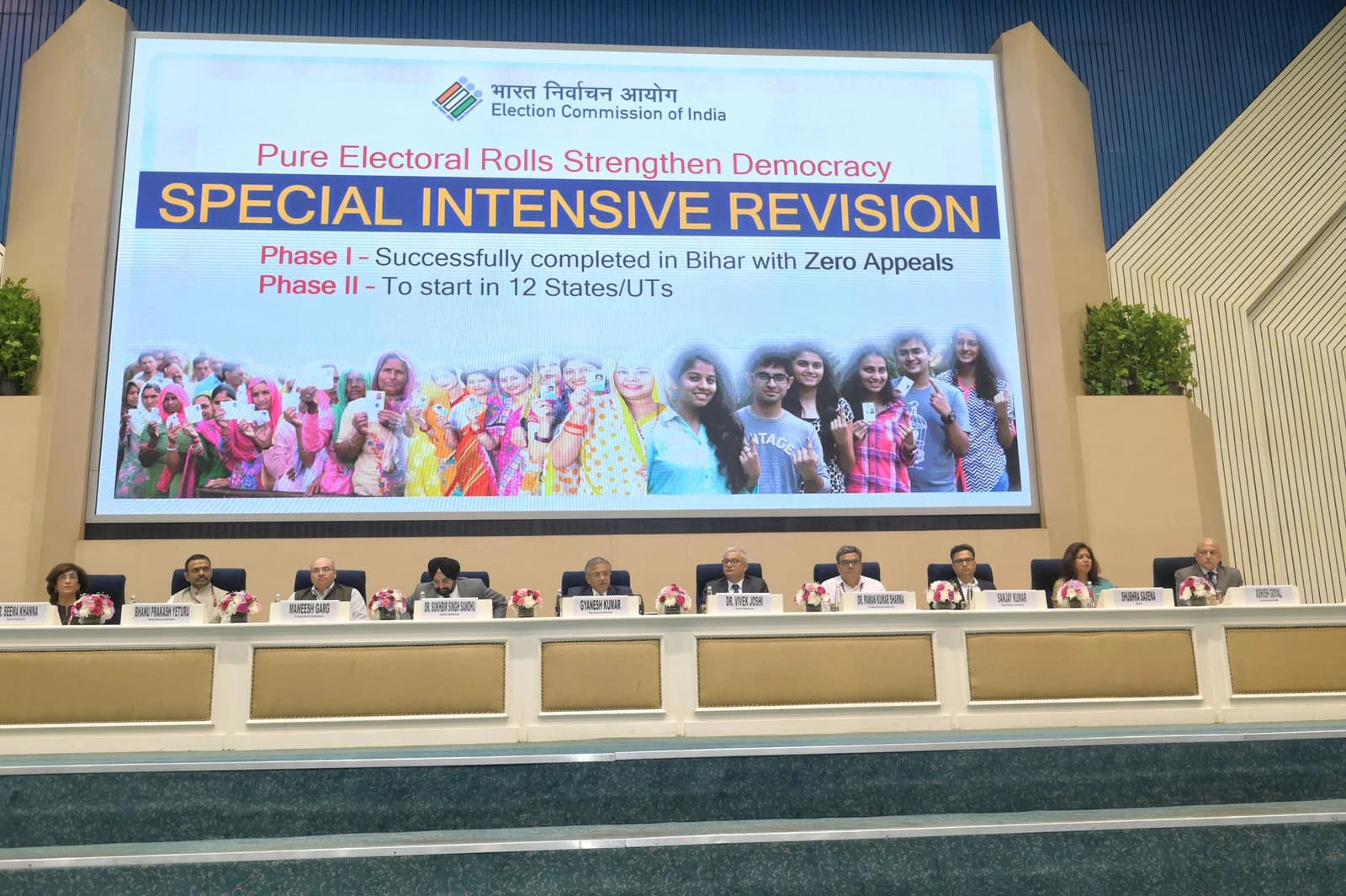
The INDIA bloc’s march to the Election Commission in New Delhi on Tuesday and its call for Chief Election Commissioner Gyanesh Kumar to resign matter because voter rolls are the plumbing of democracy: if opposition parties convince voters that names are being added or deleted unfairly, confidence in the next election cycle can erode fast. That is especially significant in India, where the electoral commission’s neutrality is a core pillar for markets that prize policy continuity and political stability.
Sentiment IndicatorsⓘProprietary · adalytica.com · October 7, 2026
This is a snapshot — live sentiment, awareness and momentum for 130+ markets update continuously in the dashboard.Open AlphaPulse
Congress leader Mallikarjun Kharge framed the issue as an assault on voting rights, while party colleagues including Karti Chidambaram alleged the SIR process was being used to disenfranchise citizens through changes to voter-registration forms and mass deletions under Form 7. The bloc wants the exercise scrapped, deleted names restored from pre-SIR rolls, prior notice before any deletion and a clearer appeal process. It also wants simpler first-time registration and, more aggressively, a return to ballot papers instead of electronic voting machines.
The immediate market read-through is not about a direct economic policy shift, but about the durability of India’s institutional framework. When opposition parties accuse the Election Commission of acting unilaterally or at the government’s direction, the issue can bleed into investor perceptions of rule of law, administrative predictability and the risk premium on Indian assets. That matters at a time when foreign capital remains sensitive to governance headlines and when India is trying to sustain its pitch as a long-duration growth market.
The confrontation also underscores how election administration is becoming a live political battleground, not a back-office function. If the SIR controversy widens, it could deepen the opposition’s “Save Democracy” campaign and keep electoral reform at the center of the national debate. For investors, the key question is whether this becomes a temporary protest cycle or a more prolonged challenge to the credibility of one of India’s most important institutions.
For now, the message is clear: the INDIA bloc is not just contesting a voter-roll revision, it is trying to turn the SIR into a national narrative about democratic risk. That makes the Election Commission dispute more than a political flare-up — it is a test of confidence in the process that ultimately determines policy continuity, market stability and who gets to govern India next.
| Entity | Gains | Losses |
|---|---|---|
| INDIA bloc | ▲Mobilization power | ▼Governance credibility gap |
| BJP government | ▲Short-term control of process | ▼Institutional trust |
| Election Commission | ▲Visibility under scrutiny | ▼Perceived neutrality |
| Indian markets | ▲Potential policy clarity if dispute ends | ▼Higher political risk premium |