Opposition leaders in India stepped up pressure on the Election Commission on Tuesday, with MPs from the INDIA bloc marching to the poll body’s headquarters, climbing police barricades and demanding the resignation of Chief Election Commissioner Gyanesh Kumar amid an escalating row over voter-roll revisions.
India opposition protests election commission over voter rolls
The protest matters because it has moved beyond a political standoff and into a direct challenge to the credibility of India’s election watchdog, adding another layer of institutional risk to an already charged debate over the Special Intensive Revision of electoral rolls. For investors, the dispute raises the premium on policy and governance stability in the world’s most populous democracy, where perceptions of electoral integrity can shape market confidence, legislative momentum and the political runway for economic reforms.
Sentiment IndicatorsⓘProprietary · adalytica.com · October 6, 2026
This is a snapshot — live sentiment, awareness and momentum for 130+ markets update continuously in the dashboard.Open AlphaPulse
The march drew leaders from Congress, Samajwadi Party, Trinamool Congress and, according to party officials, Naveen Patnaik’s BJD as well. Rahul Gandhi livestreamed the demonstration, while Samajwadi Party MPs climbed barricades near the NITI Aayog office and police deployed layers of security, including Rapid Action Force personnel, around Parliament and Vijay Chowk.
AAP leader Saurabh Bharadwaj added fuel to the controversy with a post claiming, citing sources, that Gyanesh Kumar could resign before Oct. 10. Congress leaders were even more direct, with Rajeev Shukla saying the CEC’s resignation was “certain,” while the BJP dismissed the march as a “sponsored effort” to bring Rahul Gandhi to power.
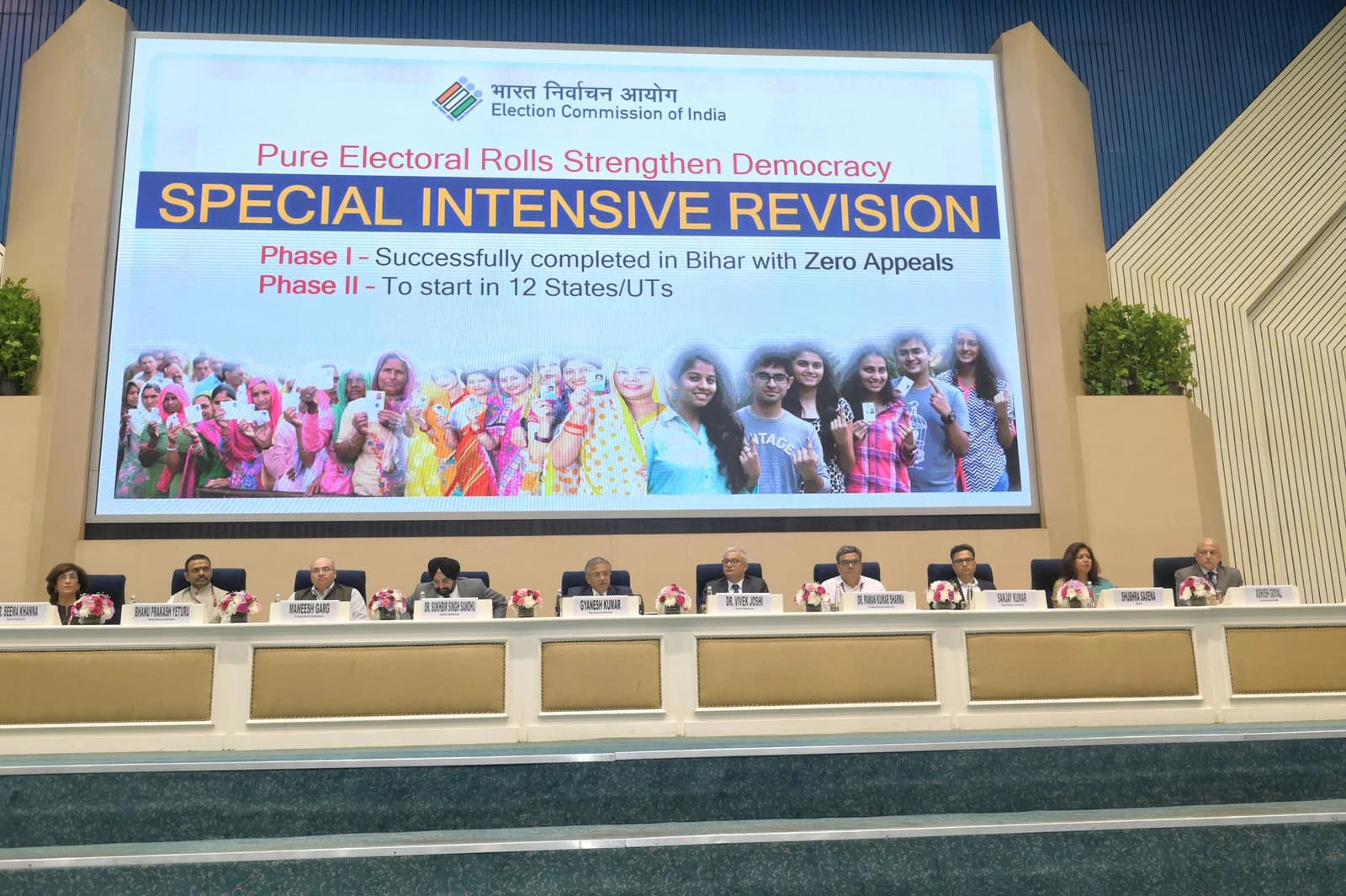
At the center of the dispute is the ECI’s handling of the SIR process, which opposition parties say has enabled mass voter disenfranchisement and unilateral decision-making. The Supreme Court on Monday refused to restrain Gyanesh Kumar from functioning, saying it could not act on assumptions, but asked for records tied to changes in Form 6, sharpening scrutiny of how the commission made key decisions.
The immediate market impact is likely to be limited, but the broader economic significance is not. A prolonged fight over election administration can deepen political noise ahead of state contests and eventually national policy battles, particularly on issues that require stable parliamentary backing such as fiscal consolidation, infrastructure spending, tax administration and foreign investment rules.
For investors in Indian assets, the episode is another reminder that governance risk can reprice quickly even when macro fundamentals remain intact. If the standoff widens, traders will watch for any spillover into the rupee, domestic equities and sectors sensitive to regulatory continuity.
The next catalyst is whether the opposition sustains street pressure beyond the Delhi march and whether the election commission or the courts are forced to answer more directly on the SIR process and the allegations that Kumar acted without consensus inside the three-member body.
| Entity | Gains | Losses |
|---|---|---|
| INDIA bloc opposition | ▲Political visibility | ▼Institutional backlash |
| Election Commission / Gyanesh Kumar | ▲None | ▼Credibility pressure |
| BJP | ▲Law-and-order narrative | ▼More election controversy |
| Indian markets / investors | ▲Clarity if dispute is resolved | ▼Governance uncertainty |