India’s next growth push will depend less on writing fresh laws than on making regulation work better, NITI Aayog member Rajiv Gauba said, putting policy simplification at the heart of efforts to improve energy security and support a more market-driven economy.
India regulation reform and energy investment

That matters because India is trying to expand power supply, attract capital and keep inflation contained without adding another layer of compliance costs for businesses. A lighter, clearer regulatory regime can speed up investment decisions in energy, infrastructure and manufacturing, while reducing the uncertainty that often slows project financing and raises the cost of capital. For foreign investors, the message is that India’s reform story is increasingly about execution quality rather than headline-grabbing new rules.
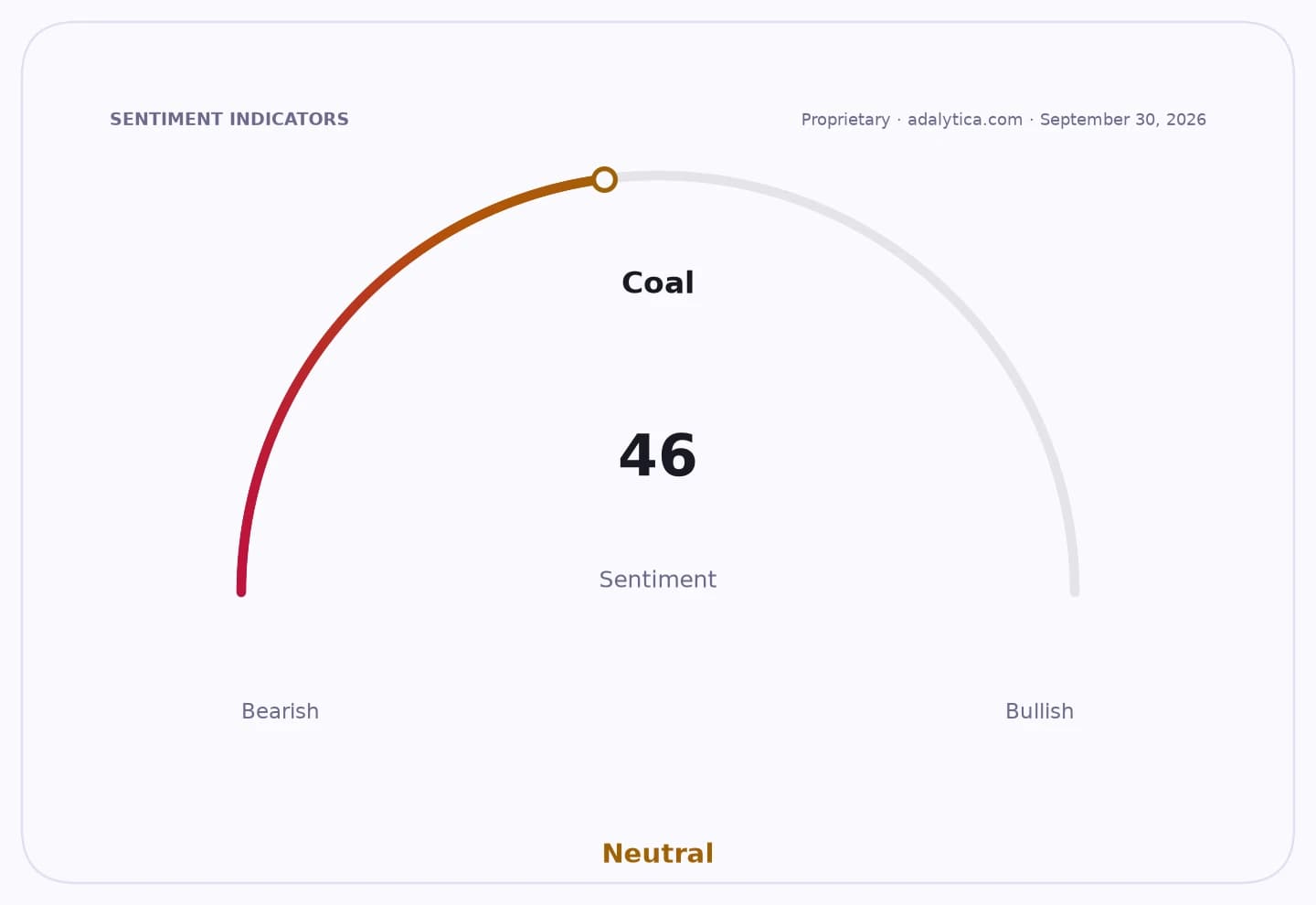
Sentiment IndicatorsⓘProprietary · adalytica.com · October 4, 2026
This is a snapshot — live sentiment, awareness and momentum for 130+ markets update continuously in the dashboard.Open AlphaPulse
Gauba’s call for a “light-touch” framework fits a broader economic need. India’s growth model still leans heavily on public capex and a few regulated sectors, especially energy, where pricing, licensing and market access remain tightly managed. Smarter regulation can help bring in private capital, improve competition and make supply more resilient. In a country that must balance rising electricity demand with imported fuel exposure, that is not just an administrative issue but a macroeconomic one.
The timing is important for markets as well. Investors have rewarded Indian equities for steady earnings growth, but valuations remain demanding relative to many emerging markets. That leaves policy credibility and reform momentum as key supports. If the government can reduce friction in sectors such as power, renewables and industrial manufacturing, it could improve return on equity for companies tied to infrastructure build-out and domestic demand. If not, compliance burdens may continue to blunt the impact of India’s growth spending.
The debate is also about risk allocation. Businesses generally gain from fewer, clearer rules and more predictable enforcement. Regulators and parts of the bureaucracy may lose some discretion, but the economy gains if policy shifts from control to supervision. That is especially relevant in energy, where India needs to balance affordability, energy security and the transition toward cleaner sources without discouraging investment.
For investors, the takeaway is that India’s reform premium will increasingly depend on whether policymakers can turn “ease of doing business” into lower operating friction on the ground. The market will watch for movement in energy pricing, market design and regulatory approvals, because those are the areas where smarter rules can translate into faster growth and better corporate earnings.
| Entity | Gains | Losses |
|---|---|---|
| Indian companies | ▲Lower compliance burden | ▼Less regulatory discretion |
| Foreign investors | ▲Better policy visibility | ▼Fewer short-term policy levers |
| Energy sector | ▲Faster investment flow | ▼Slower protectionism |
| Consumers | ▲More efficient supply | ▼Potentially less price control |