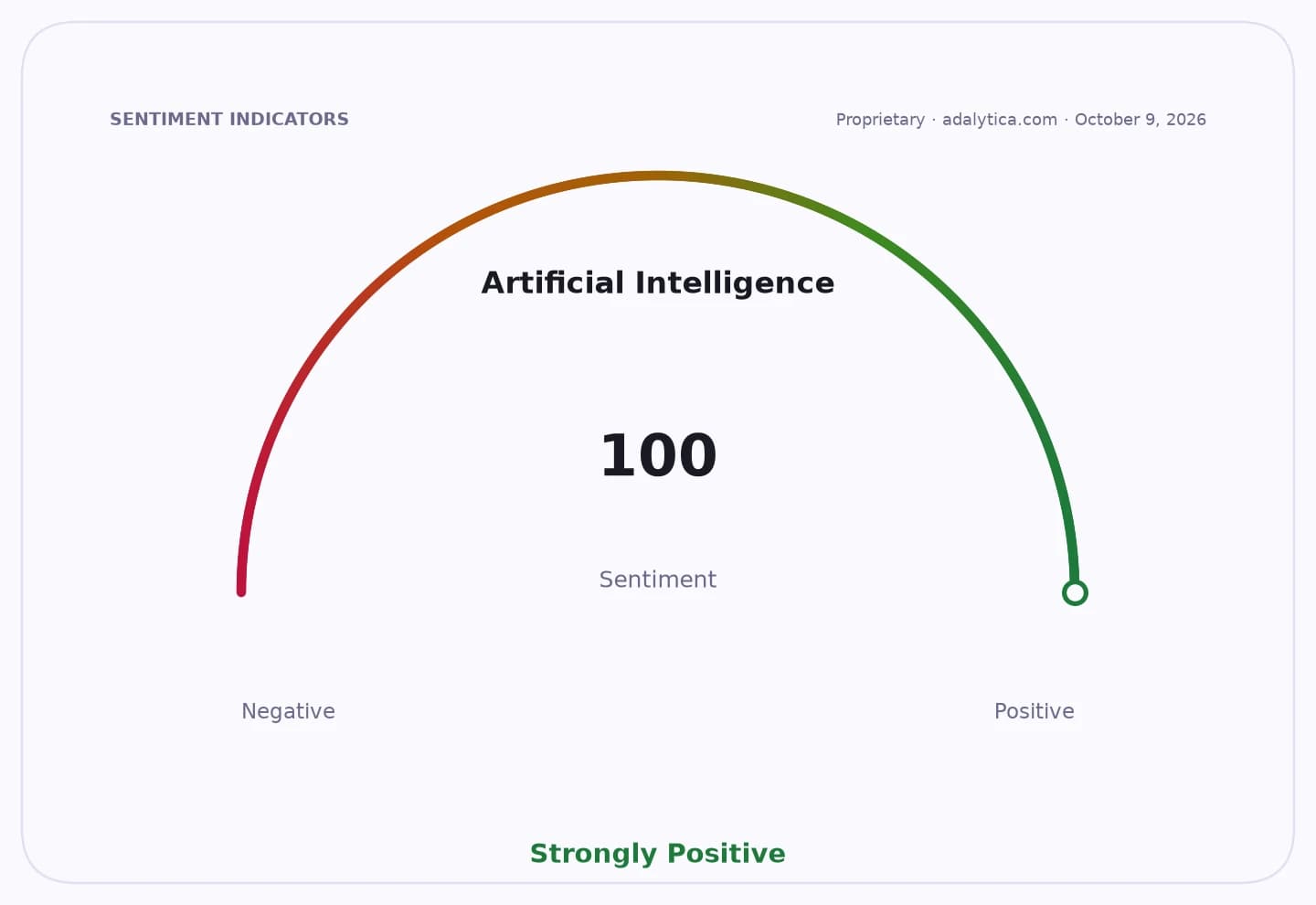
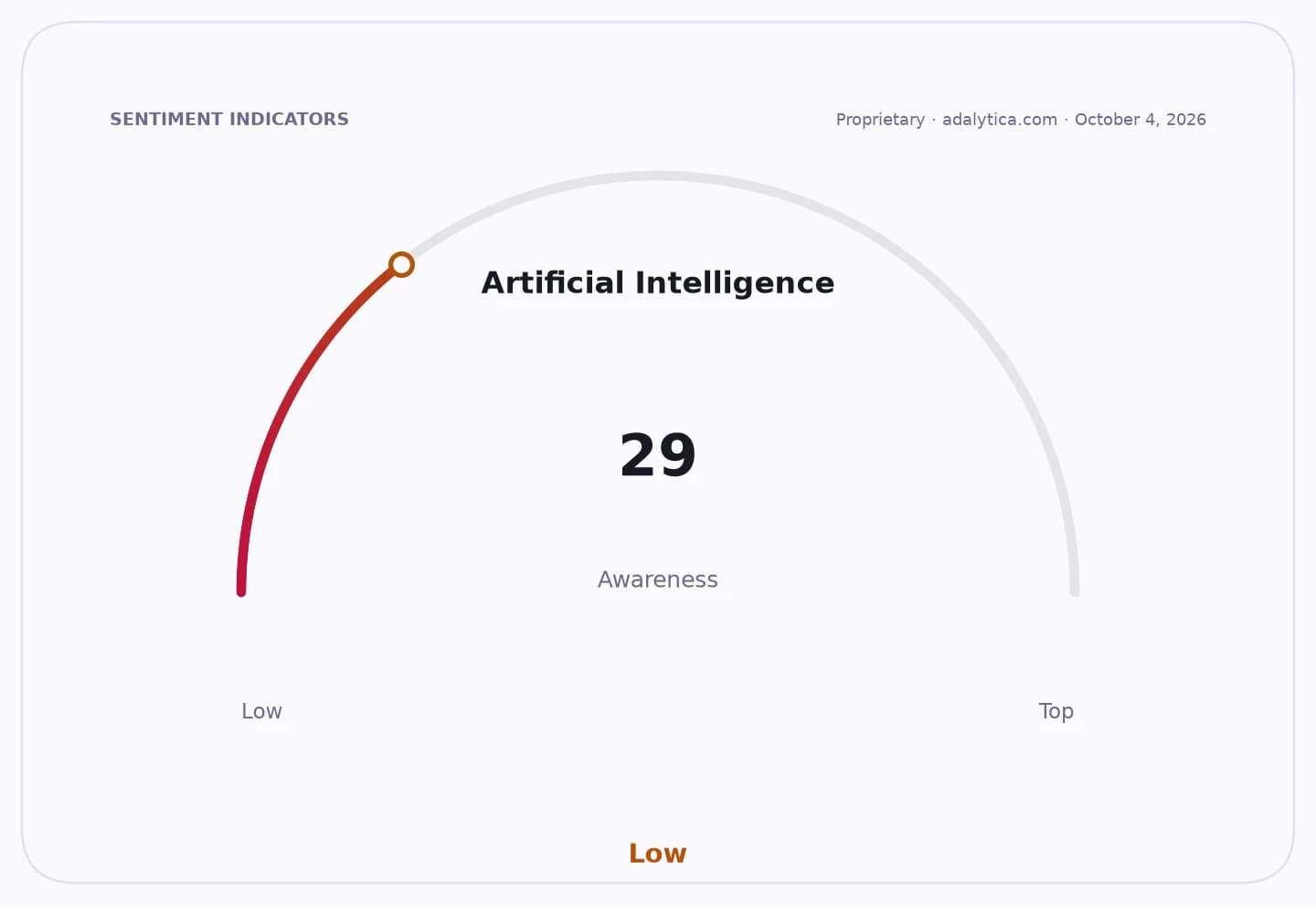
India’s $254 billion information technology services sector is headed for a fourth straight year of sluggish growth as clients delay discretionary spending, geopolitical uncertainty weighs on decision-making and generative AI is forcing vendors to defend their core business model.
India IT Sector Faces Sluggish Growth and AI Pressure
That matters because India’s IT exporters are one of the country’s biggest sources of foreign-currency earnings, wage growth and blue-chip market value. When global corporations slow outsourcing budgets, it ripples through hiring, margins and investor confidence across a sector that has long traded as a proxy for steady dollar revenue and resilient profits.
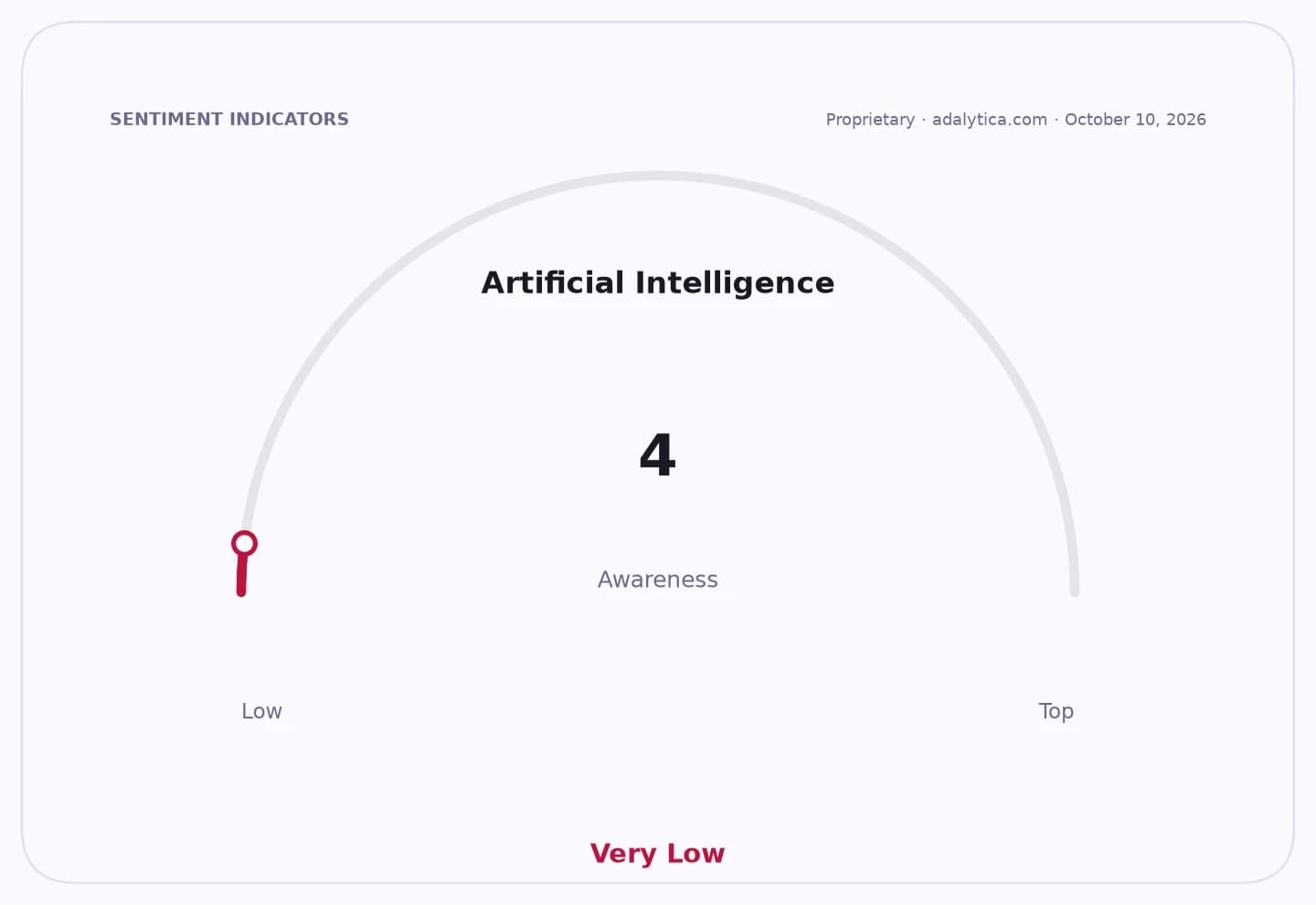
Sentiment IndicatorsⓘProprietary · adalytica.com · October 10, 2026
This is a snapshot — live sentiment, awareness and momentum for 130+ markets update continuously in the dashboard.Open AlphaPulse
Analysts say the weak backdrop is not just about cyclical caution. Customers remain hesitant to start non-essential transformation work, even as some recent results — including Accenture Plc’s — suggest budgets are not vanishing so much as being redirected toward larger AI-led programs.
Tata Consultancy Services on Thursday beat profit expectations, but its sequential revenue growth was only 0.5% in constant-currency terms, underscoring how little top-line momentum remains in the industry’s largest name. Nuvama said the sector has underperformed sharply over the past nine months because of a negative narrative around GenAI platform companies and Gulf war-related uncertainty.
Artificial Intelligence vs INFYadalytica.com
Explore this data interactively — full history, time series and cross-market comparisons.Open AlphaPulse
The market reaction has already been severe. The NSE Nifty IT Index has fallen 27% this year, pushing sector valuations to their lowest level since the pandemic. Infosys shares, for one, are down sharply over the past year and remain below their longer-term trend, reflecting how little investors are willing to pay for growth that is still missing.
The pressure is especially important for global investors because India IT has historically offered defensive exposure to the world economy. If AI adoption accelerates only at the largest customers while routine discretionary work stays frozen, the sector could face a slower, more uneven recovery than in past downcycles.
Still, some brokers argue the model itself is not broken. Antique Stock Broking said the shift toward AI-led transformation projects may support longer-term demand rather than eliminate it, and Nuvama argued that GenAI disruption could ultimately create bigger opportunities for established services firms.
For now, though, the burden of proof is on growth. With geopolitical risks still elevated and enterprise tech spending under pressure, investors will be watching the next round of quarterly results for signs that AI is translating into revenue, not just a new sales pitch.
| Entity | Gains | Losses |
|---|---|---|
| Large IT services vendors | ▲AI-led project pipeline | ▼Legacy discretionary work |
| Enterprise clients | ▲More spending leverage | ▼Slower delivery on tech programs |
| Equity investors | ▲Lower valuations for entry points | ▼Growth visibility and earnings multiples |
| India export economy | ▲Dollar inflows from big contracts | ▼Momentum in IT-linked hiring and spending |