AI is undermining the economics that made Indian IT services one of the world’s most reliable outsourcing machines, and the shift is now visible in hiring, pricing and the race to build outcome-based businesses.
Indian IT Firms Face AI Pricing Pressure
For three decades, the industry sold engineering capacity by the hour, with margins driven by headcount, utilization and access to scarce technical skills. That model is being squeezed from both sides. Coding agents and other AI tools are cutting the hours needed to deliver routine work, while clients can increasingly do more in-house with smaller, AI-augmented teams. What was once a labor-arbitrage story is turning into a pricing-power problem.
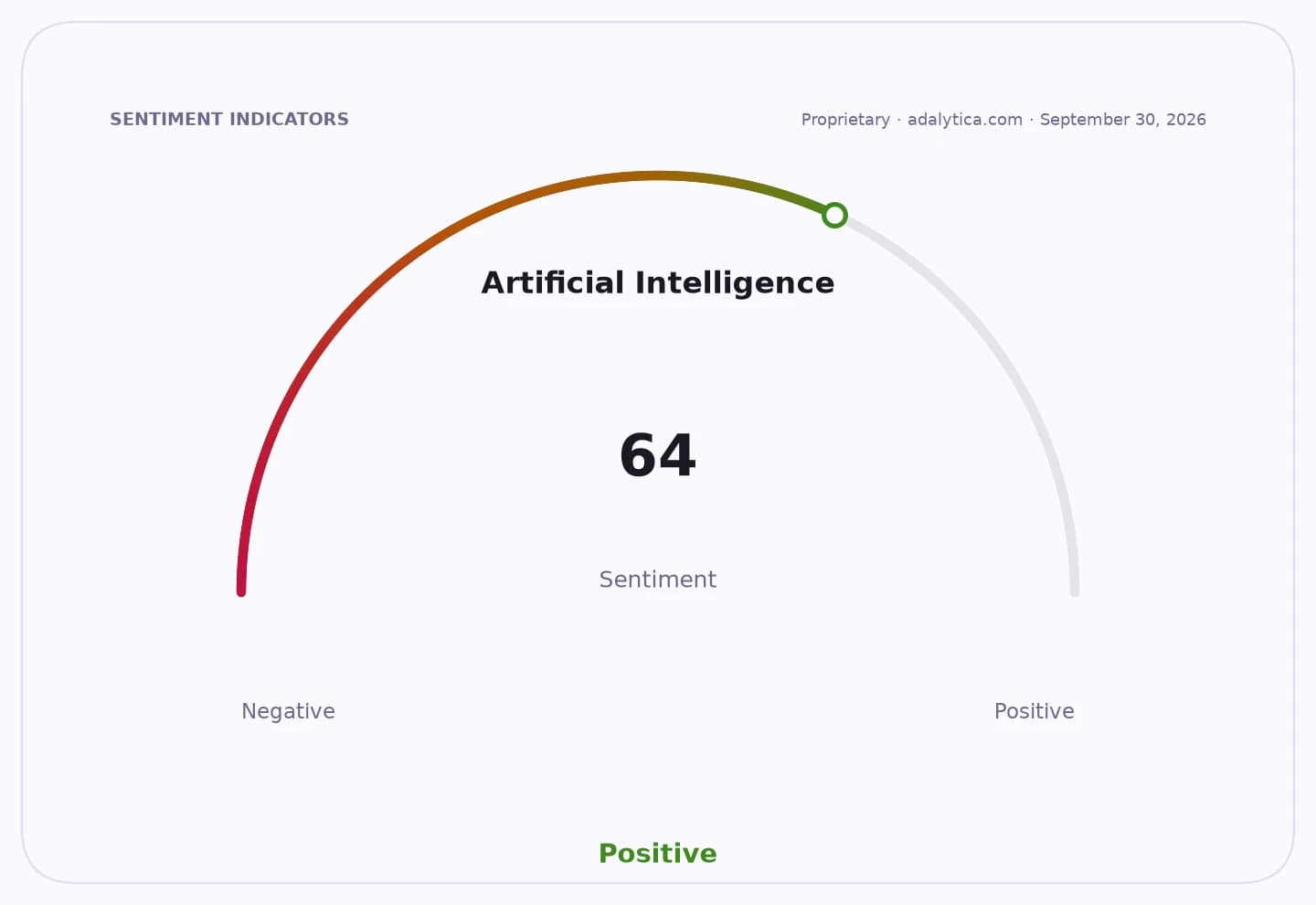
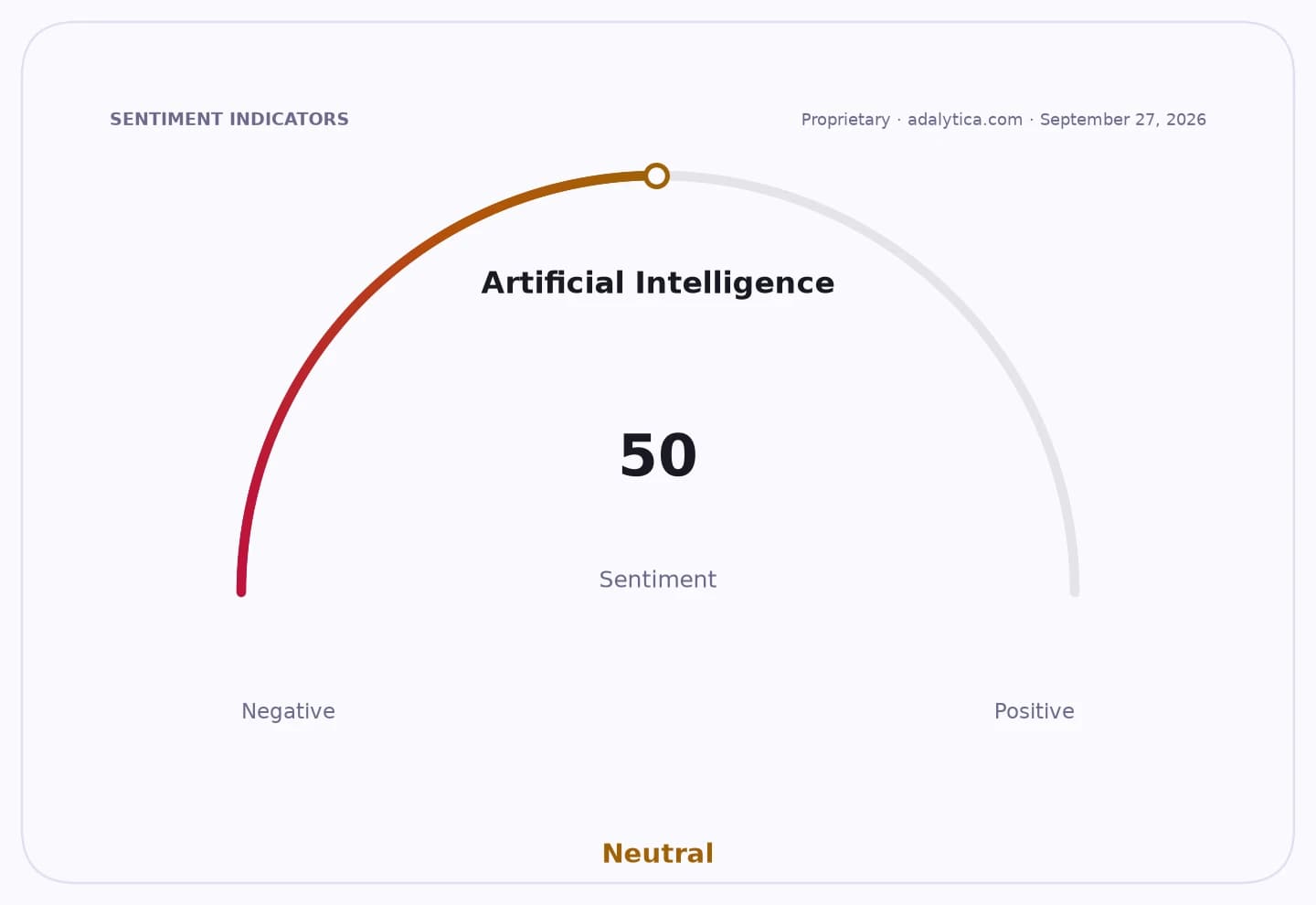
Sentiment IndicatorsⓘProprietary · adalytica.com · September 30, 2026
This is a snapshot — live sentiment, awareness and momentum for 130+ markets update continuously in the dashboard.Open AlphaPulse
That is why the debate over how many firms may struggle to make the transition misses the larger point. The disruption is not about a few weaker players falling behind; it is about the industry’s core revenue logic weakening before a replacement model is fully built. When work that once required a specialist can be done by a broader pool of generalists, the scarcity premium disappears. Under the old hourly-billing structure, the productivity gain often accrues to the client, not the vendor.
The consequences are already showing up in the labor market. The five largest Indian IT firms added a net 12,718 employees in FY25, then shed 6,981 in FY26, a reversal that suggests AI is flattening the pyramid that once relied on large cohorts of junior staff. That matters economically because the classic structure was built to scale billable hours, not to own outcomes. A leaner, more senior-heavy organization may be more efficient, but it also implies fewer entry-level jobs and less revenue leverage from growth in demand.
Investors should read that shift as a margin and multiple question, not just a staffing issue. Firms such as Accenture, IBM and DXC are all being measured against the same backdrop: clients want faster delivery, lower cost and more AI content, but they also want vendors to shoulder more of the risk. IBM’s own filings point to hybrid cloud and AI as a growth path, while Accenture says it is helping clients “reinvent” with AI. The bull case is that the strongest vendors can pivot toward proprietary platforms, domain expertise and outcome contracts. The bear case is that automation compresses legacy services revenue faster than new businesses can scale.
The market has not fully resolved that tension. Accenture’s shares have been volatile, with the stock recently trading around $177, below its 200-day moving average near $194, while IBM has also slipped to about $220 from levels above $300 earlier this year and remains under its 200-day average. DXC, a smaller and more exposed services name, was trading near $10.33, below both its 50-day and 200-day moving averages. Those patterns suggest investors are still discounting the sector’s ability to convert AI adoption into durable pricing power.
The deeper issue is intermediation. Indian IT’s old advantage was not only cheap labor; it was control over scarce skills and delivery capacity. AI reduces both, and it also makes it easier for clients to insource work through global capability centers or direct hiring. That is the most disruptive leg of the transition because it threatens the vendor relationship itself, not just the cost of delivery. “Sell outcomes, not people” is the right direction, but outcome-based contracts require intellectual property, domain depth and accountability for results — capabilities that take years to build and may cannibalize the old revenue base before they replace it.
For investors, the key question is which companies can move fast enough to rebuild their economics before legacy billing erodes. The winners will likely be those with scale, client trust and enough balance-sheet strength to absorb a painful transition. The losers will be firms that automate the front line but fail to redesign the business beneath it. AI may ultimately make Indian IT more productive, but that does not mean the sector will emerge intact.
| Entity | Gains | Losses |
|---|---|---|
| Large AI-ready IT vendors | ▲Better margins from automation | ▼Legacy billing pressure |
| Indian IT clients | ▲Lower delivery costs | ▼Less vendor dependency |
| IBM / Accenture | ▲More demand for AI transformation work | ▼Near-term pricing compression |
| DXC and smaller peers | ▲Niche reinvention opportunities | ▼Higher displacement risk |