Artificial intelligence is moving from buzzword to operating tool in Canarian companies, and the most important lesson from early adopters is that the technology is augmenting workers rather than displacing them.
Canary Islands firms adopt AI in daily operations
That matters well beyond the Canary Islands. If AI can improve productivity in family-owned and midsize businesses without a wave of layoffs, it strengthens the case for a much broader rollout across Europe’s real economy. For investors, that is the kind of adoption curve that supports durable earnings growth: more output from the same headcount, better use of institutional knowledge and, over time, higher margins.
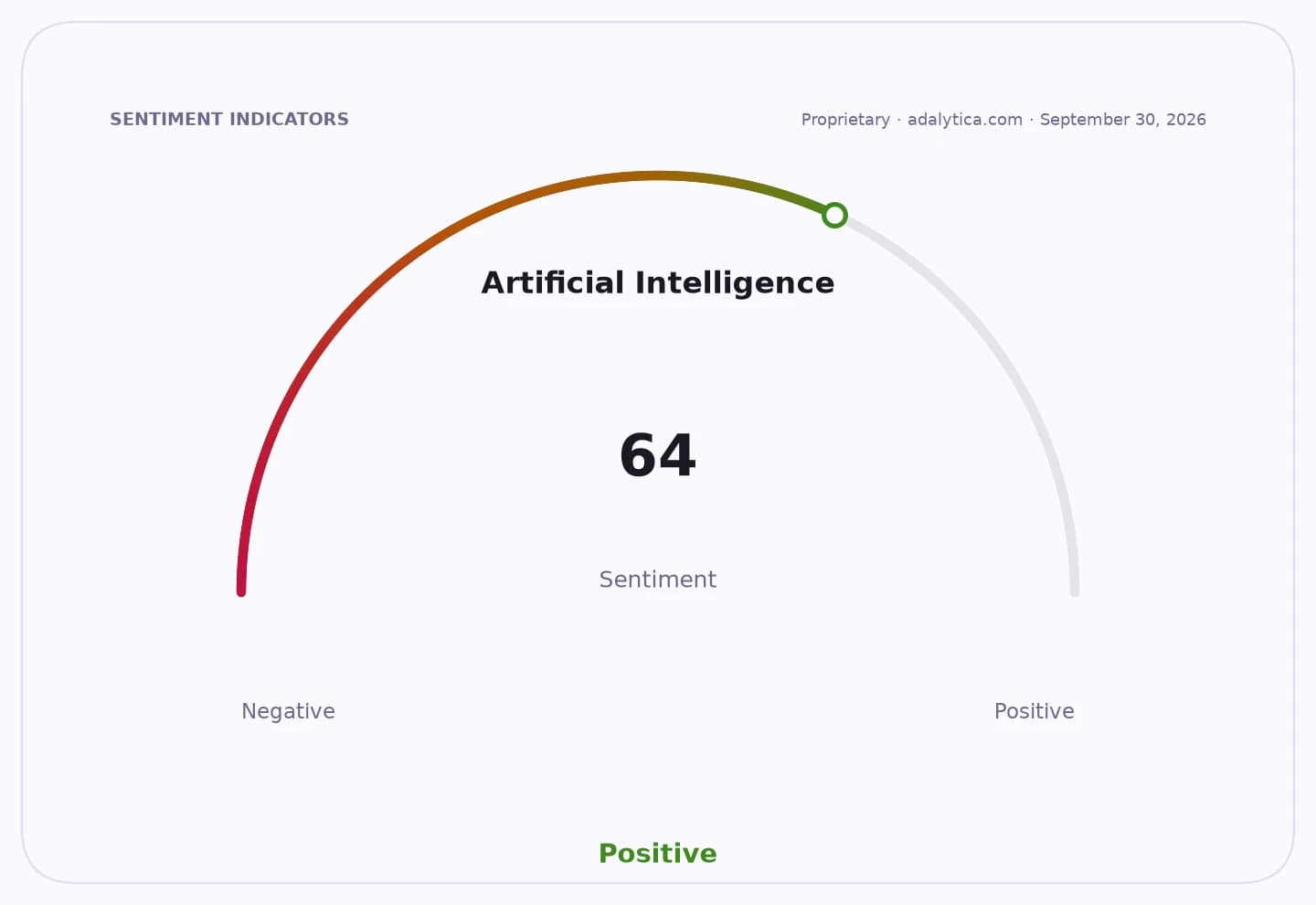
Sentiment IndicatorsⓘProprietary · adalytica.com · September 30, 2026
This is a snapshot — live sentiment, awareness and momentum for 130+ markets update continuously in the dashboard.Open AlphaPulse
At a meeting in Las Palmas de Gran Canaria this week, four organizations — Grupo Martel, Atlantis Technology, Cajasiete and KPMG — described how they are using AI in-house and what it takes to make it work. Their message was clear: the hardest part is not the software, but redesigning processes around how a business actually operates.
That is a familiar theme for long-term investors in technology. The winners are rarely the companies that merely buy the latest tool. They are the businesses that combine software with domain expertise, training and disciplined rollout. In other words, AI is most valuable when it is embedded in a workflow, not bolted onto one.
Grupo Martel offered the bluntest explanation. Its AI lead said the company’s first review was too technical and ignored the people who understood the business best. The lesson was simple: AI did not replace anyone in the organization; it amplified what employees already knew. That is exactly how productivity gains tend to compound in the real world.
Atlantis Technology said it starts with a small, specific process and then scales from there. Cajasiete framed the goal as freeing staff for higher-value work. KPMG, meanwhile, tested AI internally before taking the lessons to clients. Taken together, those approaches show a practical playbook that investors should recognize: pilot, train, scale and repeat.
The economic significance is straightforward. Canary companies are doing what many firms across the world still struggle to do — turning AI from a corporate slogan into measurable output. If that pattern spreads, it can help offset labor shortages, reduce operating friction and make existing teams more productive without requiring massive hiring. For family businesses especially, that can be a competitive edge rather than a cost line.
There is also a broader market takeaway. AI’s biggest investment opportunity is not limited to the obvious chipmakers and hyperscalers. Yes, companies such as Microsoft and Nvidia remain central to the buildout, but the next leg of value creation increasingly depends on enterprise adoption. That means software, consulting, cloud services, cybersecurity and workflow automation firms can all benefit as more businesses move from experimentation to implementation.
The risks are still real. Employees worry about job loss, and not every pilot project will produce a return. AI also requires training, governance and data discipline, and companies that rush the process can create more problems than they solve. But the Canarian examples suggest a healthy, investable truth: when AI is introduced carefully, it tends to reshape work rather than erase it.
For investors thinking in years, not weeks, that is bullish. The companies most likely to win from AI are often the ones that use it to make human expertise more valuable. That makes this a story worth watching — and, for long-term portfolios, a trend to keep on the watchlist.
| Entity | Gains | Losses |
|---|---|---|
| Canarian companies | ▲Higher productivity | ▼Manual inefficiency |
| Employees | ▲More time for higher-value work | ▼Repetitive tasks |
| Enterprise AI vendors | ▲Wider adoption | ▼Slow implementation |
| Skeptical businesses | ▲Learning opportunity | ▼First-mover advantages |