Borrowers in India are running into repayment trouble as they pile on more loans at once, and the data suggests the risk rises steadily rather than suddenly. That matters because the country’s consumer credit boom has leaned heavily on unsecured lending and smaller-ticket loans, a mix that can look manageable one EMI at a time but becomes far more fragile as obligations stack up.
India loan stacking raises retail credit stress
Equifax India’s latest retail credit report shows a clear progression: among its “Lifestyle Seekers” segment, the share of borrowers more than 30 days overdue rises from 3.4% for those with up to two active loans to 5.6% for borrowers with three to six loans, 8% for those with seven to 12 loans and 9.1% for those carrying more than 12. Nearly three-quarters of the group had at least three active loans, underscoring that this is not a fringe behavior but a broad borrowing pattern.
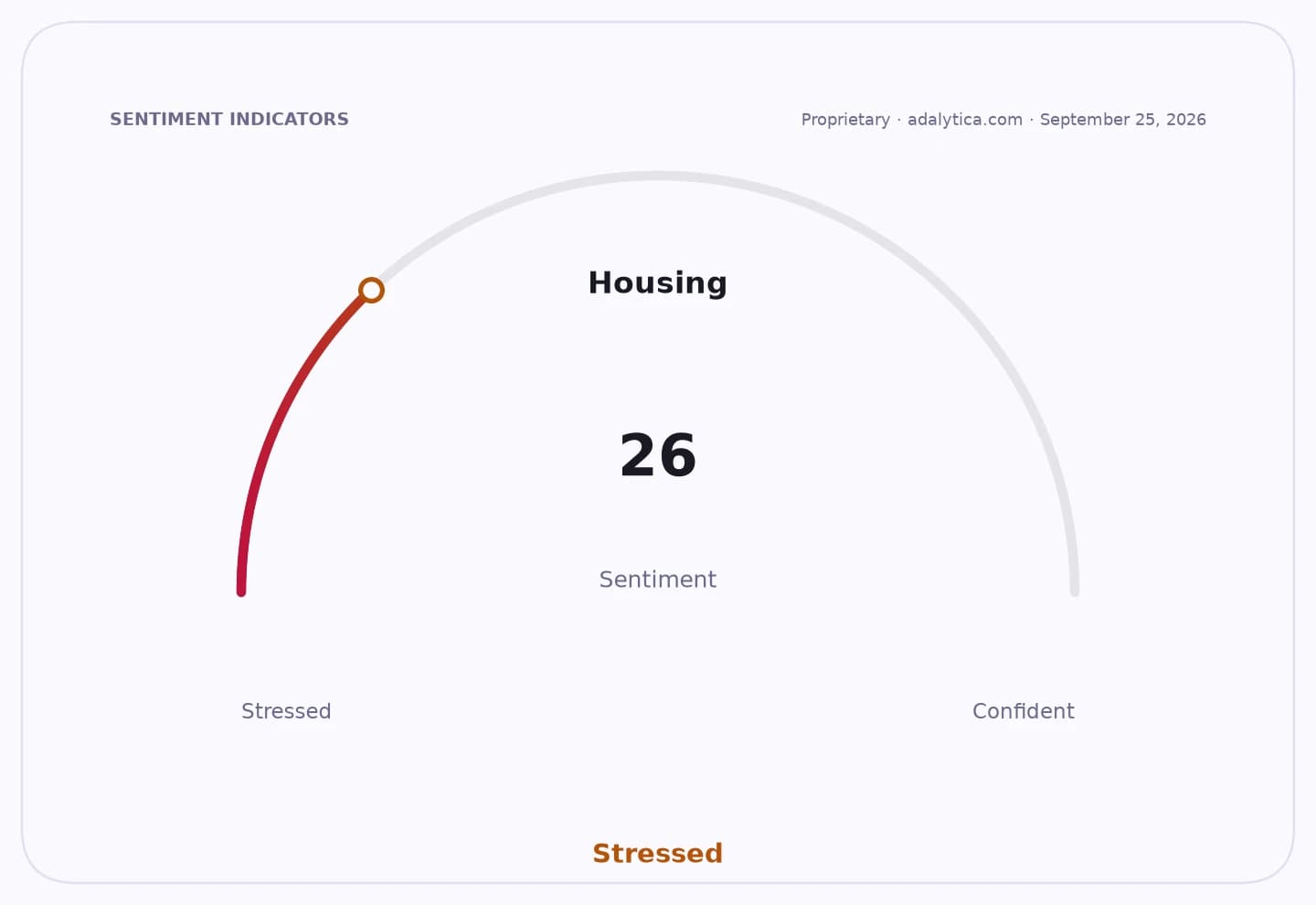
Sentiment IndicatorsⓘProprietary · adalytica.com · September 11, 2026
This is a snapshot — live sentiment, awareness and momentum for 130+ markets update continuously in the dashboard.Open AlphaPulse
The same shape appears across other borrower groups. Rural Bharat Aspirants see delinquency climb from 1.1% with up to two loans to 3.2% with more than 12. Street Vendors, already a higher-risk cohort, rise from 4% to 5.5%. Emerging Micro-Ventures move from 1.9% to 3.7%. The message for lenders is straightforward: repayment stress worsens as multiple obligations compete for the same monthly cash flow.
That is economically important because India’s retail credit expansion is being driven not just by one large loan, such as housing, but by a growing web of unsecured personal loans and small consumer borrowings. Equifax says unsecured borrowing accounts for 58.4% of retail debt, while short-term personal loans below Rs 50,000 show a 6.4% default rate in the early overdue bucket. In other words, the most aggressively distributed products are also the ones most exposed to borrower overextension.
The issue is showing up early in the credit cycle. Equifax says 31% of Gen Z consumers hold two or more active credit accounts at initial origination. That suggests loan stacking is becoming a habit at the start of the borrowing journey, not just after years of credit buildup. For lenders, that raises the odds that underwriting models built around single-loan affordability miss the bigger picture of combined obligations.
For investors, the implications are mixed. Banks and non-bank lenders with heavy exposure to unsecured retail credit could face higher delinquencies, larger provisions and slower growth if stacking behavior keeps spreading. That is especially relevant for institutions chasing growth in credit cards, personal loans and consumer finance, where yield is high but borrower fatigue can arrive quickly. Lenders with stronger underwriting, better collections and more secured portfolios should be better insulated.
The broader narrative is that India’s consumer-credit engine is still expanding, but it is becoming more complex and more levered. The market often focuses on origination growth; the better question is how much household cash flow is already spoken for before the next loan is approved. As the number of EMIs rises, the combined burden becomes the real risk.
That makes the next phase of the credit cycle less about whether borrowers can service one loan and more about how many can be stacked before stress becomes visible. For investors, the opportunity is to favor lenders that can distinguish healthy credit deepening from overextension — because the difference will decide who compounds and who absorbs the losses.
| Entity | Gains | Losses |
|---|---|---|
| Prudent lenders | ▲Better risk pricing | ▼Slower loan growth |
| Aggressive unsecured lenders | ▲Near-term volume | ▼Rising delinquencies |
| Borrowers with multiple EMIs | ▲Access to credit | ▼Higher repayment stress |
| Investors in credit quality | ▲Better underwriting names | ▼Exposure to weak portfolios |