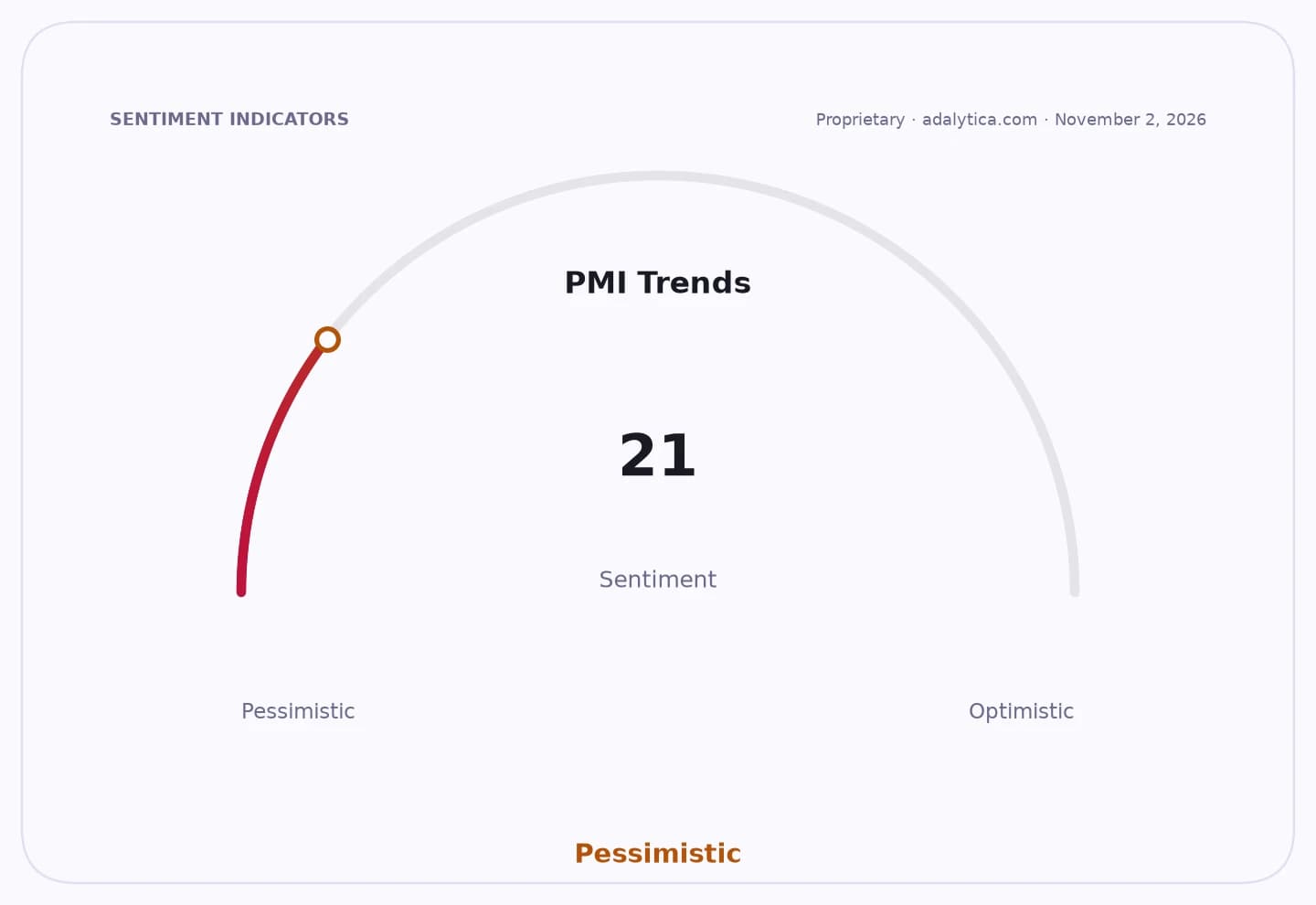
India’s factory engine cooled a touch in October, but the bigger story for investors is that export demand is still running hot. The HSBC India Manufacturing Purchasing Managers’ Index slipped to 54.7 from 55.1 in September, yet it remained comfortably in expansion territory as new export orders grew at the fastest pace in six months.
India Manufacturing PMI Falls to 54.7 in October
PMI Trends
That combination matters because it points to a manufacturing sector that is still adding activity, jobs and pricing power even as global growth remains uneven. For a country trying to deepen its role in supply chains, the latest PMI suggests India is not just benefiting from domestic demand, but also capturing more business from overseas buyers. That is the kind of trend that can support corporate earnings, industrial investment and employment over time.
Sentiment Indicators
S&P Global said manufacturers saw stronger demand from markets including the United States, the United Kingdom, Saudi Arabia, the United Arab Emirates and several Asian economies. The report said the pickup in new business reflected favorable demand trends, new client wins and successful marketing campaigns. Factory output rose sharply, though production growth did ease from September’s pace.
Just as important, price pressures softened. Input cost inflation fell to its lowest since February, while the increase in selling prices was the weakest in just under four years. In plain terms, manufacturers are still growing, but they are not facing the same cost squeeze they were earlier in the year. That gives companies a little more room to protect margins, especially those with export exposure and scale.
The report also showed firms building inventories and hiring, albeit cautiously. Input inventories rose at the fastest pace in eight months as companies prepared for possible shortages and higher production needs, while finished goods stocks climbed at an unprecedented rate. Employment rose for a second straight month, though only slightly, which suggests factories are still adding capacity rather than pulling back.
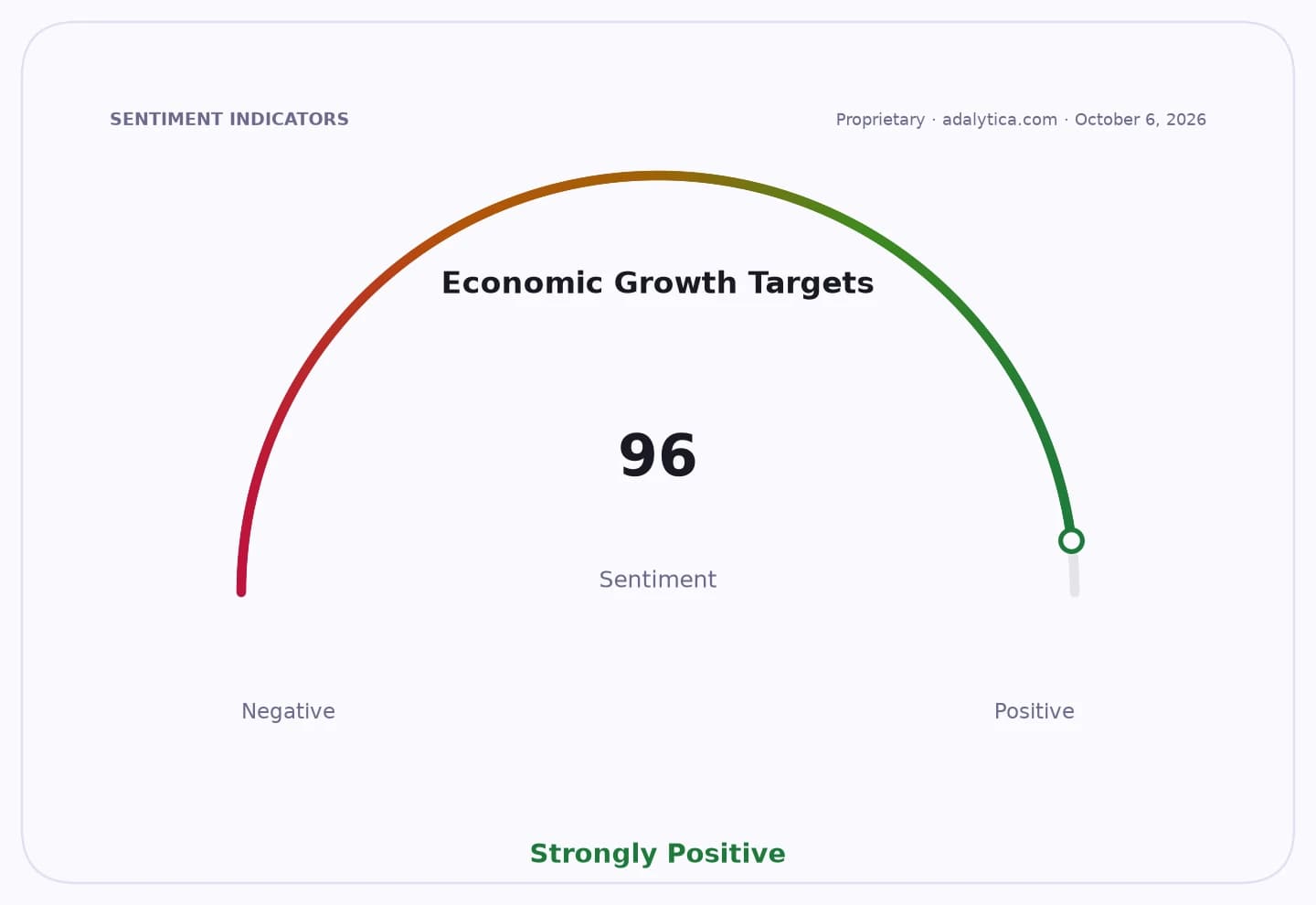
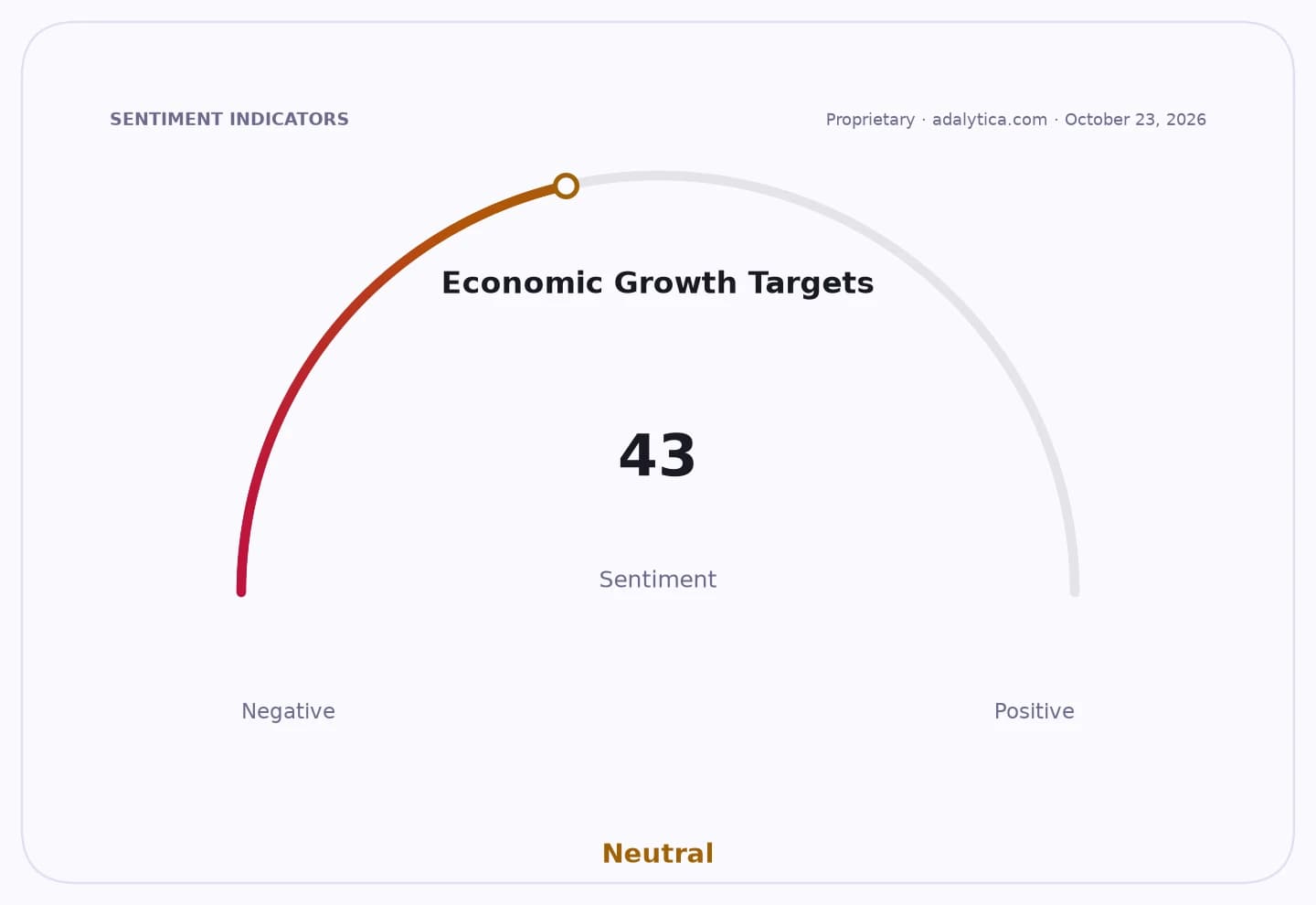
There is a note of caution underneath the strength. Business confidence slipped from September and stayed below its long-run average, so managers are not exactly euphoric about the year ahead. Even so, around 18% of manufacturers expect output to rise over the next 12 months, helped by demand for industrial automation and technology solutions.
For investors, this is the sort of data that supports a longer-term case for India’s industrial and export story. The government is also backing that narrative with fresh support for manufacturing, including schemes for sports goods and container production. If those policy efforts translate into more capacity, better logistics and stronger export competitiveness, India’s manufacturers could keep compounding from here. Worth watching for long-term portfolios.
| Entity | Gains | Losses |
|---|---|---|
| Indian manufacturers | ▲Higher export orders | ▼Marginally slower output growth |
| Export-linked industrial firms | ▲Better demand and pricing | ▼Cautious business confidence |
| Buyers of Indian goods | ▲More supply options | ▼Potentially firmer lead times |
| Global competitors | ▲Less upside from India’s share gains | ▼More competition from India |