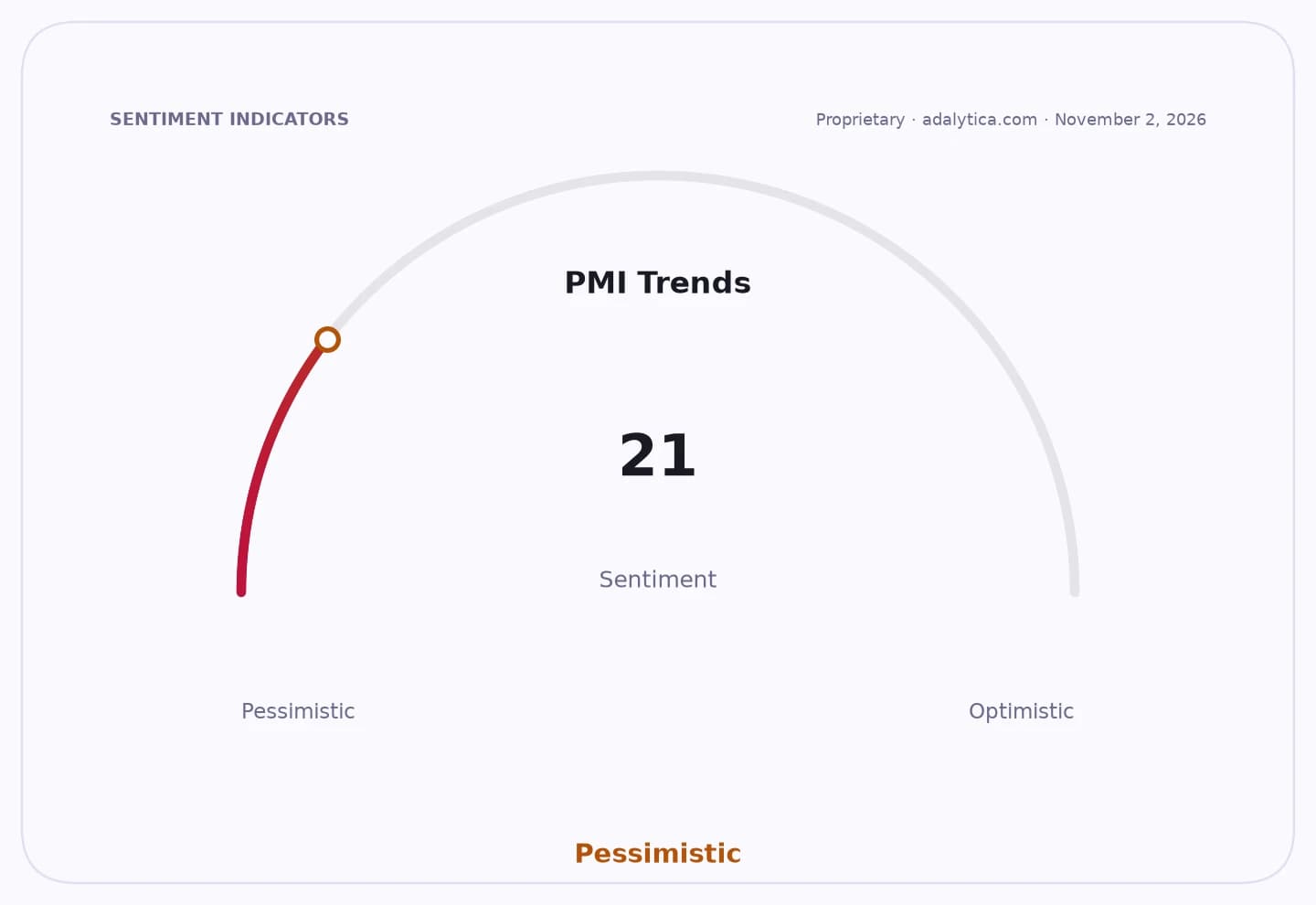
India’s manufacturing expansion lost some momentum in October, but the bright spot was a surge in export orders that shows the country’s industrial engine is still being pulled forward by overseas demand, especially for fuels.
India manufacturing slows as export orders rise
That matters because manufacturing is one of the cleanest reads on whether India’s growth story is broadening beyond domestic consumption. A softer PMI suggests factory activity is no longer accelerating as quickly, yet the jump in export orders points to a powerful offset: Indian producers are finding buyers abroad even as local growth cools. For investors, that combination is important because it helps explain why India can remain a long-term growth market even when individual monthly data look mixed.
Sentiment Indicators
The latest PMI data show factory growth easing in October from the prior month, while new export orders strengthened. That divergence is exactly what you would expect in an economy where refining, engineering and other export-oriented industries are increasingly tied to global pricing and trade flows. In this case, diesel and petrol shipments have been a major driver, with India’s refineries running hard to take advantage of elevated global oil prices and a weaker rupee.
That export strength is not just a statistical quirk. Fuel earnings have jumped sharply this fiscal year, helping India cement its position as the world’s second-largest seaborne diesel exporter. In practical terms, that means the country’s industrial complex is making better use of existing assets, which is good for revenues, margins and cash generation in the energy and logistics chain. It also signals that India is becoming more important in global commodity markets at a time when supply chains are shifting and buyers are looking for reliable alternatives.
INDPRO vs RSXFS — macro contextadalytica.com
Explore this data interactively — full history, time series and cross-market comparisons.
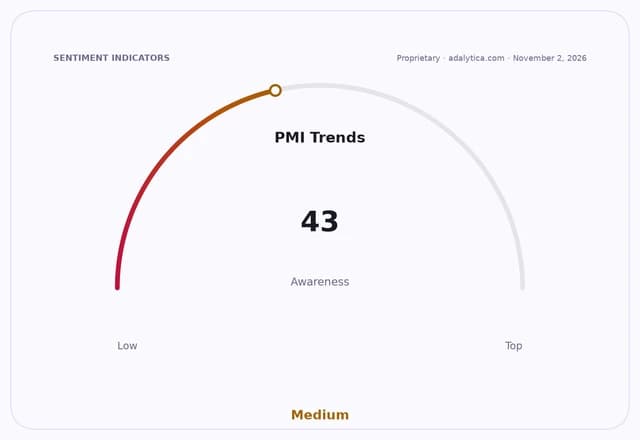
For equity investors, the message is encouraging but nuanced. A softer manufacturing headline may temper enthusiasm for cyclical names tied closely to domestic demand, but rising export orders are supportive for refiners, ports, shipping and select industrial exporters. The broader India theme remains intact: a large internal market, a rising export base and policy support through trade agreements and industrial expansion.
The next question is whether this export-led resilience can spread beyond fuels. If free trade agreements and stronger demand from the U.S. and China translate into more orders for food and engineering goods, India’s factory sector could reaccelerate without needing a big lift from domestic demand. For long-term investors, that is the story worth watching: a manufacturing sector that may be cooling at the margin, but is increasingly plugged into global demand.
| Entity | Gains | Losses |
|---|---|---|
| Indian refiners | ▲Higher export volumes | ▼Margin pressure from volatility |
| Export-heavy manufacturers | ▲Stronger overseas orders | ▼Slower domestic momentum |
| Domestic cyclical stocks | ▲Select support | ▼Less broad-based factory growth |
| Global fuel buyers | ▲More supply from India | ▼Higher dependence on Indian exports |