India needs a much faster pace of economic reform and structural change if it wants to become a developed nation by 2047, former NITI Aayog vice chairman Ashok Kumar Lahiri said, putting a hard number on the scale of the challenge: per-capita income must rise from about $2,813 now to roughly $18,000.
India Reform Agenda and 2047 Income Goal

That implies sustained annual per-capita income growth of about 9.25% over the next 21 years, a rate that would require stronger productivity, deeper job creation and better capital formation than India has managed for most of its post-independence history. Lahiri made the case at an SRCC centenary conference in New Delhi, arguing that education, health care and infrastructure will determine whether India can move into high-income status by 2047.
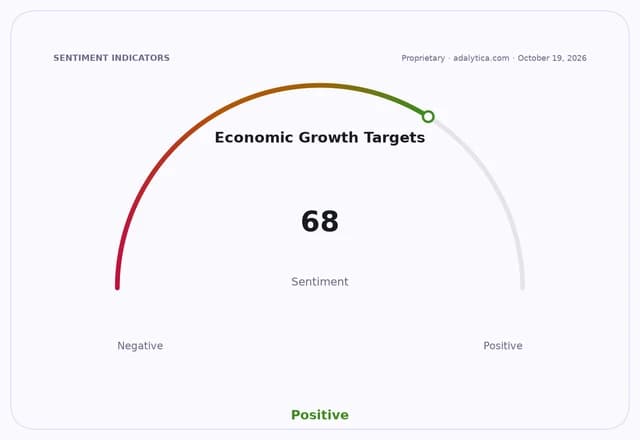
The benchmark is important because the World Bank-style threshold for a high-income economy in 2047 is estimated at $14,375 in per-capita gross national income, meaning India must not only grow quickly but also keep that growth broad-based. Lahiri cited China, Japan, Taiwan and South Korea as examples of Asian economies that climbed into richer-income brackets through rapid structural transformation rather than incremental policy tweaks.
For investors, the message is that India’s long-term equity story still rests on reform delivery, not just demographic optimism. The NITI Aayog veteran’s comments reinforce the market’s focus on whether New Delhi can accelerate changes in labor, education, health and infrastructure enough to sustain industrial expansion and consumption growth over decades.
Indian equity funds tied to the growth narrative were mixed in recent trading, with the INDA ETF at $47.66 on Oct. 16, below its 50-day average of $48.41 and 200-day average of $49.50, while EPI traded at $41.31, also below both moving averages. That suggests investors are still waiting for a clearer policy catalyst even as the long-term reform case remains intact.
The broader backdrop is still supportive but not decisive. India’s economy has expanded sharply over time, yet the reform agenda Lahiri described is what would turn cyclical growth into a sustained leap in living standards, especially if policymakers want to close the gap with richer Asian peers.
| Entity | Gains | Losses |
|---|---|---|
| India’s reform agenda | ▲Higher productivity, investment | ▼Policy delay, status quo |
| Consumers and workers | ▲Better incomes, services | ▼Slow wage gains |
| Indian equities | ▲Long-term growth premium | ▼Near-term reform disappointment |
| Reform laggards | ▲None | ▼Lower competitiveness |