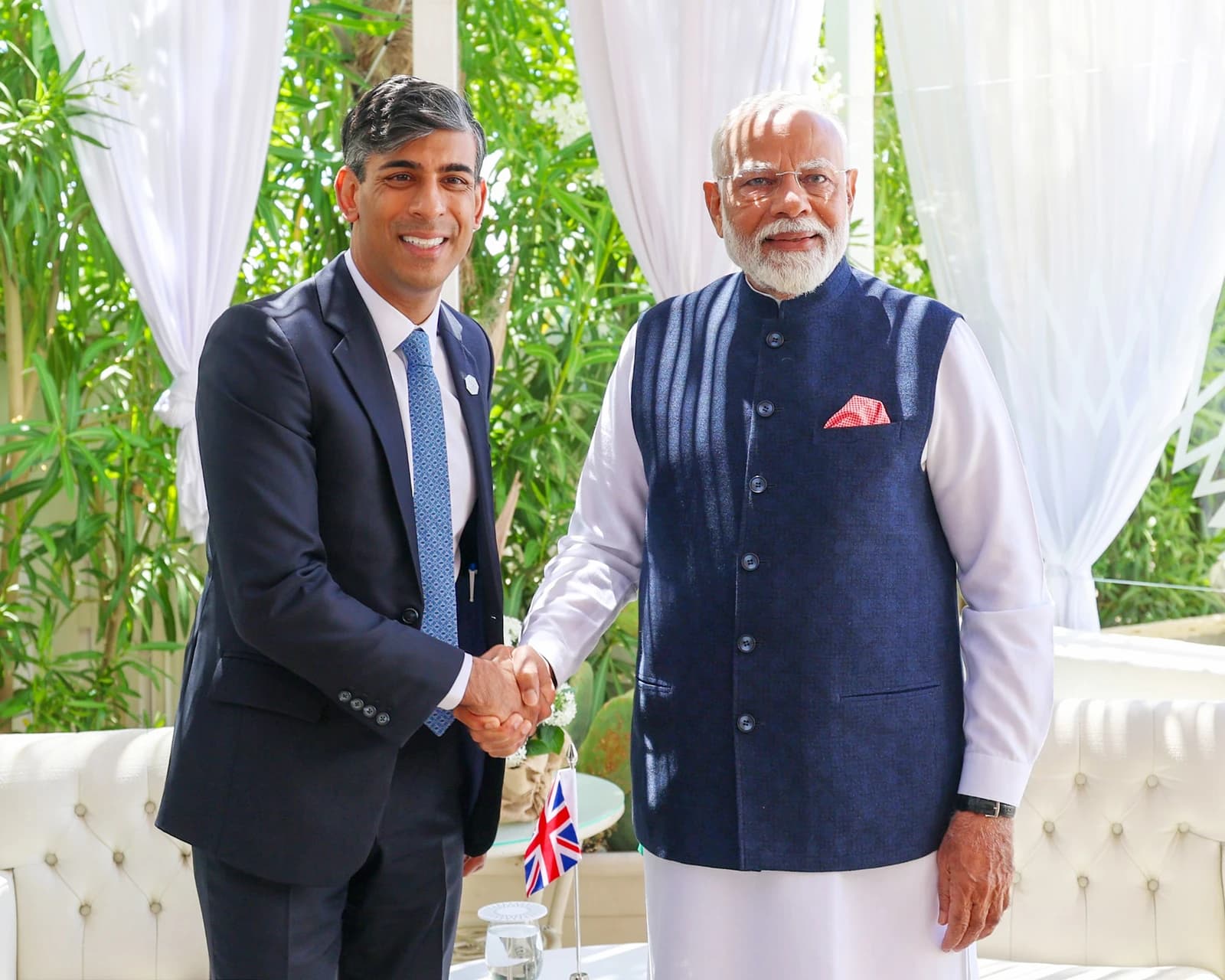
Indian Home Minister Amit Shah’s two-day visit to meet Prime Minister Narendra Modi comes as New Delhi and Washington move closer to a trade agreement, a development that could ease tariff pressure on Indian exporters and give investors a clearer line of sight on growth.
India-US Trade Talks Lift INDA, Weigh on FXI
That matters because trade is not just a diplomatic talking point for India. It is a direct lever on margins, foreign investment and earnings expectations across sectors that have been hit by tariffs and global uncertainty. If the remaining issues are mainly on the US side, as External Affairs Minister S. Jaishankar said, the negotiating balance appears to be shifting toward a deal rather than another escalation.
The market has already started to price in some of that possibility. The India-focused iShares MSCI India ETF has climbed to $53.03, up sharply from $45.56 on Oct. 8, while the ETF tracking major Chinese stocks in Hong Kong, the FXI, has slipped to $31.52 from a recent high above $40 earlier this year. That divergence reflects a broader investor view: capital is rotating toward economies seen as better insulated from trade shocks and more attractive in the long run.
For India, the economic stakes are bigger than one agreement. A more predictable trade relationship with the US would support exporters, help manufacturing planning and reduce the uncertainty that has weighed on corporate margins. It would also strengthen India’s pitch as a reliable alternative hub in global supply chains, especially as companies keep diversifying away from overdependence on China.
The setup is also encouraging from a longer-term investing perspective. INDA is trading above both its 50-day and 200-day moving averages, with strong momentum readings, while EPI has also pushed above key trend levels. Those are not guarantees, but they do suggest investors are willing to pay for India exposure again after a volatile stretch. When policy clarity improves, that can matter more than any single day’s move.
There are still risks. Trade talks can stall, and Washington may continue to push for concessions that India is reluctant to grant. But if the two sides can turn today’s diplomatic progress into a formal deal, it would reinforce India’s case as one of the most durable secular growth stories in emerging markets. For investors thinking in years, not weeks, that is worth watching closely.
| Entity | Gains | Losses |
|---|---|---|
| Indian exporters | ▲Easier US market access | ▼Tariff uncertainty |
| US consumers/importers | ▲Lower trade friction | ▼Higher costs if talks fail |
| India-focused ETFs | ▲Better growth sentiment | ▼Volatility if deal stalls |
| China-focused equity funds | ▲— | ▼Relative capital rotation |