Indian banks are sitting on a potentially costly foreign-exchange mismatch: they have largely left the interest payments on more than $127 billion of overseas deposits unhedged, creating a source of dollar demand that could bite the rupee if the currency weakens again.
Indian banks leave deposit interest unhedged

That matters because the Reserve Bank of India’s special swap facility protects lenders only on the principal, not the interest bill. If banks have to buy dollars later to pay depositors, those flows could amplify a rupee selloff at exactly the wrong time for India’s external accounts and imported inflation.
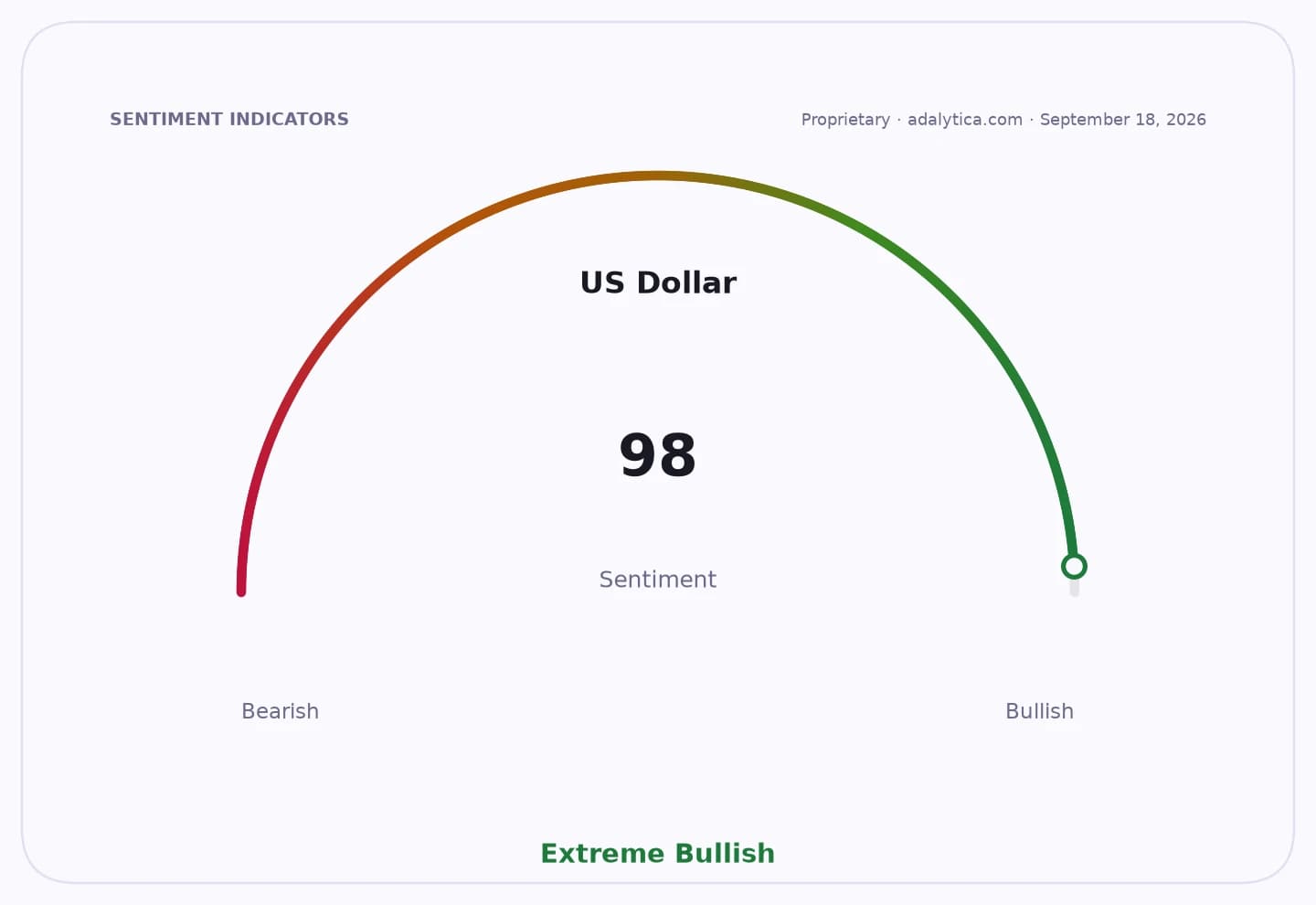
Sentiment IndicatorsⓘProprietary · adalytica.com · September 9, 2026
This is a snapshot — live sentiment, awareness and momentum for 130+ markets update continuously in the dashboard.Open AlphaPulse
The deposits were introduced as a one-off measure to bolster the balance of payments when oil prices were surging, and they succeeded in drawing in foreign currency funding. But the structure leaves banks with a choice: pay roughly 3% a year to hedge interest payments on 3- to 5-year tenors, or take the chance that future dollar purchases can be made cheaply in the spot market.
Most foreign banks are hedging the exposure, bankers said, while most state-run lenders and several private Indian banks are not. For now, some officials are comfortable because the RBI’s intervention has helped the rupee recover to a two-month high. That strength, though, may be fragile. Brent crude is again edging toward $100 a barrel, and markets are pricing a 60% chance of a Federal Reserve rate hike next week, both of which could lift the dollar and pressure emerging-market currencies.
For investors, the key point is that the issue is not just about banks’ treasury desks. It is about a latent demand for dollars that can surface in size if the rupee turns lower. The currency is already trading around 94.5 to the dollar, and bankers said a move toward 96-97 could change the economics of hedging quickly. In other words, the more the rupee falls, the more likely banks are to rush in and buy dollars to cover obligations, creating a self-reinforcing squeeze.
Over the long term, that makes the RBI’s support operation a mixed blessing. It has bought time and stabilized the currency, but it has also allowed banks to postpone hedging a risk that has not gone away. If global oil prices stay elevated and the Fed stays hawkish, the rupee could face another test, and Indian lenders may discover that saving on hedging costs today only shifts the pain into a weaker-currency tomorrow.
For investors in Indian banks, the lesson is simple: treasury risk can become earnings risk when currencies move sharply. It is worth watching whether lenders start locking in protection before the next bout of rupee weakness makes that decision more expensive.
| Entity | Gains | Losses |
|---|---|---|
| RBI | ▲More FX firepower | ▼Bigger future dollar demand |
| Indian banks | ▲Lower near-term hedge cost | ▼Rupee mismatch risk |
| Foreign banks | ▲Hedged exposure | ▼Higher hedge costs |
| Rupee bears | ▲Potential dollar demand | ▼RBI support and rally risk |