Banks in Indonesia are becoming more selective about lending to shophouses and office-home units as weaker commercial-property demand starts to bite and credit quality takes priority over growth.
Indonesia banks tighten ruko and rukan lending
That matters because ruko and rukan loans are a small but visible gauge of appetite for small-business real estate, a segment closely tied to local spending power, occupancy levels and the health of neighborhood commerce. When banks pull back here, it is often a sign that lenders see more risk ahead for both borrowers and collateral values.
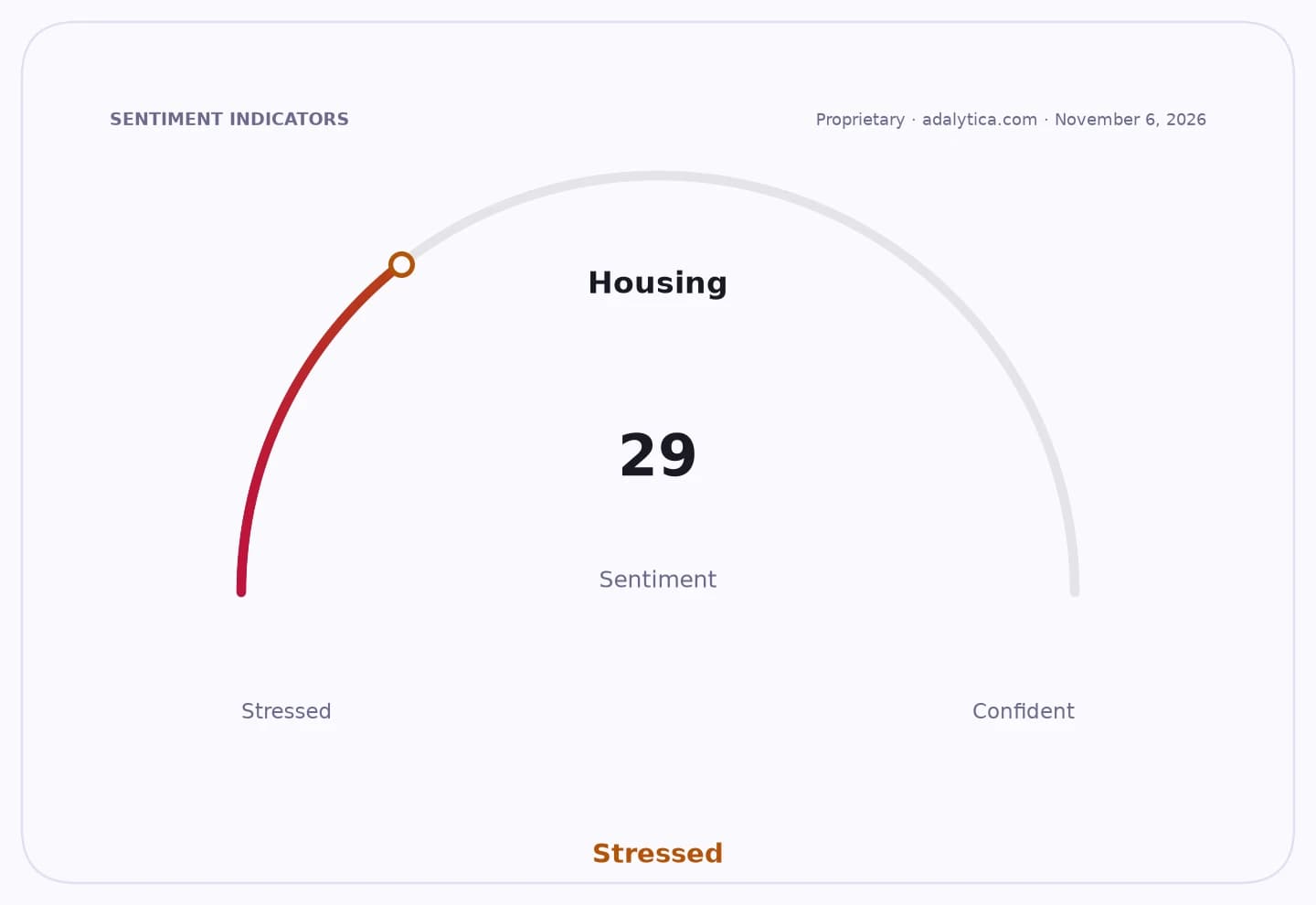
Sentiment Indicators
The clearest evidence is in the loan data: outstanding credit for ruko and rukan stood at Rp 29.88 trillion as of August 2026, down 1.67% from Rp 30.39 trillion a year earlier, according to Indonesia’s financial regulator OJK. The drop comes as occupancy in business districts weakens and consumers remain cautious, limiting demand for financing.
For banks, the response is not a blanket retreat but a sharper sorting of risk. Danamon says it still sees financing opportunities in the Jakarta buffer zone — including BSD City, Serpong, Karawaci and Cikarang — but is prioritizing areas with logistics and industrial activity where real demand is more durable. BCA, meanwhile, is leaning on data analytics and branch-level customer profiling to protect asset quality, with non-performing loans at 1.8% overall. BTN is tightening monitoring through early-warning systems and regular portfolio reviews, watching occupancy rates and borrowers’ business viability more closely.
The macro backdrop reinforces the caution. Higher interest rates and softer purchasing power are making borrowers more selective, while lenders are increasingly reluctant to chase volume in a segment where occupancies can deteriorate quickly. That is the kind of credit cycle shift investors need to watch: when banks become more defensive, financing costs can rise and transaction activity can slow further, feeding back into property prices and developer sales.
For investors, the message is that Indonesia’s property recovery is likely to be uneven. Developers and lenders exposed to speculative or slow-moving commercial property may struggle, while banks with tighter underwriting and stronger data tools should hold up better. The better opportunities, in our view, remain with institutions and projects tied to real end-user demand, affordable ticket sizes and industrial-logistics hubs rather than broad commercial-property exposure.
The market is underestimating how selective credit can reshape the next phase of Indonesia’s property cycle. If demand does not improve, ruko and rukan financing will stay under pressure, and banks will keep favoring quality over growth.
| Entity | Gains | Losses |
|---|---|---|
| BCA | ▲Better asset quality | ▼Slower loan expansion |
| Danamon | ▲Exposure to logistics-linked demand | ▼Weaker broad property demand |
| BTN | ▲Lower credit losses | ▼Reduced commercial-property growth |
| Ruko/rukan borrowers | ▲Financing only for stronger projects | ▼Easier credit access |