Indonesia’s consumer mood improved in August, with Bank Indonesia’s confidence index rising to 118.5, a fresh signal that household spending may hold up into the second half of the year and give banks and retailers a stronger footing.
Indonesia consumer confidence rises to 118.5 in August
The increase matters because consumer demand is still a key engine of Southeast Asia’s largest economy. A reading above 100 indicates optimism, and August’s 118.5 was up from 116.8 in July, suggesting households were becoming more confident about both current conditions and the outlook six months ahead. That is important for growth, but also for credit quality and liquidity in the financial system: when consumers feel better about jobs, incomes and big-ticket purchases, they are more likely to borrow and spend.
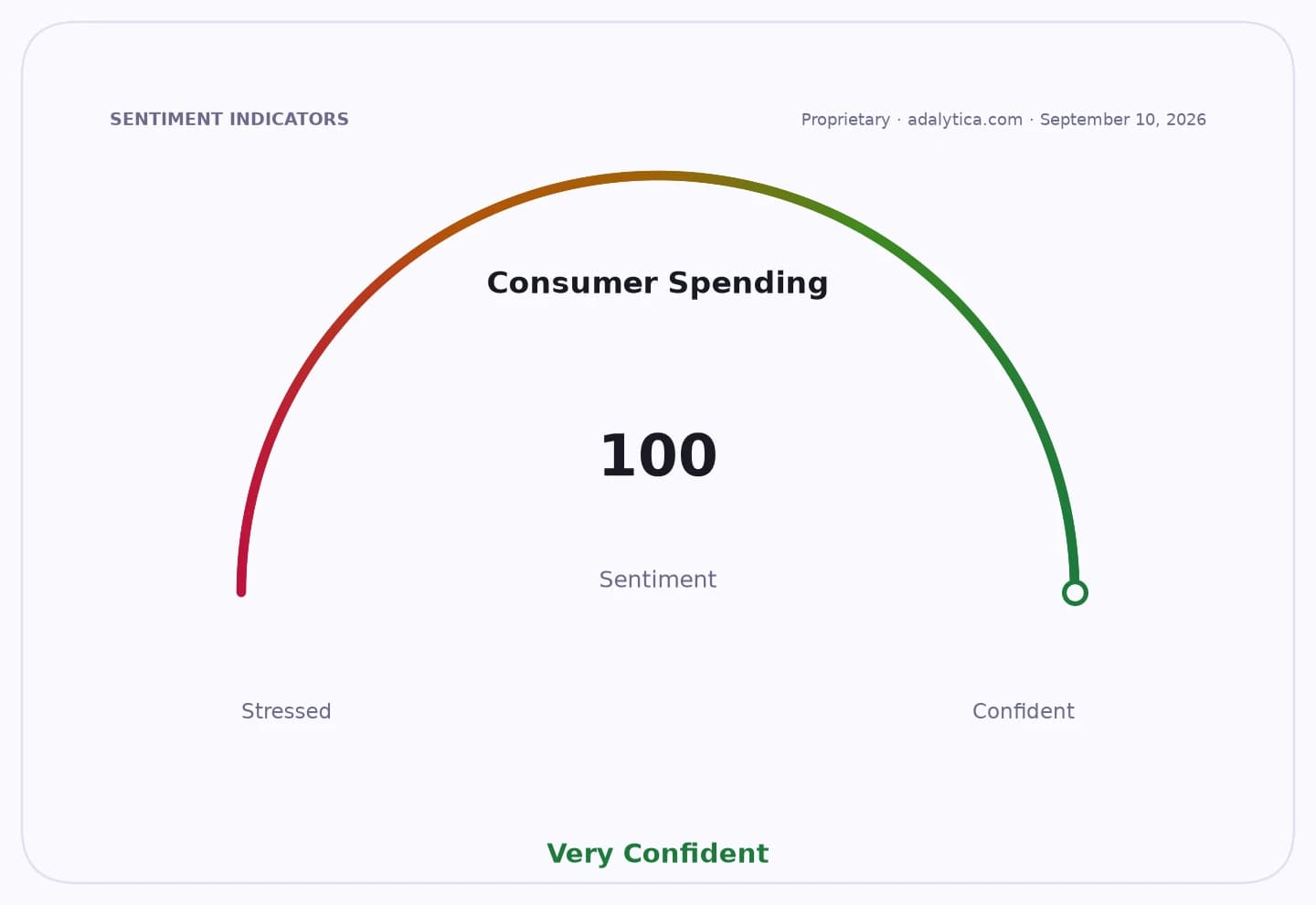
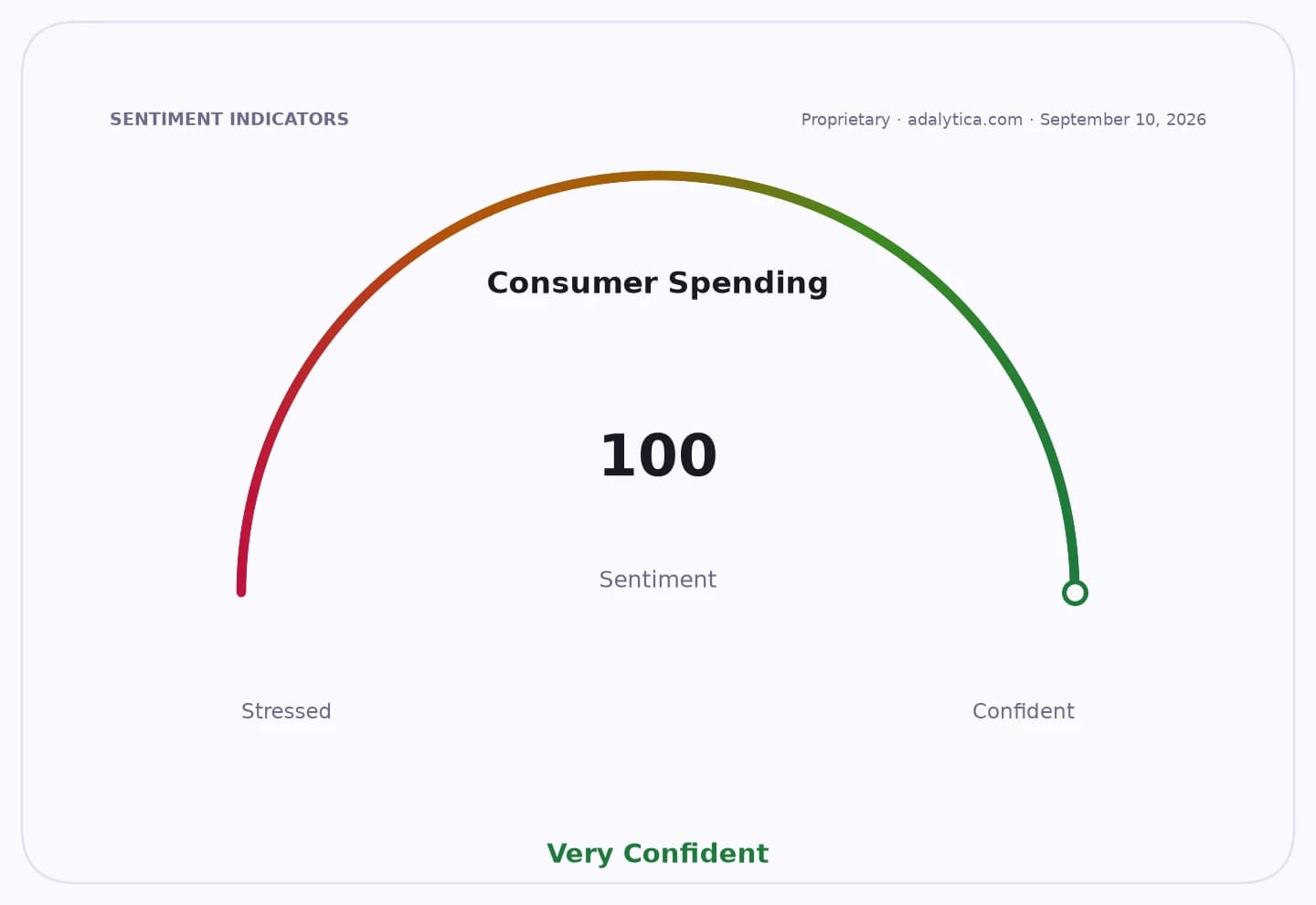
Sentiment IndicatorsⓘProprietary · adalytica.com · September 10, 2026
This is a snapshot — live sentiment, awareness and momentum for 130+ markets update continuously in the dashboard.Open AlphaPulse
Bank Indonesia said the improvement was supported by both the Current Economic Conditions Index and the Consumer Expectations Index, which rose to 109.4 and 127.6 from 107.9 and 125.7, respectively. Within the current-conditions measure, perceptions of income, employment availability and durable goods purchases all improved. Expectations were also broadly stronger, with gauges for income, jobs and business activity all climbing. That breadth matters because it suggests the optimism is not just about one sector or one month’s data.
For investors, the implications are clearest in domestically focused assets. A firmer consumer backdrop tends to support lenders, retailers and consumer discretionary names, while easing pressure on the rupiah by improving the domestic growth narrative. It also strengthens the case for banks, which stand to benefit if better sentiment translates into higher loan growth and healthier deposit formation. Adalytica’s consumer spending sentiment gauge was already in “Extreme Greed,” while its retail sales sentiment reading also pointed to strong momentum, underscoring the market’s view that spending conditions are improving.
The bull case is that the August reading marks the start of a more durable rebound in household demand, helped by stable policy, better labor-market perceptions and rising confidence in future incomes. The bear case is that sentiment can outrun actual spending, particularly if wage growth, employment gains or borrowing conditions fail to keep pace. For now, the message from the data is straightforward: Indonesian households are less cautious, and that gives the economy a better chance of sustaining momentum into the coming months.
| Entity | Gains | Losses |
|---|---|---|
| Indonesian consumers | ▲Stronger confidence | ▼Less incentive to defer spending |
| Banks | ▲Loan growth, deposit inflows | ▼More pressure if demand disappoints |
| Retailers | ▲Higher discretionary sales | ▼Weakness if optimism fades |
| Household savers | ▲Better economic outlook | ▼Higher propensity to spend rather than save |