Indonesia’s consumer confidence improved in August as Finance Minister Purbaya Yudhi Sadewa said fresh government stimulus was beginning to filter through the economy, a sign officials hope will support household spending and a broader recovery in domestic demand.
Indonesia consumer confidence rises in August
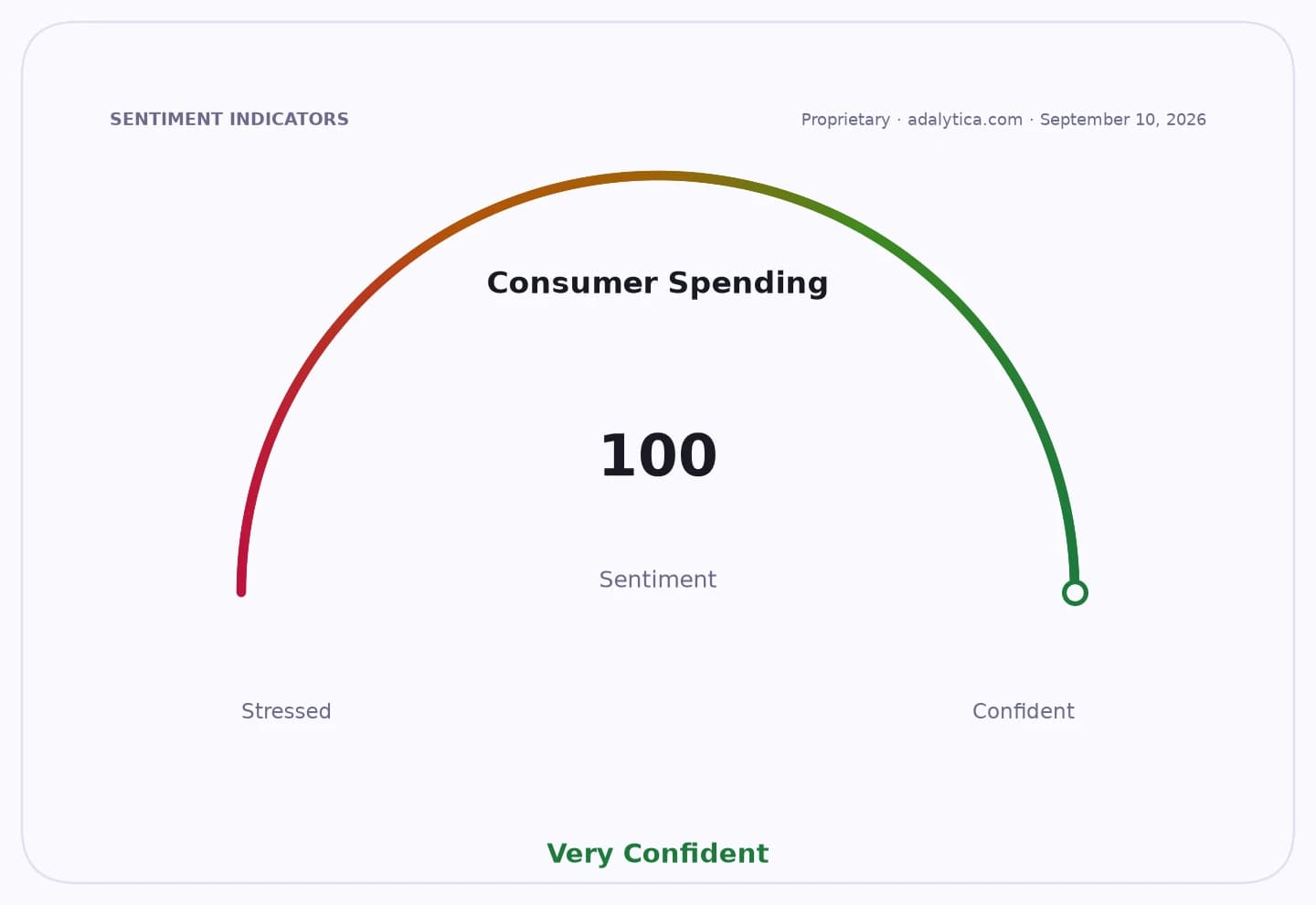
The Bank Indonesia consumer confidence index rose to 118.5 in August from 116.8 in July, marking the first increase after months of declines and suggesting sentiment may be turning. Purbaya said the move reflected a reversal in public mood after a prolonged slide and argued the uptick was likely linked to policy support rolled out from late July into early August.
Sentiment IndicatorsⓘProprietary · adalytica.com · September 10, 2026
This is a snapshot — live sentiment, awareness and momentum for 130+ markets update continuously in the dashboard.Open AlphaPulse
That matters because Indonesia’s growth outlook still depends heavily on consumption, which makes up the largest share of the economy. A firmer confidence reading can translate into stronger retail sales, better corporate revenue for banks, consumer lenders, retailers and telecoms, and less pressure on policymakers to lean even harder on fiscal support. If households believe jobs, incomes and prices are stabilizing, they are more likely to spend rather than defer purchases.
Purbaya also framed the data as evidence that the transmission from policy to the real economy is starting to work. He pointed to the return of roughly 400 trillion rupiah into the financial system, tighter liquidity conditions at state-related funds and additional transfers to regional governments worth 10 trillion rupiah, alongside 20.5 trillion rupiah in extra support from President Prabowo Subianto. The government’s bet is that more cash in circulation will push funding costs lower and encourage lending and spending.
For investors, the key question is whether August was a one-month bounce or the start of a more durable improvement in domestic demand. A sustained recovery would be positive for Indonesian banks, consumer-facing companies and local assets more broadly, especially if it eases concerns that slower household spending could weigh on earnings. But if confidence fails to follow through in September, markets may conclude that policy support has not yet been large enough, or broad enough, to offset weak underlying demand.
Purbaya said September should look better because the full effect of the measures may not have been captured in the August survey. That sets up the next consumer confidence reading as an important test of whether stimulus is moving beyond headlines and into actual household behavior.
| Entity | Gains | Losses |
|---|---|---|
| Indonesian households | ▲Better sentiment, easier credit | ▼Still exposed to inflation and weak incomes |
| Local banks and retailers | ▲Stronger loan and sales growth | ▼Slower demand if confidence fades |
| Indonesian government | ▲Validation of stimulus policy | ▼Pressure if recovery stalls |
| Savers and bondholders | ▲Potentially lower rates over time | ▼Lower yields and liquidity risk |