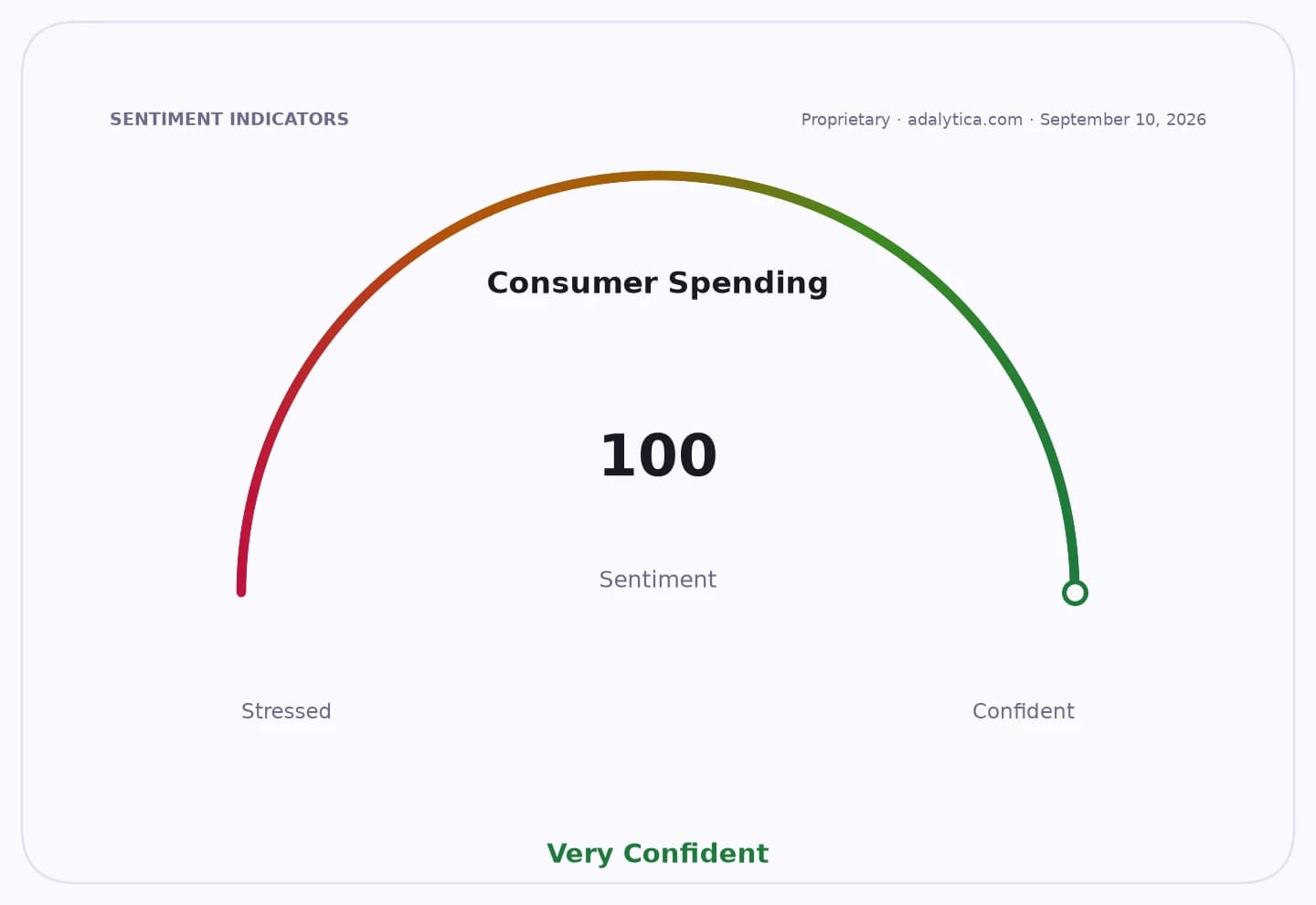
Thailand’s consumer confidence slipped back below 50 in August, underscoring how high living costs and heavy debt are still choking household spending even as government stimulus and exports provide some support.
Thailand Consumer Confidence Falls Below 50 in August

The Commerce Ministry said its consumer confidence index fell to 49.5 from 51.1 in July, with the current-conditions measure dropping to 39.8 from 41.7. The three-month outlook remained in expansionary territory at 56.0, but also eased from 57.3, suggesting households are hopeful but still cautious about spending.
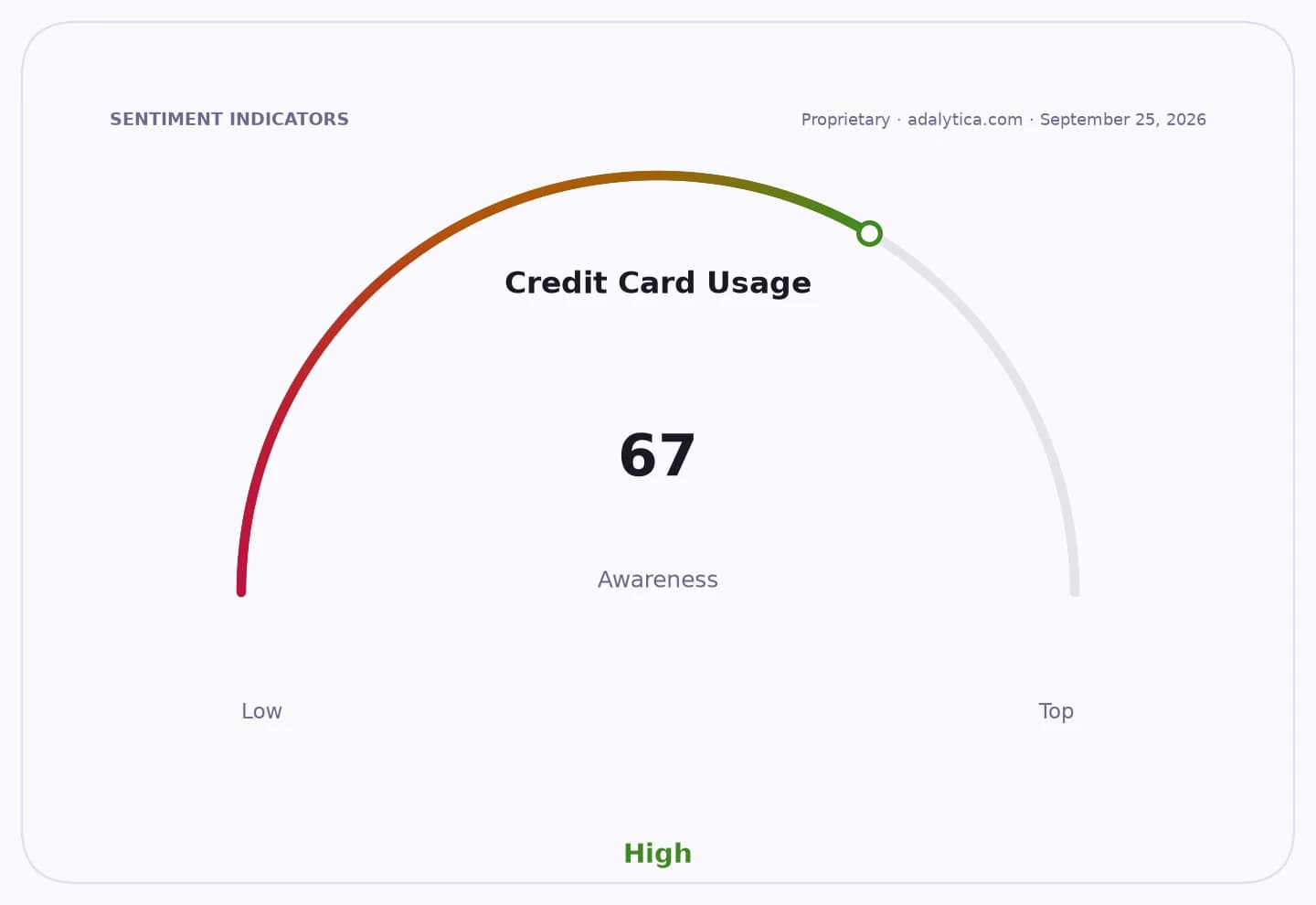
Sentiment IndicatorsⓘProprietary · adalytica.com · September 7, 2026
This is a snapshot — live sentiment, awareness and momentum for 130+ markets update continuously in the dashboard.Open AlphaPulse
The reading matters because private consumption remains a key engine for Thailand’s economy, and confidence below 50 typically points to restraint at the cash register. The ministry said concerns over the cost of living, household and business debt, limited income recovery and political uncertainty are keeping consumers defensive, even after recent policy support.
Officials pointed to the government’s “Thai Plus” program as a key stabilizer, saying it is helping ease living expenses, support small businesses and lift purchases. Export growth, particularly in electronics and other technology-linked goods, also helped cushion sentiment.
But the negatives were stronger. The ministry cited still-high household debt, sluggish tourism after travelers returned home following holidays, and risks from Middle East tensions and trade measures by major partners that could hit production, exports and domestic demand. That mix leaves policymakers facing a familiar problem: stimulus can slow the deterioration, but it is not yet enough to restore broad-based spending confidence.
Regional data showed the northeast was the only area above the 50-point threshold at 52.0, while Bangkok and surrounding provinces fell to 49.2 from 52.7 and the central region dropped to 47.3. By occupation, farmers, private workers and freelancers were below 50, while entrepreneurs, civil servants, students and retirees were above the line.
For investors, the report reinforces the case for selective exposure to Thai consumer, retail and tourism names, while keeping a close eye on companies tied to discretionary spending. It also supports the view that Thailand may need more policy backing if it wants consumption to reaccelerate into year-end, when holiday spending and seasonal tourism usually offer the biggest lift.
| Entity | Gains | Losses |
|---|---|---|
| Thai government stimulus | ▲Gets credit for cushioning demand | ▼Must do more to lift confidence |
| Small retailers and vendors | ▲Benefit from Thai Plus support | ▼Still face cautious shoppers |
| Thai consumers | ▲See some relief from living costs | ▼Stay burdened by debt and weak income growth |
| Consumer and tourism stocks | ▲Could gain from year-end spending | ▼Face weaker near-term demand |