Indonesia’s factory sector is expanding again, but the bigger story for investors is that stronger output is arriving with a warning attached: rising production costs could quickly eat into margins and cool the recovery.
Indonesia Manufacturing PMI Rises to 54.0
The country’s manufacturing purchasing managers’ index climbed to 54.0, a solid reading that points to broad-based expansion in industrial activity. For an economy like Indonesia’s, that matters because manufacturing is one of the clearest high-frequency gauges of domestic demand, export momentum and business confidence. A reading above 50 signals growth, and a move to 54 suggests factories are not just stabilizing but actively producing more.
Sentiment Indicators
That strength is encouraging for investors who want evidence that Indonesia’s growth story is still intact. It supports the case for suppliers, logistics firms and companies exposed to domestic consumption, while also hinting that industrial earnings could improve if demand remains firm. In long-term portfolios, that kind of resilience matters more than a single month’s print.
But the key catch is inflation at the factory gate. Entrepreneurs are already flagging production costs, which means higher input prices, wages or energy bills may be working their way through the system. If businesses cannot pass those costs along, profit margins will come under pressure even as volumes rise. That is the classic late-cycle tension investors watch closely: better activity, but less room for earnings leverage.
The technical picture in Indonesia’s market has been weak, too, with the tracked index trading below both its 50-day and 200-day moving averages after a rough stretch this year. From a long-term investing standpoint, that gap between improving real-economy data and softer market pricing can be an opportunity, but only if earnings follow through. A single PMI bounce does not make a durable bull market unless it turns into sustained profit growth and cash generation.
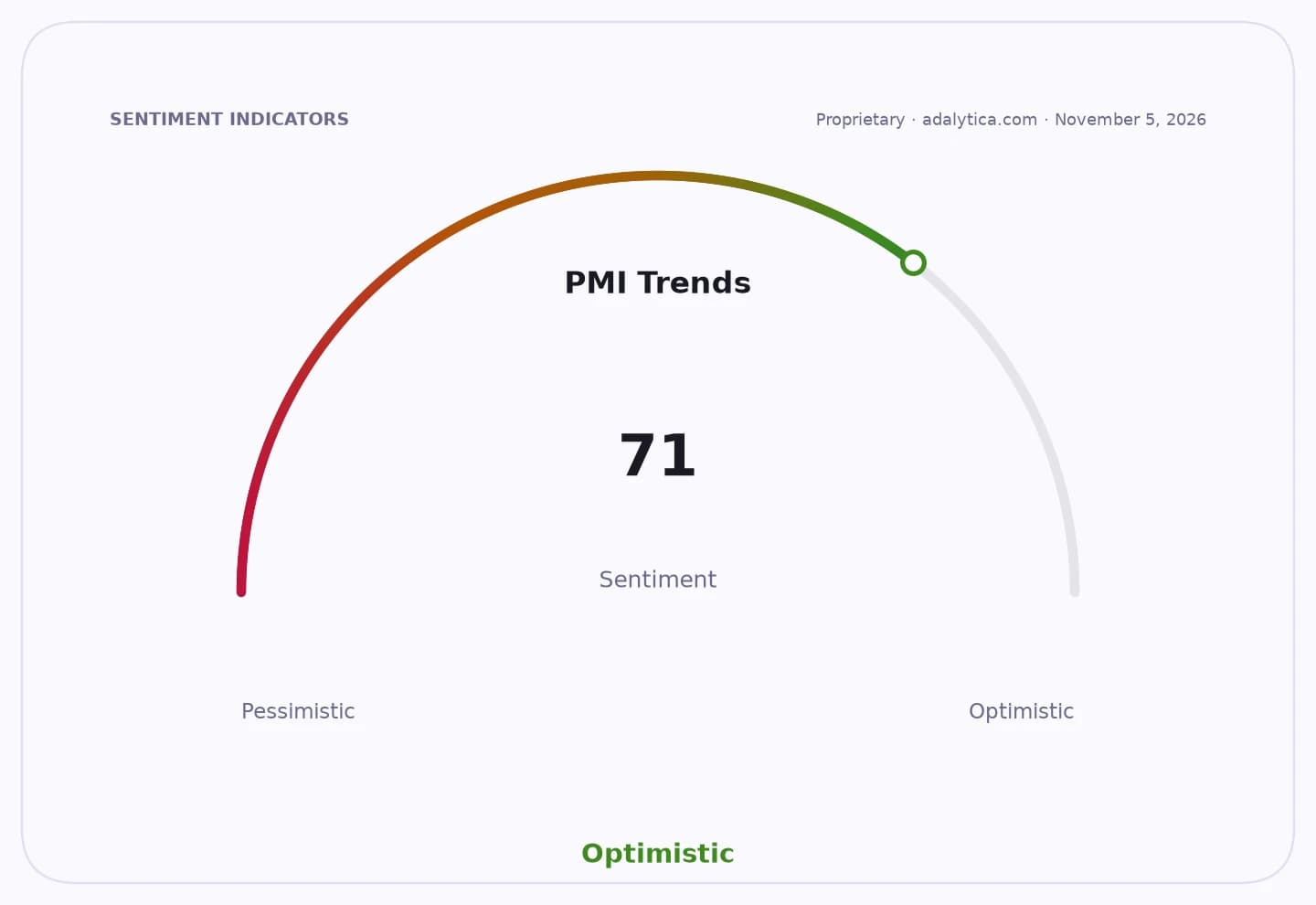
Adalytica’s industrial production sentiment snapshot is neutral, which fits the message here: the economy is improving, but not in a way that screams euphoria. For patient investors, that is often a healthier setup than overheated optimism. If manufacturers can keep production rising while containing costs, Indonesia’s industrial and consumer-linked names could have room to compound. If costs keep climbing faster than pricing power, the rebound may prove uneven.
For now, the PMI suggests Indonesia’s industrial engine is running again. The next question for investors is whether companies can turn that activity into durable earnings rather than just higher expenses.
| Entity | Gains | Losses |
|---|---|---|
| Indonesian manufacturers | ▲Higher output volumes | ▼Margin pressure from costs |
| Domestic suppliers and logistics firms | ▲More factory activity | ▼Exposure to input inflation |
| Consumers | ▲Potentially stronger supply | ▼Risk of higher product prices |
| Equity investors | ▲Rebound opportunity | ▼Companies with weak pricing power |