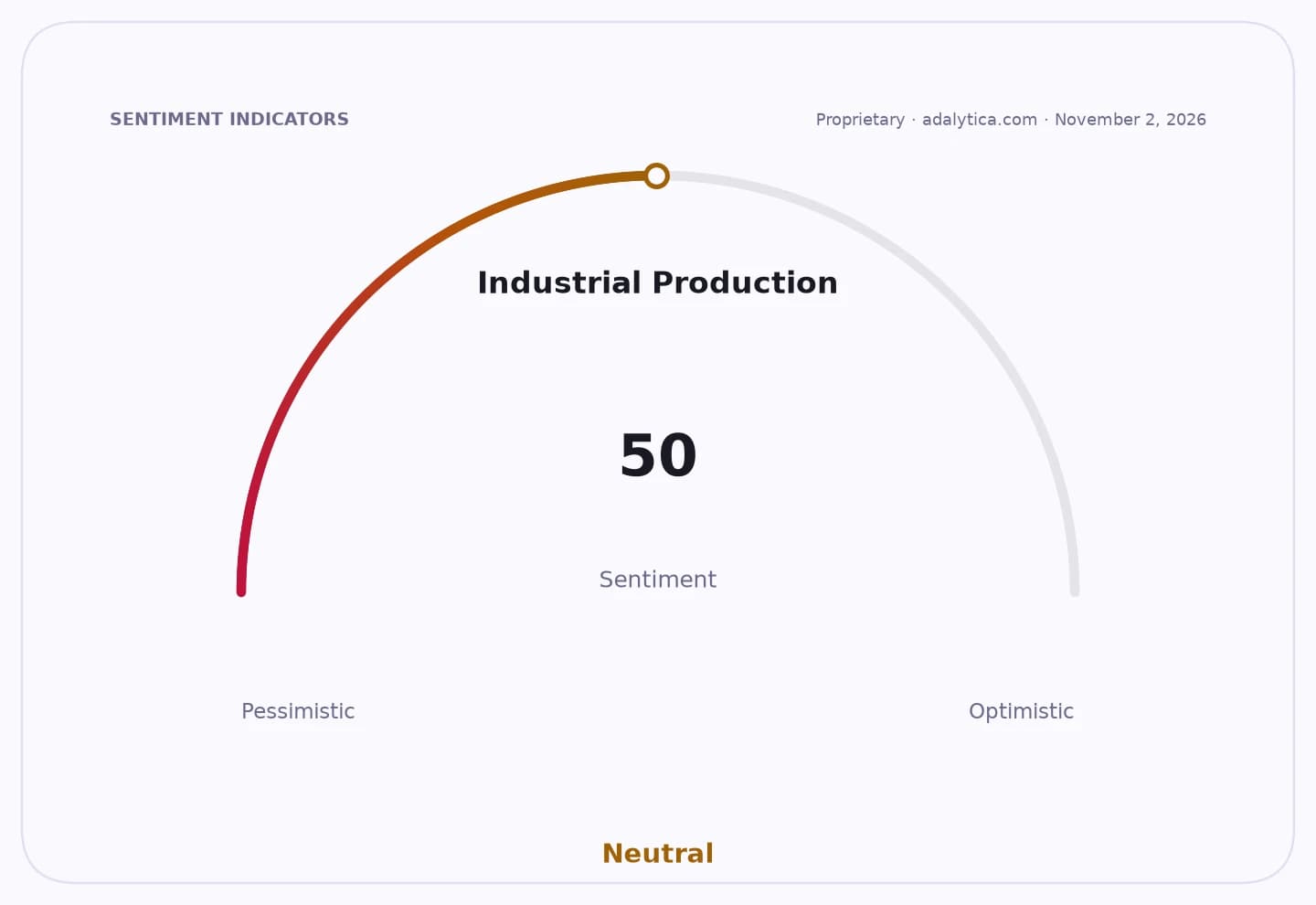
The U.S. factory sector remained in solid expansion in October, with S&P Global’s manufacturing PMI easing to 54.9 from 55.9 but still pointing to the strongest growth since May 2022 and a 15th straight month above the 50 threshold.
U.S. Manufacturing PMI Falls to 54.9 in October
The reading matters because it suggests manufacturing is continuing to add momentum to an economy that has been more dependent on services and consumer demand. A PMI above 50 indicates expansion, and October’s figure implies factories are still benefiting from firmer new orders, better employment and improved business confidence even as the pace moderated slightly from September’s high.
Sentiment Indicators
That combination is important for investors because it supports the case that U.S. growth remains resilient enough to keep industrial earnings, freight activity and capital spending moving higher. The latest data also align with a broader global picture of manufacturing stabilisation, with other major economies showing similar resilience, though with regional differences.
The move in the sector was reflected in exchange-traded funds tied to industrials and consumer discretionary stocks. The Industrial Select Sector SPDR Fund, XLI, has recovered above both its 50-day and 200-day moving averages and closed at 172.17 on Nov. 3, while the Consumer Discretionary Select Sector SPDR Fund, XLY, also traded higher at 117.29. That suggests investors have been willing to lean into cyclical exposure as the economic backdrop improves.
For companies tied to the industrial economy, the PMI reading is consistent with better order flow and steadier production planning. Recent results and filings from transport and industrial companies have pointed to improving orders and demand visibility, even as management teams continue to flag uncertainty around trade policy, input costs and borrowing conditions.
The risk for markets is that a firm manufacturing backdrop could keep pressure on policymakers to avoid easing financial conditions too quickly, especially if inflation proves sticky. But for now, the bigger message is that U.S. manufacturing is not just recovering from weakness — it is expanding at a pace strong enough to matter for growth, earnings and industrial-sector valuations.
| Entity | Gains | Losses |
|---|---|---|
| U.S. manufacturers | ▲Stronger orders, hiring, confidence | ▼Higher input and financing costs |
| Industrial stocks (XLI) | ▲Cyclical demand support | ▼Valuation if growth fades |
| Consumer discretionary stocks (XLY) | ▲Better economic backdrop | ▼Pressure if rates stay high |
| Central bank doves | ▲Evidence of growth resilience | ▼Less room for rapid easing |