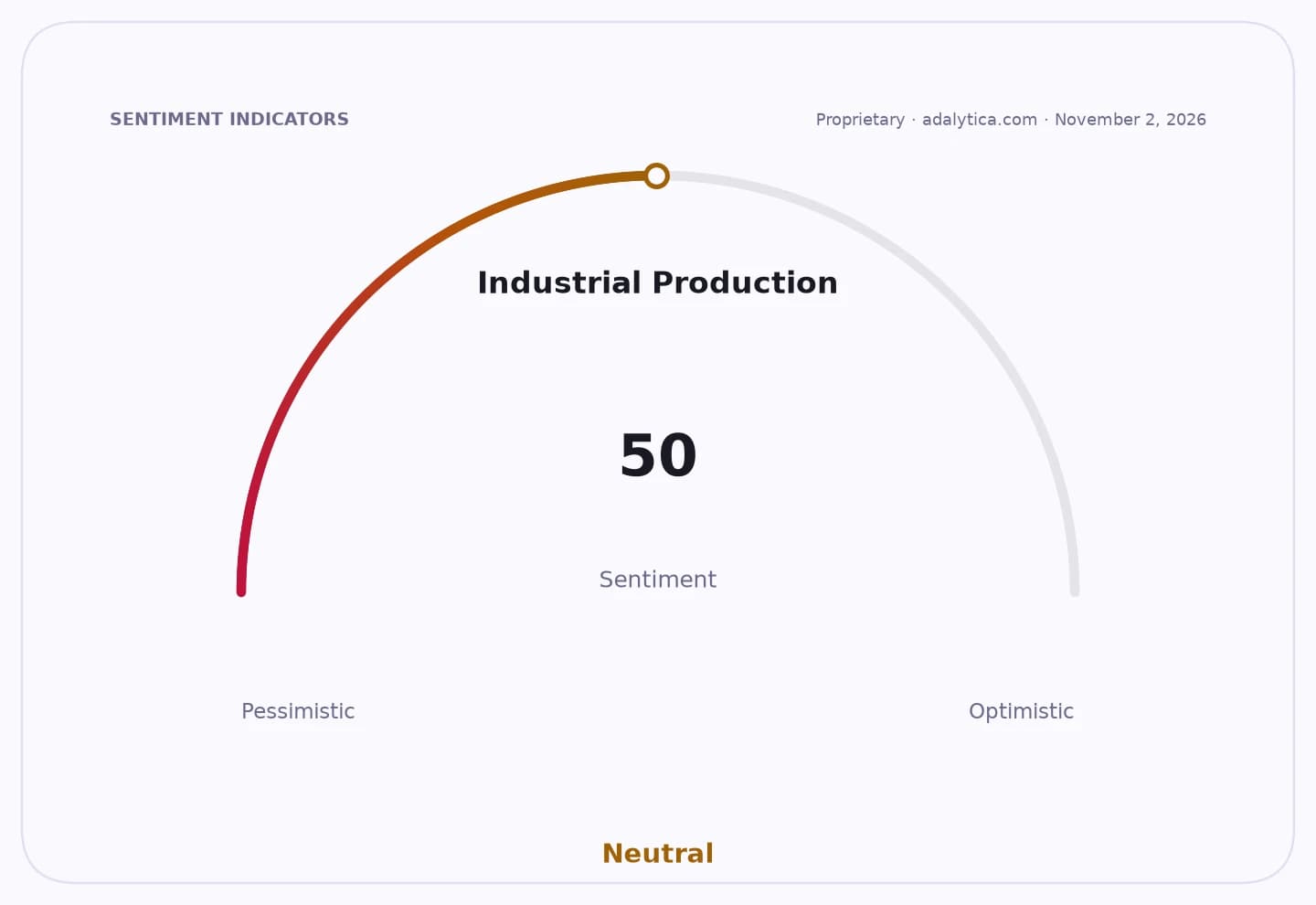
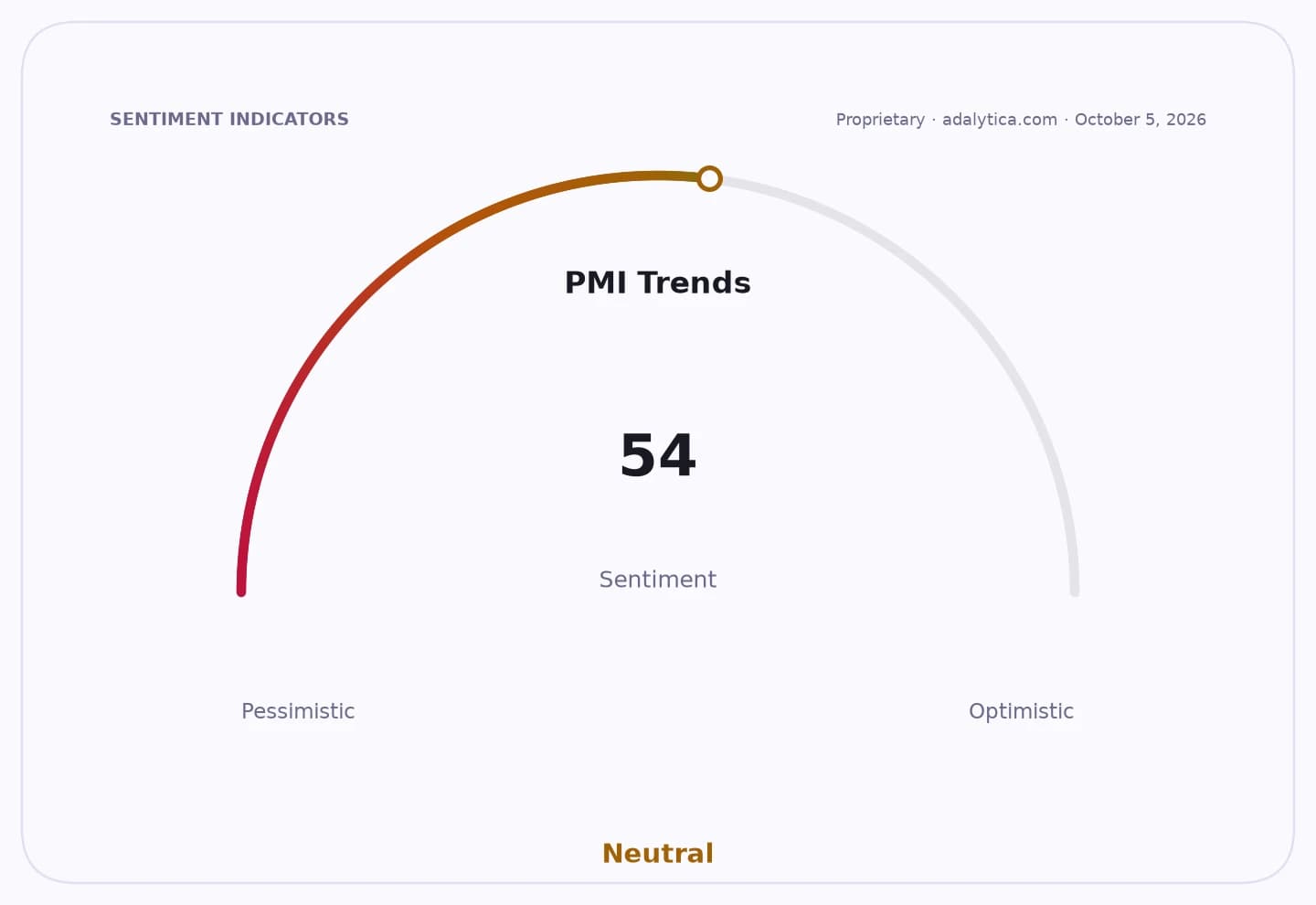
Britain’s manufacturing sector returned to a stronger footing in October, with output expanding at the fastest pace in two years and signalling that factory activity is beginning to add to growth rather than subtract from it.
UK Manufacturing Output Rises in October
The improvement matters because manufacturing has been one of the weakest parts of the UK economy since the inflation shock and rate-hike cycle hit demand. A firmer PMI reading suggests producers are benefiting from steadier domestic orders, some recovery in export demand and a less hostile operating backdrop than earlier in the year. For a Bank of England still balancing weak growth against sticky inflation, evidence of a manufacturing pickup complicates the argument for rapid rate cuts.
Sentiment Indicators
The PMI’s output component is the key detail for markets. It implies that the sector is not just stabilising, but actually accelerating from a low base after months of subdued production. That matters for gross domestic product estimates, inventory rebuilding and corporate guidance across industrials, transport and capital goods. A broadening factory recovery can also feed through to supplier activity, hiring and pricing power, though the scale of the boost will depend on whether new orders hold up into year-end.
Investor reaction tends to be clearest in UK domestic cyclicals and mid-cap industrial names, where even modest changes in activity can alter earnings expectations. Sterling and UK rate-sensitive equities can also react if stronger manufacturing data are interpreted as reducing recession risk. But the signal is not unambiguously bullish: higher output alongside still-elevated costs would reinforce the view that the BoE may have limited room to ease quickly, especially if services inflation remains sticky.
The broader narrative is one of an economy still growing unevenly, but with the industrial side showing more resilience than it did through much of the past two years. If the October strength persists, it would support the case that the UK is moving out of stagnation rather than into a sharp downturn. If it fades, it will confirm how fragile the recovery remains.
| Entity | Gains | Losses |
|---|---|---|
| UK manufacturers | ▲Higher output and orders | ▼Margin pressure if costs stay elevated |
| Domestic cyclicals | ▲Better earnings outlook | ▼Weak demand if recovery stalls |
| Bank of England hawks | ▲Less urgency for rapid cuts | ▼Rate-cut advocates |
| UK consumers and borrowers | ▲Possible growth stabilisation | ▼Slower easing in borrowing costs |