Indonesia’s government is entering a critical political stretch with public approval still solid but showing clear pressure points, as a new survey found 65.4% of respondents satisfied with its performance and 67% optimistic it can do its job well.
Indonesia survey shows Prabowo approval still solid
That matters because the numbers suggest President Prabowo Subianto’s early governing strategy — heavy reliance on social assistance, school programs and subsidised meals — is still landing with voters, but not comfortably enough to guarantee a stronger mandate. The survey by Parameter Politik Indonesia found support was driven most by rising social aid, cited by 16.7% of respondents, followed by anti-corruption enforcement, the “Sekolah Rakyat” programme and the “Makan Bergizi Gratis” free meals scheme.
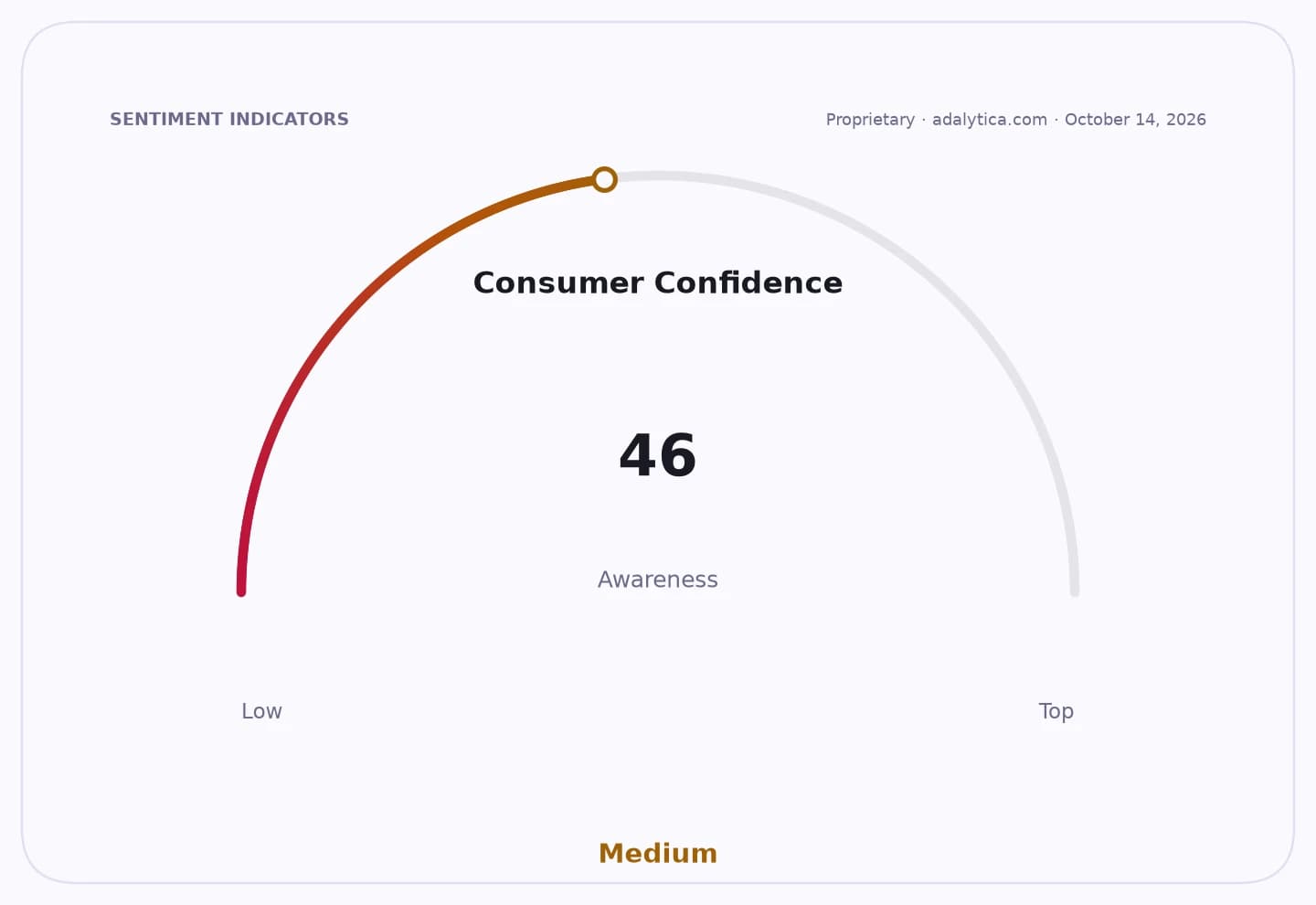
Sentiment IndicatorsⓘProprietary · adalytica.com · October 21, 2026
This is a snapshot — live sentiment, awareness and momentum for 130+ markets update continuously in the dashboard.Open AlphaPulse
The other side of the ledger is equally important for investors and policymakers. A sizeable 32.5% said they were dissatisfied, with the biggest complaints centred on a difficult economy, misdirected aid and expensive basic necessities. That is a warning that household purchasing power remains the main vulnerability for a government trying to convert popularity into economic stability.
The poll also shows a split between the president and his running mate, with 65.2% satisfied with Prabowo’s performance but only 49% for Vice President Gibran Rakabuming Raka. That gap matters because it suggests public confidence is being personalised around the president rather than the wider administration, leaving less room for error if growth slows, inflation bites or delivery of flagship programmes falters.
For markets, the political message is that the government still has enough public backing to pursue its fiscal and social agenda, including expanded welfare measures and budget initiatives, but the room for complacency is limited. Approval remains above the 60% threshold, yet the survey’s own conclusion that satisfaction would need broader improvement to get back above 70% underscores how fragile that support could be if living costs stay elevated.
The investor takeaway is that Indonesia’s policy direction remains oriented toward consumption support and social spending, which can cushion demand in the near term, but also raises questions about fiscal discipline and programme efficiency. If aid continues to be seen as too broad or badly targeted, the political dividend could weaken even if headline approval stays respectable. For now, the government still has a workable mandate — but not a blank cheque.
| Entity | Gains | Losses |
|---|---|---|
| Prabowo administration | ▲Still-high approval | ▼Margin for policy errors |
| Low-income households | ▲More social aid | ▼Risk of poor targeting |
| Consumer-facing sectors | ▲Demand support | ▼If inflation stays high |
| Fiscal hawks | ▲Restraint debate | ▼Bigger welfare spending |