U.S. crude and gasoline inventories rose in the latest Energy Information Administration data, a sign that the oil market’s recent surge is running into a softer physical balance even as geopolitical risks keep prices elevated.
Rising inventories challenge oil rally
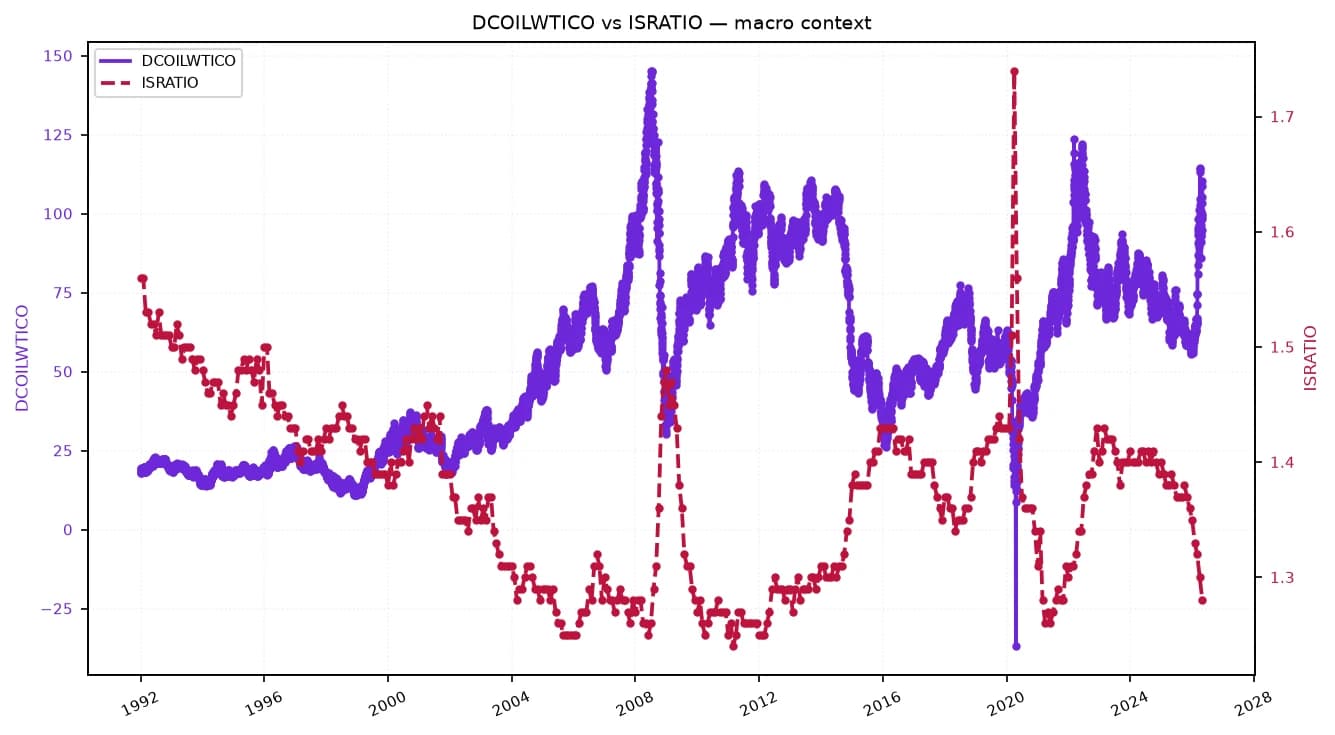
The build matters because the rally in crude has been driven as much by fear as by fundamentals. West Texas Intermediate was recently trading around $95 a barrel in the broader market backdrop, a level that has helped producers and integrated majors but has also raised the risk that demand destruction and inventory replenishment will eventually cool the advance. Rising U.S. stockpiles suggest the market is not as tight as headlines around the Middle East might imply, even if supply disruption fears continue to support prices.
Sentiment IndicatorsⓘProprietary · adalytica.com · July 22, 2026
This is a snapshot — live sentiment, awareness and momentum for 130+ markets update continuously in the dashboard.Open AlphaPulse
For investors, the data is a reminder that oil is being pulled in two directions. On one side are supply concerns tied to heightened tensions in the Middle East and U.S.-Iran friction, which have kept Brent and WTI near multi-week highs. On the other is the supply chain reality inside the United States, where rising inventories can signal either weaker demand, stronger refinery runs, or both — all of which tend to cap upside when positioning is already crowded. The WTI benchmark traded sharply higher this week before the latest inventory figures, while U.S.-listed oil exposure via USO and sector ETF XLE has remained bid.
The price action itself shows how stretched the trade had become. USO climbed to 131.94 on July 22, with its 14-day RSI at 86, a level that typically signals an overbought market under standard technical analysis. XLE also rose to 59.21, near its upper Bollinger Band, reflecting strong momentum in energy equities. Yet the rise in inventories injects a cautionary note: if the physical market is not tightening further, the latest rally may prove more vulnerable to profit-taking, especially after a strong run that pushed the broader energy complex back into expensive territory.
The macro backdrop is still supportive for producers. Equinor has already pointed to higher crude prices as a major earnings tailwind, and U.S. majors including Chevron and ConocoPhillips continue to emphasize commodity price sensitivity in their filings. But higher inventories can temper margin expectations for refiners and blunt the case for another leg higher in crude unless geopolitical risks intensify further or demand proves unexpectedly resilient.
The key question now is whether the inventory build marks a temporary pause or the start of a more durable loosening in the U.S. balance. If stockpiles keep rising while prices stay near recent highs, traders may begin to price in a ceiling on the geopolitical premium. If tensions worsen and supply fears override the data, the market could still extend gains — but with more volatility and a greater risk of sharp reversals.
| Entity | Gains | Losses |
|---|---|---|
| Oil producers | ▲Higher realized prices | ▼Risk of demand erosion |
| Refiners | ▲Cheaper crude feedstock | ▼Softer product spreads |
| Energy ETFs / longs | ▲Momentum trade support | ▼Pullback risk from inventory builds |
| Consumers / importers | ▲Potential relief if prices cool | ▼Higher fuel costs if rally persists |