Iran’s fast-growing instalment economy is turning consumer distress into a lucrative business for credit companies, with late fees and financing charges generating billions of tomans even as households struggle to buy basic goods.
Iran BNPL fees rise as households buy essentials
The profit pool is expanding because the country’s inflation, weak wages and shrinking purchasing power have pushed millions of Iranians out of cash purchases and into buy-now-pay-later services. What began as a way to finance televisions, phones and appliances has spread to rice, cooking oil and bottled water, underscoring how deeply household balance sheets have been eroded. For lenders and fintech platforms, the crisis is not just a demand driver but the core of the business model: the more consumers fall behind, the more fee income these firms can extract.
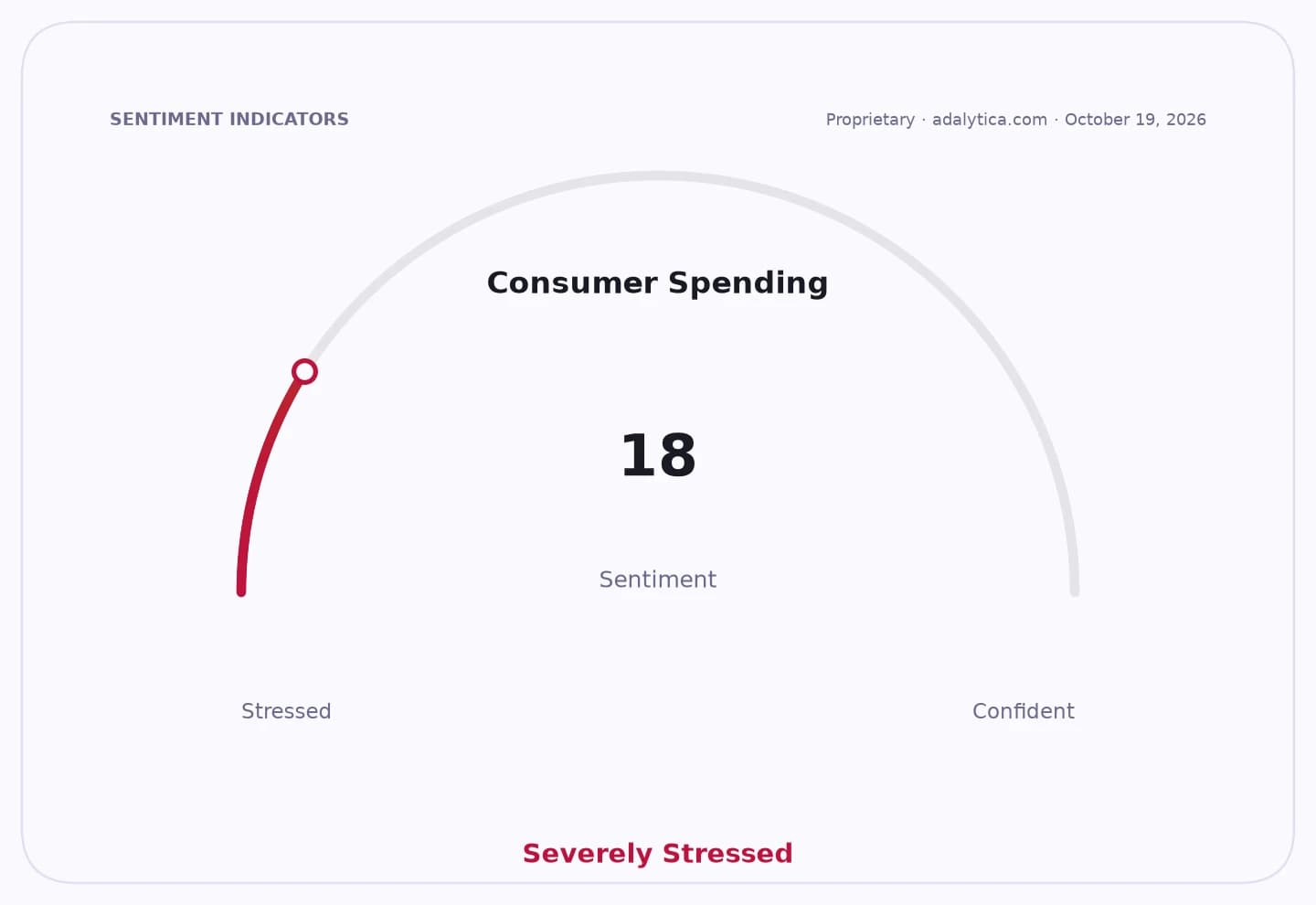
Sentiment IndicatorsⓘProprietary · adalytica.com · October 22, 2026
This is a snapshot — live sentiment, awareness and momentum for 130+ markets update continuously in the dashboard.Open AlphaPulse
The scale is visible in the fee structure. Platforms such as SnapPay, Digipay and Tara routinely market “buy now, pay later” plans as interest-free, yet the fine print typically imposes late penalties of about 6% a month on unpaid instalments. On a 20 million toman purchase, a missed monthly payment of 5 million tomans can trigger a 300,000 toman penalty after one month, rising to 900,000 tomans after three months. Multiplied across thousands of customers, that quickly becomes material revenue: 10,000 delinquent clients on a 300,000 toman fee would generate 3 billion tomans in penalties alone.
That fee engine matters economically because it effectively monetises the country’s consumer slump. Rather than broadening access to affordable credit in a healthy credit market, the system is functioning as a shadow tax on households that are already under stress. The report says some consumers are even financing basic groceries on instalment plans, a sign that the economy has moved from discretionary spending stress to everyday liquidity strain. In that environment, arrears are likely to stay elevated, supporting revenue for lenders while deepening household indebtedness and reducing future consumption capacity.
Investor relevance lies in the structure of the market and who controls it. The sector is dominated by a network of fintechs, banks, telecom-linked investment arms and industrial groups, some with reported ties to military and security institutions. Digipay sits within Digi Kala’s ecosystem, after a 40% stake was acquired by Hamrah Aval’s investment arm; SnapPay sits inside Snap Group; Tara is backed by Golrang; and other players such as Azki Vam, Baloon and TechnoPay operate through bank and corporate partnerships. The ownership links matter because they suggest the industry is not just a retail credit story but part of a wider state-adjacent financial architecture with access to consumer data, distribution channels and regulatory leverage.
That makes the upside for operators clear but also raises governance and policy risks. For investors, the bull case is that instalment credit can keep scaling as formal household finance remains scarce, producing recurring fee income, cross-selling opportunities and rich data on consumer behavior. The bear case is that this growth rests on rising delinquency, opaque ownership structures and reputational sensitivity around profiting from poverty. Any move by regulators to cap penalty rates, tighten disclosure or police data use would hit margins first.
The deeper narrative is that Iran’s consumer credit boom is not a sign of healthier financial intermediation. It is a symptom of economic distress being packaged as financial innovation. Until incomes recover and inflation eases, instalment platforms are likely to keep growing, but so will the political and social scrutiny over who profits from the country’s debt trap.
| Entity | Gains | Losses |
|---|---|---|
| BNPL and credit platforms | ▲Fee income and customer growth | ▼Regulatory scrutiny |
| Cash-strapped households | ▲Short-term purchasing access | ▼Late fees and debt burdens |
| Bank/telecom-linked owners | ▲Data access and recurring revenue | ▼Reputational risk |
| Regulator/policymakers | ▲Leverage over consumer finance | ▼Pressure to curb abuses |