High borrowing costs and the absence of bankable collateral are forcing Nigerian lenders to move away from old-fashioned asset-backed lending and toward cash-flow, invoice discounting and joint-liability models for small businesses.
Nigeria lenders shift to cash-flow SME lending

That shift matters because Nigeria’s small and medium-sized enterprises are the backbone of commerce, but they are also the least able to absorb expensive credit. With the monetary policy rate still elevated, lenders say the cost of funds remains too high for broad-based productive lending, even after a slight easing in market rates. Zitra Investments’ managing director, Tunde Obadero, said the industry is still waiting for a sub-20% MPR before it can support a genuinely healthier borrowing environment.
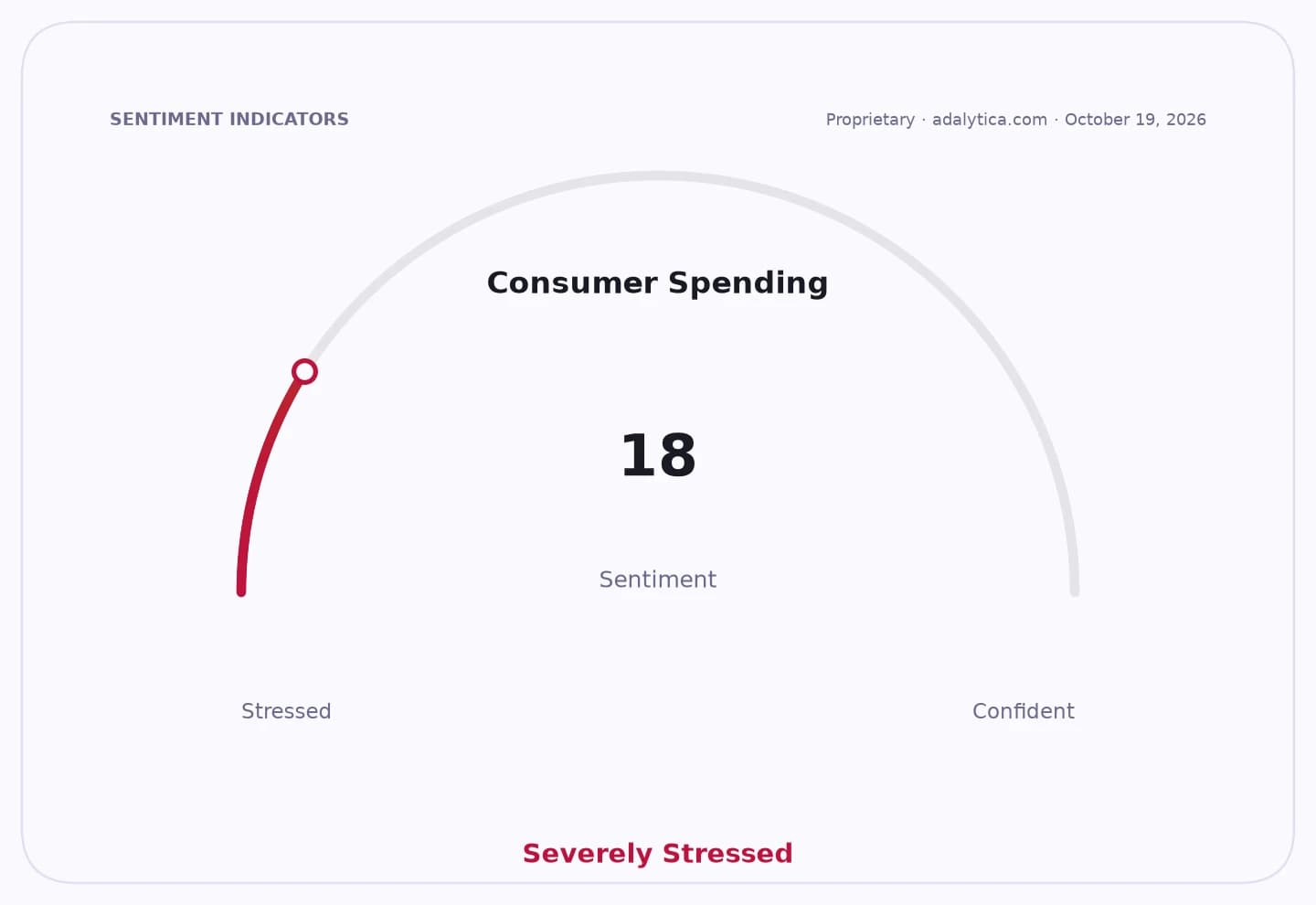
Sentiment IndicatorsⓘProprietary · adalytica.com · October 21, 2026
This is a snapshot — live sentiment, awareness and momentum for 130+ markets update continuously in the dashboard.Open AlphaPulse

The economics are straightforward: when policy rates stay high, lending rates stay sticky, and banks become more selective. In Nigeria, where most SMEs operate informally, lack formal registration, keep incomplete books and have little or no credit history, traditional underwriting breaks down. That leaves a vast chunk of the economy either underfinanced or pushed toward family loans, cooperatives and predatory lenders. Zitra says only about 10% of Nigerian adults have access to formal credit, underscoring how shallow the market remains.
For investors, this is not just a Nigerian credit story — it is a blueprint for where financial returns may come next. The market underestimates the opportunity in alternative SME finance, especially lenders that can underwrite on transaction data, cash flow visibility and invoice finance rather than real estate collateral. That creates a powerful opening for fintech lenders, specialized credit funds and banks willing to build distribution and data partnerships around informal businesses. In a high-rate environment, the winners will be the firms that can price risk accurately without relying on hard collateral that borrowers do not have.
Zitra’s model points to the next phase of SME finance: organizing informal businesses first, then lending against revenue streams. That approach is more operationally intensive, but it is far better aligned with the reality of Nigeria’s economy, where many businesses have cash trapped in receivables and need invoice discounting more than term debt. It also helps explain why regulators remain central to the story: lenders are making provisions for defaults under Central Bank of Nigeria standards, which keeps the push into riskier SME books within a formal framework.
The key investment implication is that policy easing alone will not solve SME funding. Even if the MPR eventually falls, the real long-term edge will belong to lenders that can convert informal commerce into bankable data. That is where the asymmetric opportunity lies: a credit market far larger than today’s formal system, but one that will only unlock through innovation, not legacy balance-sheet lending. Investors should watch for lenders and fintechs building these cash-flow-based models now, before a lower-rate cycle makes the opportunity obvious to everyone else.
| Entity | Gains | Losses |
|---|---|---|
| Cash-flow lenders | ▲Better SME access | ▼Traditional collateral banks |
| Nigerian SMEs | ▲More financing options | ▼Borrowers needing cheap debt now |
| Invoice discounting firms | ▲Higher demand | ▼Asset-backed lenders |
| Regulators | ▲Formal risk controls | ▼Informal loan sharks |