Poor countries are being squeezed by a debt bill that has surged to 14% of government revenue, forcing the IMF to press for faster restructuring and easier lending terms at a moment when high rates and inflation are making repayments more expensive just as global risk appetite turns uneven.
IMF Pushes Faster Debt Restructuring for Poor Countries

That matters because debt service is no longer a bookkeeping problem for low-income nations — it is a fiscal constraint that is crowding out health, infrastructure and growth spending, and raising the odds that governments will need outside support before they can stabilize budgets on their own. IMF Managing Director Kristalina Georgieva said the share of revenue spent on debt repayment has climbed from 8% a few years ago, underscoring how quickly the cost of borrowing has outpaced any relief from lower debt ratios in some countries.
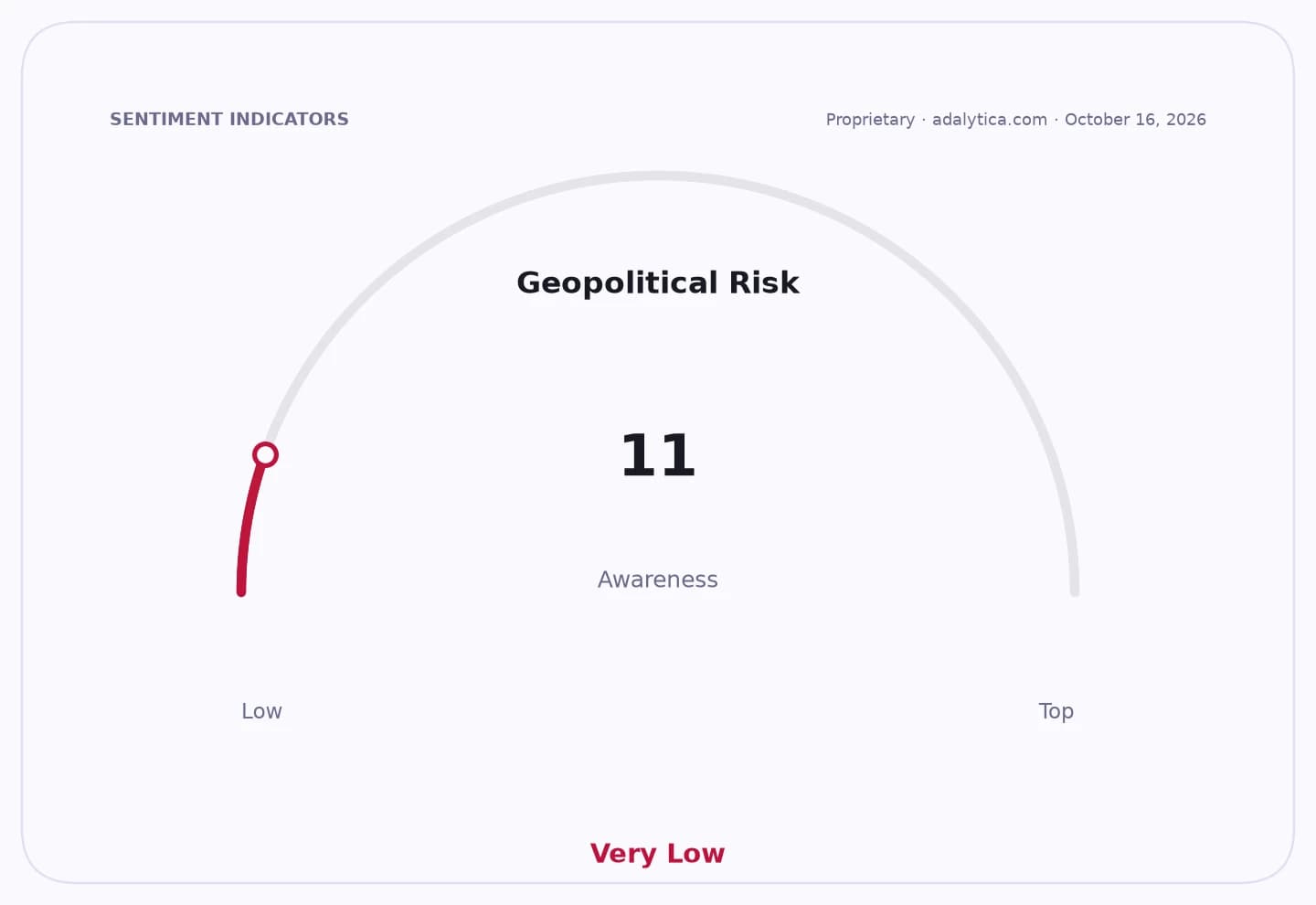
Sentiment IndicatorsⓘProprietary · adalytica.com · October 20, 2026
This is a snapshot — live sentiment, awareness and momentum for 130+ markets update continuously in the dashboard.Open AlphaPulse

The IMF’s message is also a signal to markets that the lender of last resort sees a growing need for concessional financing, not just austerity. Georgieva said the fund is working to expand support through its Poverty Reduction and Growth Trust, with reforms that could more than triple the amount of lending available on easier terms. That is significant for frontier debt investors, bilateral lenders and development financiers because cheaper IMF money can help avoid disorderly defaults, but it can also delay hard restructurings if policymakers move too slowly.
For investors, the implication is clear: the next cycle of sovereign stress is less likely to look like a sudden emerging-market blowup and more like a prolonged squeeze in the weakest credits, where refinancing needs, foreign-exchange scarcity and high real rates collide. The IMF’s push for quicker, more effective debt restructurings — especially under the G20 Common Framework — suggests that countries with stretched balance sheets may face a narrower path to market access, while those with credible revenue collection and reform plans could emerge as relative winners.
The macro backdrop reinforces that view. The U.S. 10-year Treasury yield remains around 5.1%, the two-year near 4.8%, and high-yield credit spreads are still elevated, keeping global borrowing costs sticky. In that environment, even countries whose debt-to-GDP ratios have stabilized can see debt-service burdens rise if coupons reset higher or currencies weaken. Georgieva noted that low-income countries have made progress on debt trends, but inflation and interest rates are still forcing them to devote more of their budgets to creditors rather than growth.
That creates a straightforward investment thesis: the market underestimates the value of disciplined sovereign balance sheets and concessional capital. Countries that protect fiscal credibility and secure cheaper official financing should command lower funding risk over time, while lenders, bondholders and contractors tied to highly leveraged sovereigns face more restructuring risk and slower payment cycles. The IMF is effectively warning that debt relief alone is not enough; without easier terms, faster restructuring and stronger domestic revenue mobilization, the cost of debt will continue to dictate the investment landscape across the poorest economies.
| Entity | Gains | Losses |
|---|---|---|
| IMF / multilateral lenders | ▲Greater policy influence | ▼More balance-sheet exposure |
| Low-income borrowers | ▲Cheaper official funding | ▼Less market financing |
| Private creditors | ▲Faster restructurings if coordinated | ▼Higher haircut risk |
| Frontier debt investors | ▲Clarity on problem credits | ▼Repayment delays, defaults |