Debt transparency has become a financing issue, not just a governance slogan, as the World Bank presses highly indebted African countries including Ghana, Zambia and Angola to disclose more clearly what they owe and on what terms.
Ghana, Zambia, Angola Face Debt Transparency Pressure
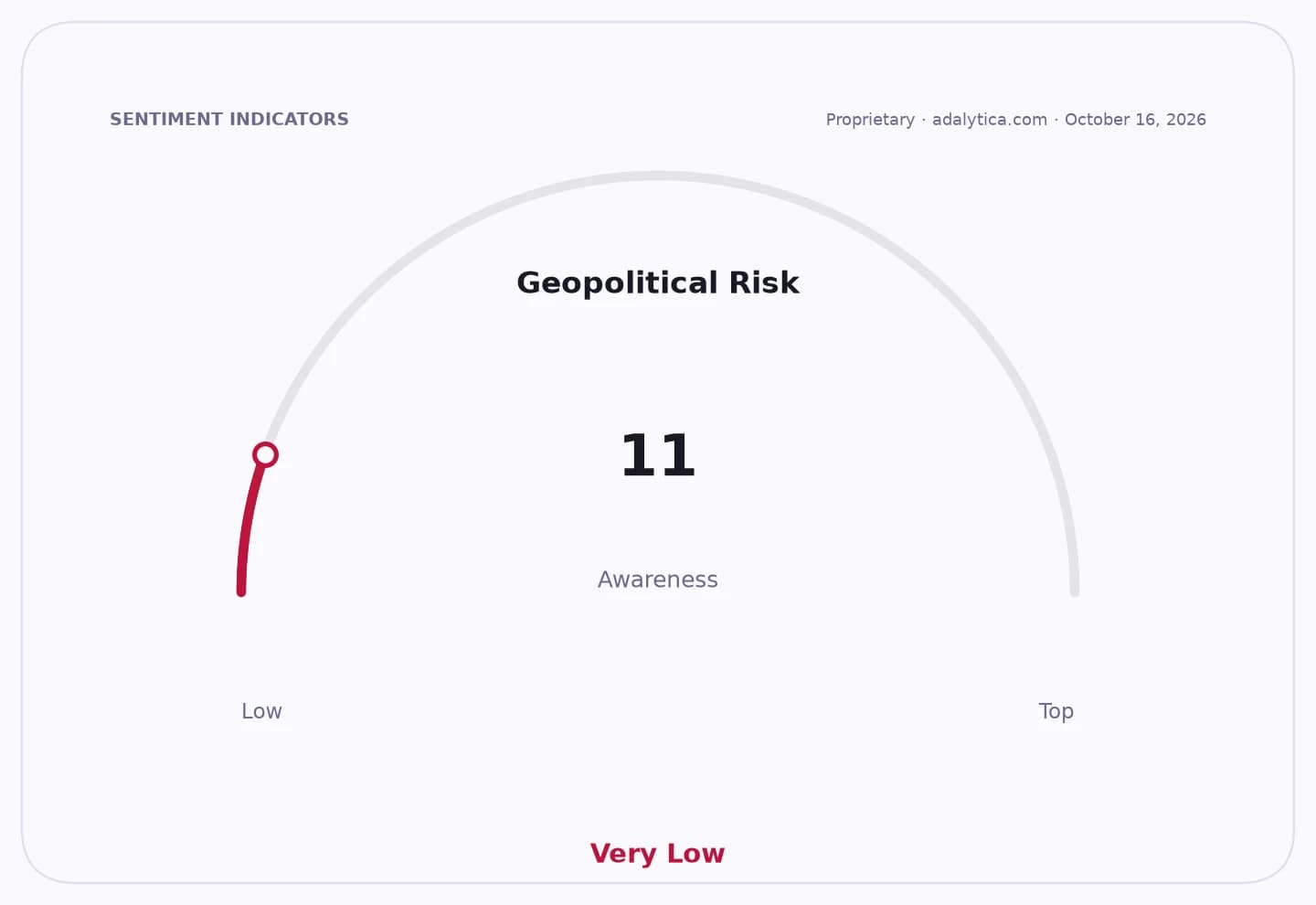
The warning matters because opaque liabilities tend to raise risk premia, complicate restructurings and delay access to capital at a time when many frontier borrowers are already under strain from higher global interest rates and tighter dollar funding. For countries that rely on external borrowing to refinance maturing obligations and fund basic spending, the cost of uncertainty can be as damaging as the debt itself.
Sentiment IndicatorsⓘProprietary · adalytica.com · October 16, 2026
This is a snapshot — live sentiment, awareness and momentum for 130+ markets update continuously in the dashboard.Open AlphaPulse
The call in the World Bank’s 2021 Africa Pulse report reflects a broader shift in how lenders and investors assess sovereign risk. The issue is no longer limited to headline debt-to-GDP ratios. Markets now also care about hidden liabilities, collateralized loans, state-backed guarantees and the full maturity profile of government obligations. When that information is incomplete, pricing becomes less efficient and refinancing negotiations become harder.
For Ghana, Zambia and Angola, the stakes are especially high. Each has faced pressure from heavy debt burdens and weakening fiscal flexibility. Greater transparency could help restore some confidence by making debt sustainability assessments more credible, but it could also expose the scale of the problem and sharpen scrutiny from creditors, rating agencies and multilateral lenders.
Investors typically prefer clarity even when the numbers are ugly. Better disclosure can support restructurings by reducing disputes over claims and priority, while also improving comparability across sovereign issuers. The bear case is that tougher transparency demands may reveal larger near-term financing gaps, forcing austerity, slower growth or more debt relief talks.
The broader message for African sovereign debt markets is that access to capital is increasingly tied to disclosure standards as much as to policy promises. Countries that move quickly to clean up debt reporting are more likely to preserve market access; those that do not may find borrowing costs rising further as investors demand compensation for uncertainty.
| Entity | Gains | Losses |
|---|---|---|
| Transparent sovereign borrowers | ▲Lower risk premia | ▼Hidden liabilities exposure |
| Bondholders and lenders | ▲Better credit visibility | ▼Less information asymmetry premium |
| Ghana, Zambia, Angola | ▲Potential market trust | ▼Pressure to reveal debt burdens |
| Multilateral lenders | ▲Stronger restructuring framework | ▼Slower negotiations if data stay unclear |