Iran’s plan to set up a new shipping corridor through the Strait of Hormuz is heightening the risk of a deeper disruption to the world’s most important oil artery, with Brent crude already back above $97 a barrel and traders pricing in the chance of a sharper supply squeeze.
Iran Hormuz shipping corridor raises oil risk

The proposed corridor would effectively give Tehran another layer of control over transit through the chokepoint, where roughly a fifth of global seaborne oil flows. Under the arrangement being negotiated with Oman, vessels would need to coordinate with Iran before being allowed to pass, and those that do not could be placed on sanctions lists. That would turn what has long been a flashpoint into a more formalized mechanism for policing traffic, increasing Iran’s leverage over tankers and insurers even if the strait is not physically shut.
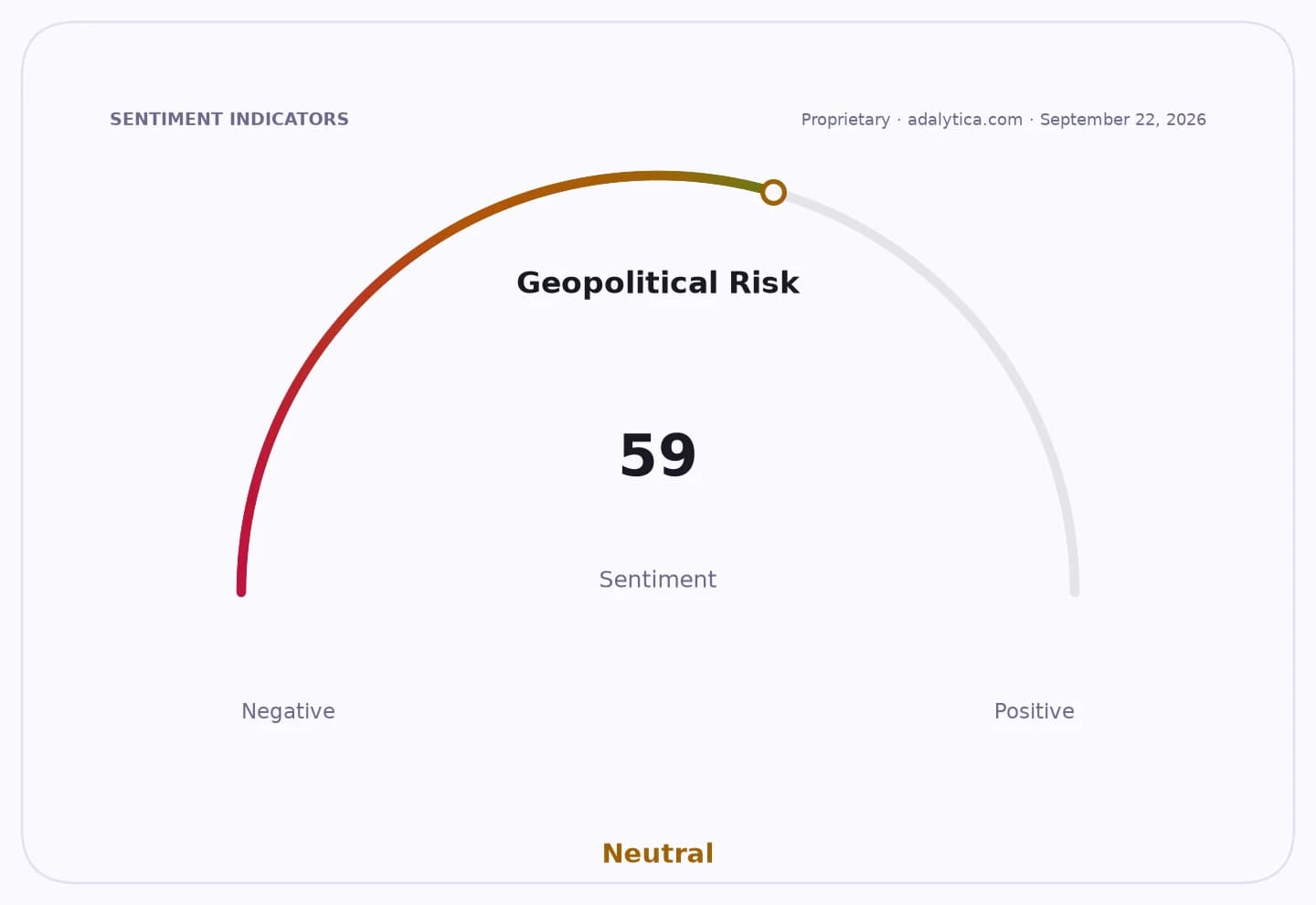
Sentiment IndicatorsⓘProprietary · adalytica.com · September 8, 2026
This is a snapshot — live sentiment, awareness and momentum for 130+ markets update continuously in the dashboard.Open AlphaPulse

The timing matters because the shipping risk is already feeding into energy markets. Independent vessel-tracking data show traffic through Hormuz has dropped to the lowest level since May, while US forces have struck Iranian tankers and Iran has retaliated against US vessels in the region. Goldman Sachs has warned that oil could surge to $120 a barrel if attacks on commercial shipping intensify, underscoring how quickly disruption in the Gulf can spill into global fuel costs, inflation expectations and central bank policy debates.
For oil producers, the escalation is a windfall; for importers, refiners and consumer economies, it is a tax. Brent’s move above $97, alongside stronger prices in US crude benchmarks and oil-related funds, reflects a market that is paying up for risk rather than immediate lost barrels. Technical readings on WTI and the USO exchange-traded fund show prices trading above their 50-day and 200-day moving averages, with RSI levels pointing to a stretched but still upward-biased trend, while the broader geopolitical-risk gauge remains elevated. In market terms, that means traders are still willing to hold long exposure to crude, but they are increasingly doing so on fear of a supply shock rather than confidence in demand.
Oil WTI — 30-day sentimentadalytica.com
Explore this data interactively — full history, time series and cross-market comparisons.Open AlphaPulse

The proposed corridor also sharpens the political stakes with Oman, which has often served as a mediator in Gulf tensions. If Tehran gains a de facto gatekeeper role with Omani coordination, it could complicate shipping compliance, raise war-risk premiums and make route planning more expensive even without a formal blockade. That would also put pressure on the IMO and maritime insurers to clarify whether vessels can safely transit under a new Iranian approval regime.
For investors, the key question is not whether Hormuz becomes “closed” in a legal sense, but whether the cost of moving oil through it rises enough to reshape prices. Energy equities, tanker operators and defense-related stocks may keep benefitting if tensions persist, while airlines, chemical makers, refiners and broader risk assets face margin pressure from higher feedstock costs. The next catalyst is whether the Iran-Oman arrangement becomes formal policy and whether the US-Iran maritime confrontation spreads to more commercial vessels.
| Entity | Gains | Losses |
|---|---|---|
| Iran | ▲More leverage over transit | ▼Higher risk of escalation |
| Oil producers | ▲Higher crude prices | ▼— |
| Importers and refiners | ▲— | ▼Costlier feedstock |
| Tanker insurers and shippers | ▲— | ▼War-risk premiums |