Iran is stepping up construction around Mount Pikaks, a development that adds fresh urgency to long-running suspicions that Tehran is building a hidden nuclear site beneath the mountain and raises the risk of another confrontation with Israel and the United States.
Iran Mount Pikaks Construction Raises Nuclear Concerns
The significance is less about the excavation itself than what it suggests about Iran’s program and the policy response it could trigger. An analysis by the US-based Center for Strategic and International Studies, published after review of new satellite imagery, found a marked increase in building activity at Kuh-e Kolang this year. CSIS said the underground complex could be used to assemble uranium-enrichment centrifuges, carry out enrichment or support other activities that could be linked to nuclear weapons work.
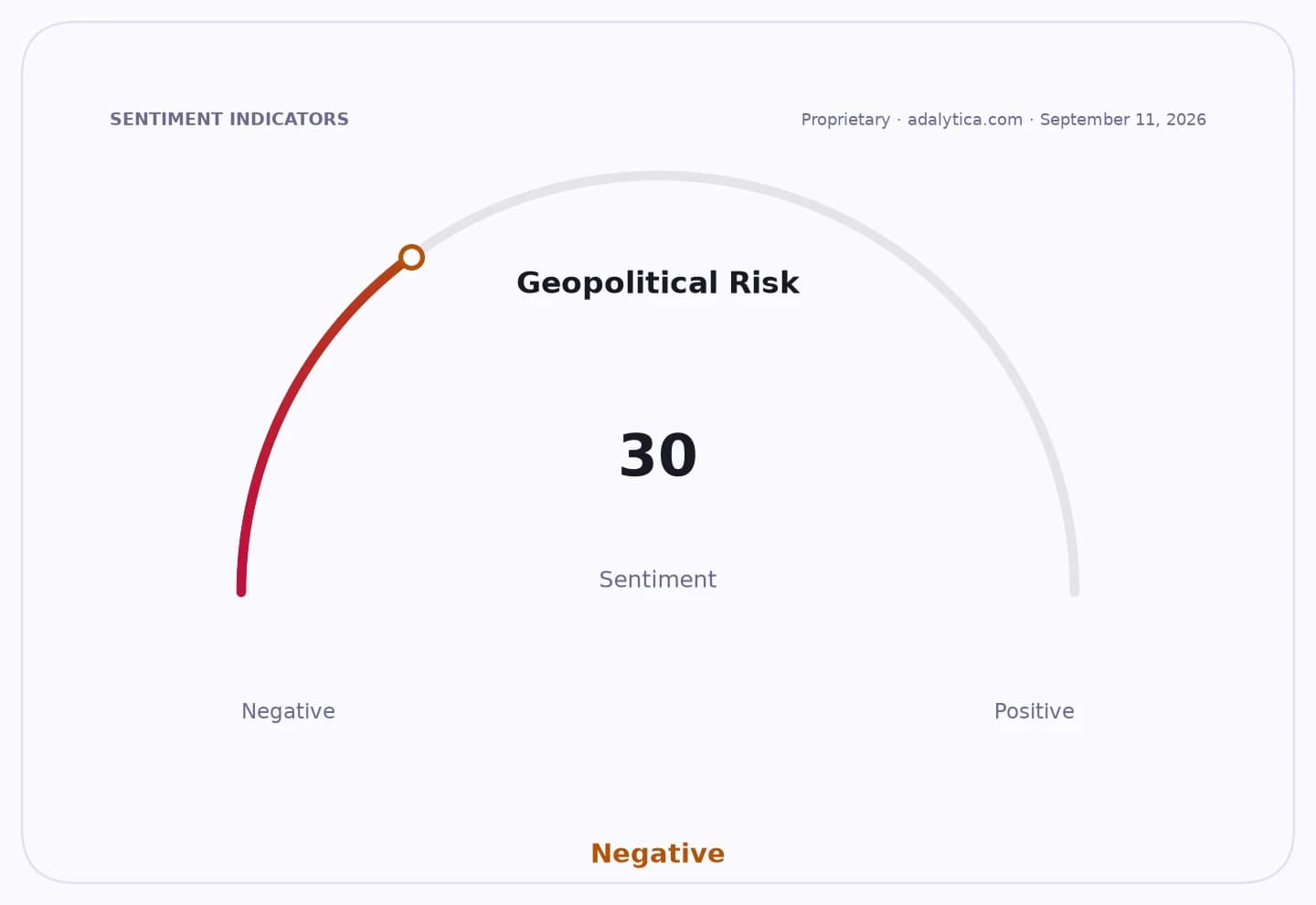
Sentiment IndicatorsⓘProprietary · adalytica.com · September 11, 2026
This is a snapshot — live sentiment, awareness and momentum for 130+ markets update continuously in the dashboard.Open AlphaPulse
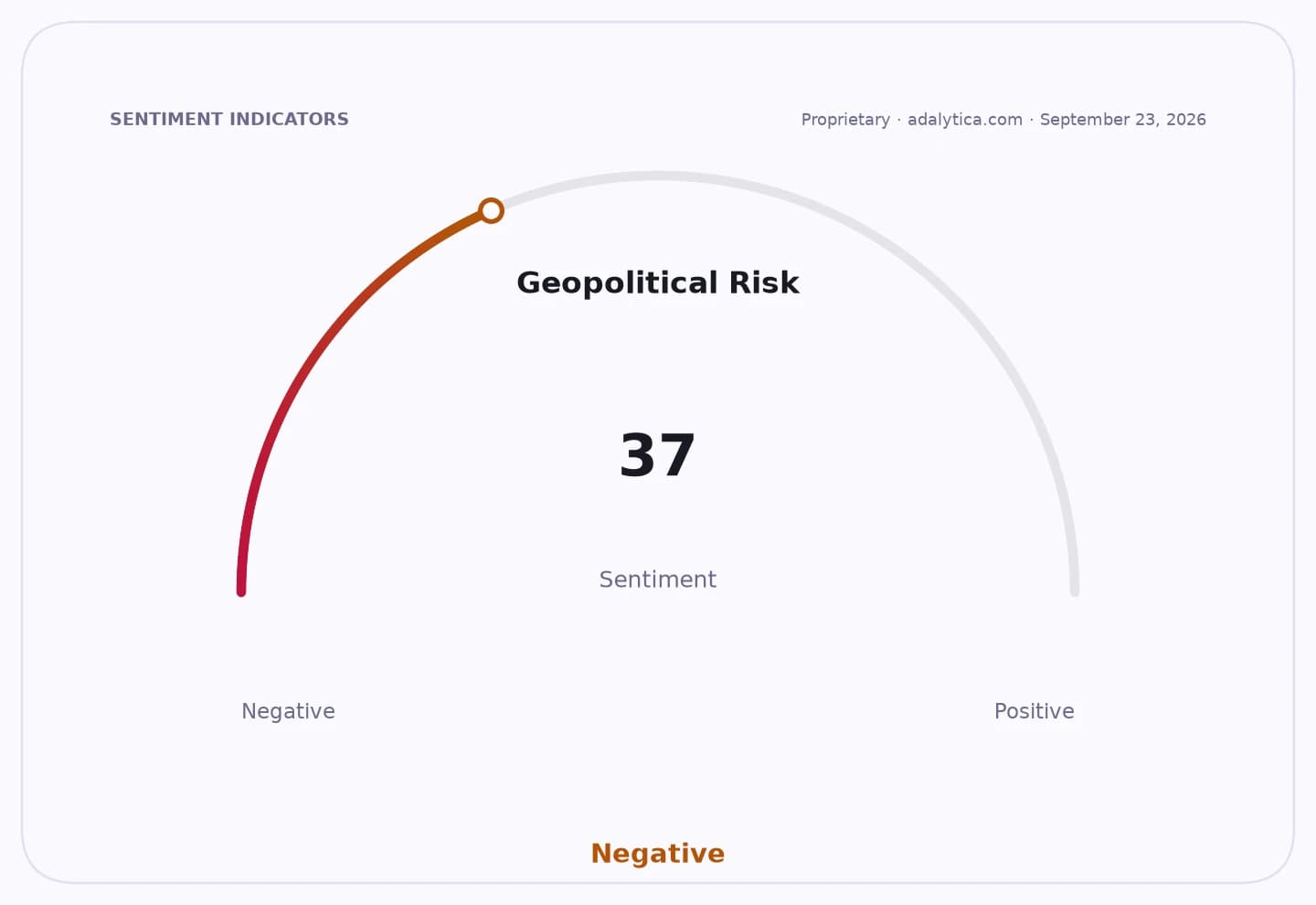
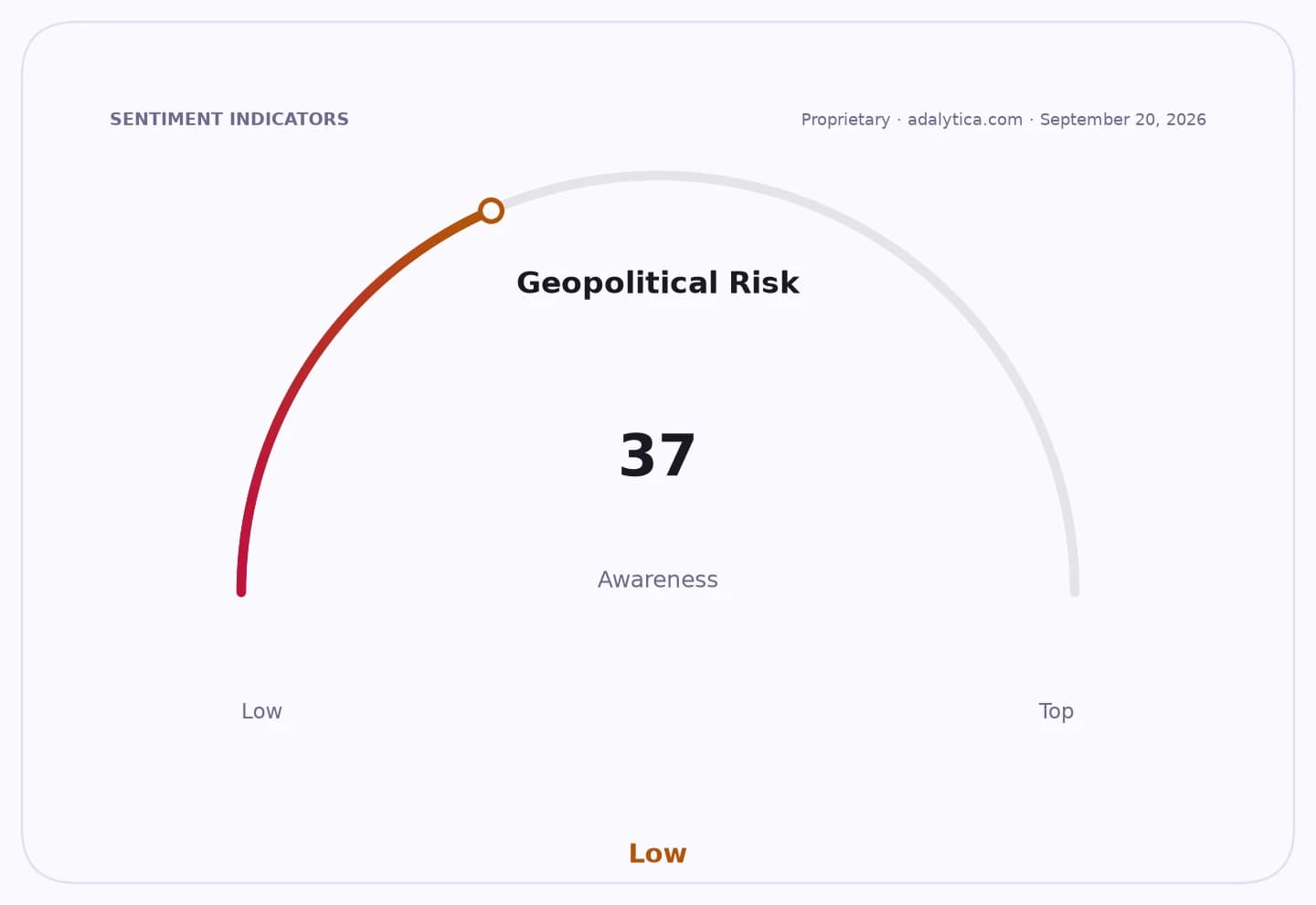
That matters economically because Iran’s nuclear trajectory remains one of the biggest tail risks for energy markets, regional trade and global risk appetite. Any new evidence that Tehran is hardening or expanding sensitive facilities increases the odds of tighter sanctions, renewed military planning by Israel and the US, and a sharper premium in crude and safe-haven assets. The broader market backdrop already reflects elevated anxiety: Adalytica’s Global Stability Sentiment gauge has fallen to 30, into “Fear,” while awareness remains high at 70, suggesting geopolitical risk is increasingly on investors’ radar.
The read-through for markets is straightforward. If the satellite evidence is interpreted in Washington and Jerusalem as proof Iran is moving closer to weapons-related capabilities, pressure will build for a more aggressive containment strategy. That could include additional sanctions, covert action or even pre-emptive strikes on suspected nuclear infrastructure. Conversely, if the activity is framed as fortification rather than weaponisation, it may still extend the cat-and-mouse cycle that keeps the region’s risk premium elevated without immediately forcing a military response.
Geopolitical Risk — 30-day sentimentadalytica.com
Explore this data interactively — full history, time series and cross-market comparisons.Open AlphaPulse
Investors have already been forced to price in the possibility of sharper Middle East volatility. Uranium-related equities have been sensitive to headlines around supply security and enrichment risk, while gold remains a direct beneficiary of geopolitical stress. The dollar has also retained a modest bid as a haven currency, even as oil-specific signals from Adalytica point to extreme fear in crude-linked trading sentiment.
For Tehran, the construction is consistent with a long-standing strategy of dispersing and hardening its most sensitive assets to reduce vulnerability to attack. For Israel and the US, it reinforces the suspicion that Iran is preserving a path to rapid nuclear breakout or at least building leverage ahead of any future negotiations. The absence of transparency only heightens the market’s worst-case assumptions.
What investors should watch next is whether satellite assessments are matched by official action: a new IAEA dispute, additional US or European sanctions, or fresh warnings from Israel. If those follow, the story would move from intelligence-driven concern to a direct policy and market catalyst, with energy, defense and safe-haven assets most exposed to the next escalation.
| Entity | Gains | Losses |
|---|---|---|
| Iran | ▲Strategic concealment | ▼Sanctions risk |
| US & Israel | ▲Justification for pressure | ▼Lower room for diplomacy |
| Gold & safe havens | ▲Haven demand | ▼Calm headlines |
| Oil importers | ▲Lower immediate disruption | ▼Higher geopolitical premium |