Donald Trump is willing to break with Israeli Prime Minister Benjamin Netanyahu when U.S. interests diverge, a striking signal that could widen the gap between Washington and Jerusalem at a time when Middle East policy is already under strain.
Trump, Netanyahu Split on Middle East Policy

That matters because markets, diplomats and defense contractors have long treated the U.S.-Israel relationship as one of the most durable alliances in global politics. If the White House is more prepared to publicly push back on Netanyahu, the result could be a less predictable policy mix on Gaza, Iran and regional security — and a bigger premium on geopolitical risk across oil, defense and havens such as gold and Treasurys.
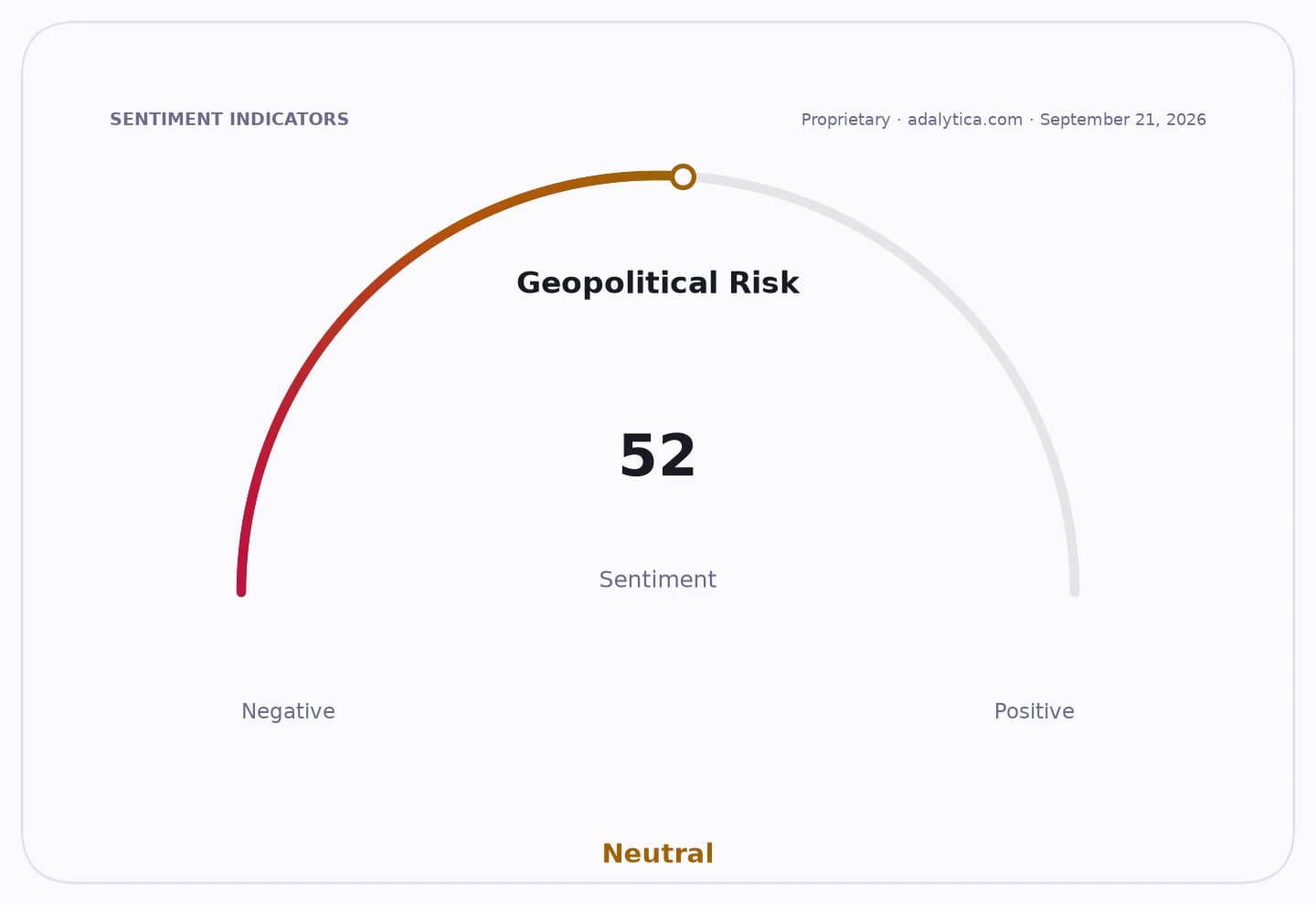
Sentiment IndicatorsⓘProprietary · adalytica.com · September 17, 2026
This is a snapshot — live sentiment, awareness and momentum for 130+ markets update continuously in the dashboard.Open AlphaPulse

Vice President J.D. Vance said at the All-In Summit in Los Angeles that Washington and Jerusalem do not always have aligned interests, and that the administration would work with Israel when those interests overlap and disagree when they do not. He added that Trump was ready to “separate” from Netanyahu if he judged American interests were different from those of the Israeli government.
The comments are notable less for their bluntness than for what they suggest about the direction of policy. For years, investors have assumed the U.S. would stay firmly in Israel’s corner, especially during conflict. But Vance’s language points to a White House more willing to treat Israel as a partner, not a proxy — a shift that could affect negotiations involving Iran and the wider security architecture in the region.

There is already evidence of friction. Vance said U.S. policy in the Middle East cannot be subordinate to Israel, and pointed to differences that have emerged over the conflict with Iran. He also noted that he took part in June discussions on a temporary ceasefire with Tehran, a move that drew criticism from some pro-Israel voices and underscored the administration’s willingness to explore options Netanyahu may not welcome.
For investors, the immediate reaction is less about one speech than about the policy path it implies. A more independent U.S. stance could reduce the odds of automatic escalation, which would be supportive for risk assets. But it could also make diplomacy more unpredictable in the near term, especially if Israel feels pressure from its closest ally. That uncertainty tends to favor defensive positioning.
The market backdrop already reflects a jump in caution. Adalytica’s Global Stability Sentiment gauge shows “Extreme Fear,” while its U.S. dollar trade signals point to “Extreme Greed,” a combination that often accompanies demand for liquid shelter assets. Gold has also held near the upper end of its recent range, while the iShares 20+ Year Treasury Bond ETF has been under pressure, leaving room for bond prices to benefit if geopolitical stress deepens.
That is the bigger investing lesson here: this is not just a diplomatic nuance. It is a reminder that Middle East politics can move capital flows, energy prices and safe-haven demand very quickly. If Washington is less aligned with Netanyahu, investors should expect more volatility around headlines — but also a possible reduction in the risk of broader conflict if the U.S. pushes harder for restraint.
For long-term investors, the best response is not to guess every turn in the relationship. It is to stay diversified, keep an eye on energy and defense exposure, and treat pullbacks in quality assets as opportunities when fear rises faster than fundamentals. This is one to keep on the watchlist.
| Entity | Gains | Losses |
|---|---|---|
| U.S. diplomats seeking flexibility | ▲More room to negotiate | ▼Less policy consistency |
| Netanyahu and Israeli hard-liners | ▲Less direct dependence | ▼Greater U.S. pressure |
| Gold and Treasurys | ▲Safe-haven demand | ▼None if tensions ease |
| Oil importers and risk assets | ▲Lower escalation risk | ▼Higher volatility if talks fail |