The United States is widening its financial war on Iran by sanctioning a cryptocurrency exchange and related individuals accused of moving hundreds of millions of dollars for the Islamic Revolutionary Guard Corps, a step that raises the cost of one of Tehran’s most adaptive sanctions-busting channels.
U.S. sanctions crypto exchange over Iran ties
That matters because the fight over Iran’s funding network is no longer just about oil tankers and bank transfers. It now runs through digital assets, which can move fast, cross borders and exploit weak compliance in parts of the crypto ecosystem. By going after the exchange and developers alleged to be part of the network, Washington is trying to close off a channel that can help keep the IRGC funded even as traditional payment rails remain heavily restricted.
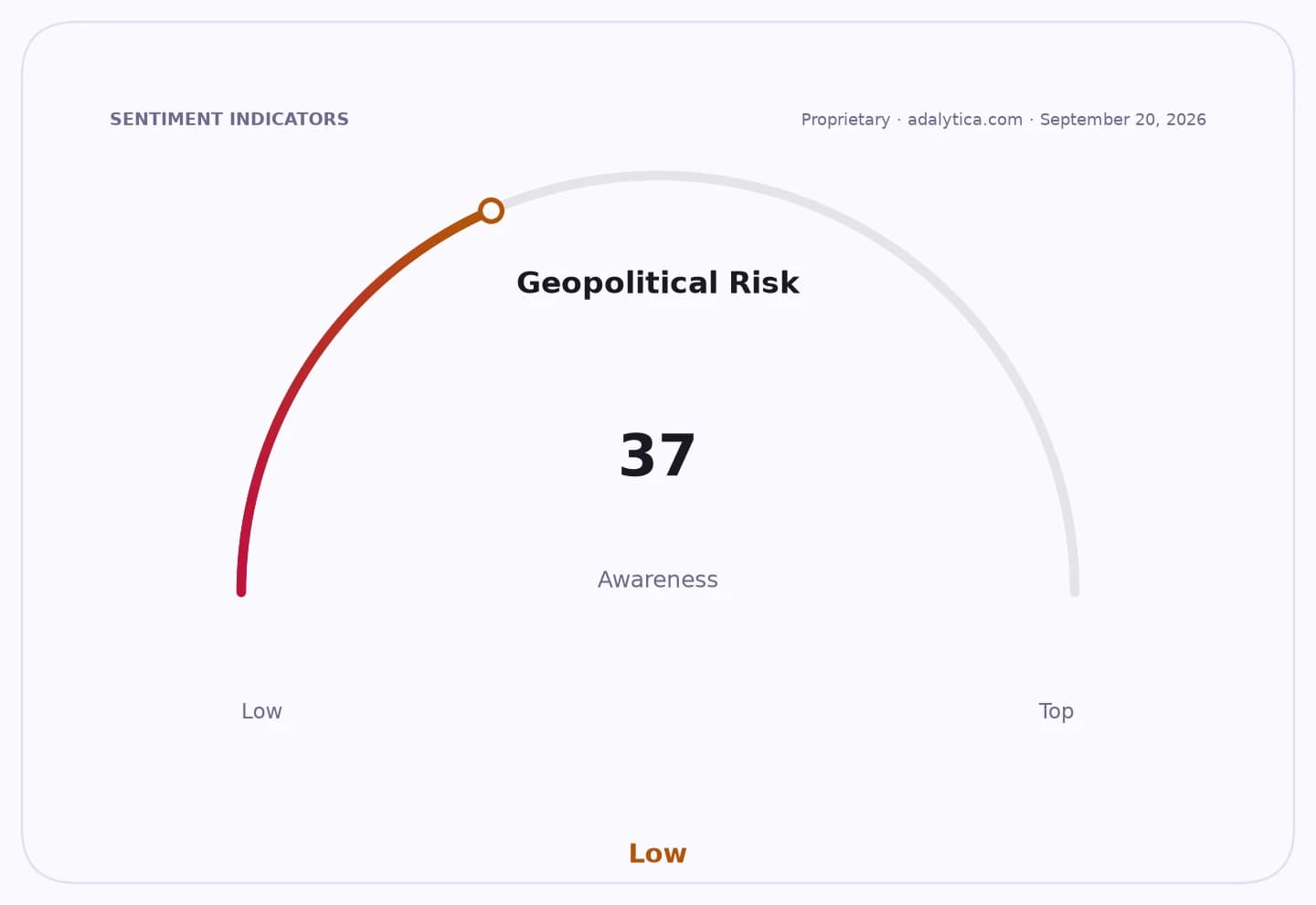
Sentiment IndicatorsⓘProprietary · adalytica.com · September 20, 2026
This is a snapshot — live sentiment, awareness and momentum for 130+ markets update continuously in the dashboard.Open AlphaPulse
For investors, the message is broader than one sanction notice. Geopolitical enforcement is moving deeper into crypto infrastructure, and that keeps regulatory risk elevated for exchanges, stablecoin issuers and payment intermediaries with exposure to high-risk jurisdictions. It also reinforces the premium on firms that can demonstrate strong compliance, clean counterparty screening and transparent reserves. In a market where capital is already sensitive to policy shocks, sanctions headlines can quickly hit liquidity, sentiment and multiple expansion.
The timing is also important. The new action comes as Washington escalates pressure on Iran across several fronts, while the Strait of Hormuz remains a live geopolitical flashpoint. Any widening of sanctions tied to maritime tolls, shipping and regional security can reverberate far beyond the crypto market, because the same tensions that drive illicit finance also threaten energy flows and risk appetite more broadly.
Coinbase Global is likely to stay at the center of the market debate even if it is not named in the sanctions, simply because every fresh crackdown on crypto misuse increases scrutiny on legitimate platforms. Riot Platforms, meanwhile, reflects how tightly the sector can trade with broader crypto liquidity and Bitcoin sentiment when geopolitical risk rises. The larger investment thesis is that compliance tooling, blockchain analytics and regulated market infrastructure become more valuable each time the US proves it is willing to target digital finance in national-security cases.
Adalytica’s S&P 500 trade signals show fear remains elevated even as awareness improves, and that is exactly the kind of backdrop in which enforcement headlines can trigger sharp moves in risk assets. The market underestimates how quickly sanctions policy can become a direct trading catalyst for crypto and a second-order driver for energy, defense and infrastructure themes tied to the Middle East.
The real takeaway is that this is not a one-off crypto bust. It is part of a longer campaign to weaponize financial plumbing against Iran, and that means more volatility for digital-asset names, more demand for compliance-heavy winners, and more opportunities in the picks-and-shovels layer of the crypto stack. Investors should treat every new sanctions action as a reminder that geopolitical risk is now a core part of the crypto investment case, not a side issue.
| Entity | Gains | Losses |
|---|---|---|
| U.S. Treasury | ▲stronger enforcement reach | ▼higher monitoring burden |
| Compliance software and blockchain analytics firms | ▲more demand | ▼none |
| Crypto exchanges with weak controls | ▲none | ▼higher sanctions risk |
| Iran / IRGC funding channels | ▲none | ▼blocked dollar and crypto flows |