Iran is stepping up regional contacts in search of a diplomatic off-ramp even as attacks in the Strait of Hormuz keep oil markets on edge, underscoring how fragile the security backdrop has become for one of the world’s most important shipping lanes.
Iran Contacts Keep Oil Markets on Edge

The shift matters because any sign of de-escalation could ease a risk premium that has been hanging over crude, tankers and broader markets, while a failure to contain the dispute raises the chance of fresh supply disruptions through the waterway that handles a large share of seaborne oil trade.
Sentiment Indicators
USO, the U.S. oil fund, has been volatile as traders price in that geopolitical premium. It closed at $148.41 on Nov. 6 after touching $161.86 in mid-September, while its 50-day moving average stood at $152.22, suggesting the recent pullback has not yet erased the broader uptrend. Trading volume remained elevated at 4.0 million shares on the latest session.
Gold has also retained a safety bid. GLD ended at $372.52 on Nov. 6, below its 50-day average of $384.96 and 200-day average of $411.24, but still well above the levels seen earlier this year, reflecting persistent demand for defensive assets even after the most recent retreat.
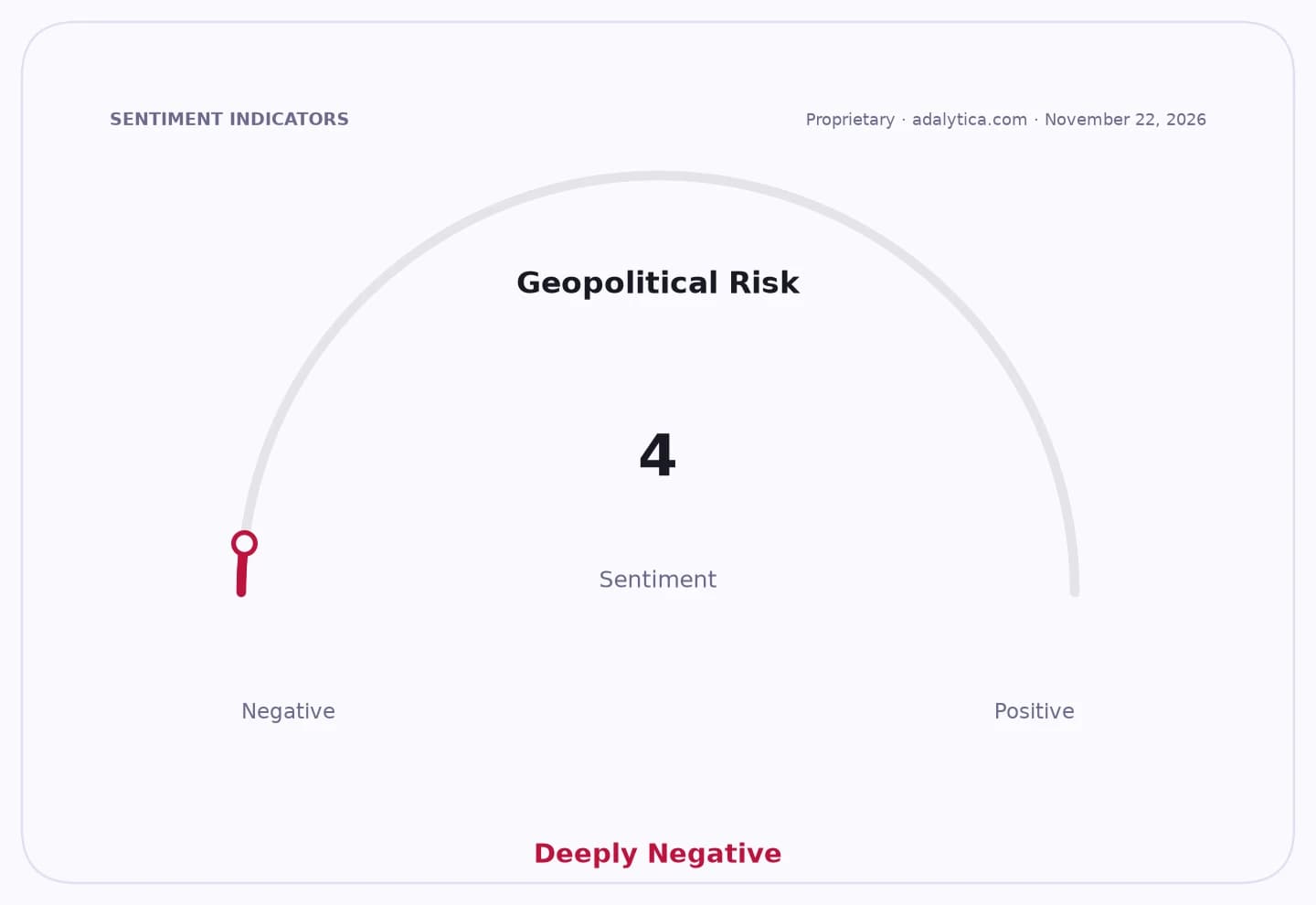
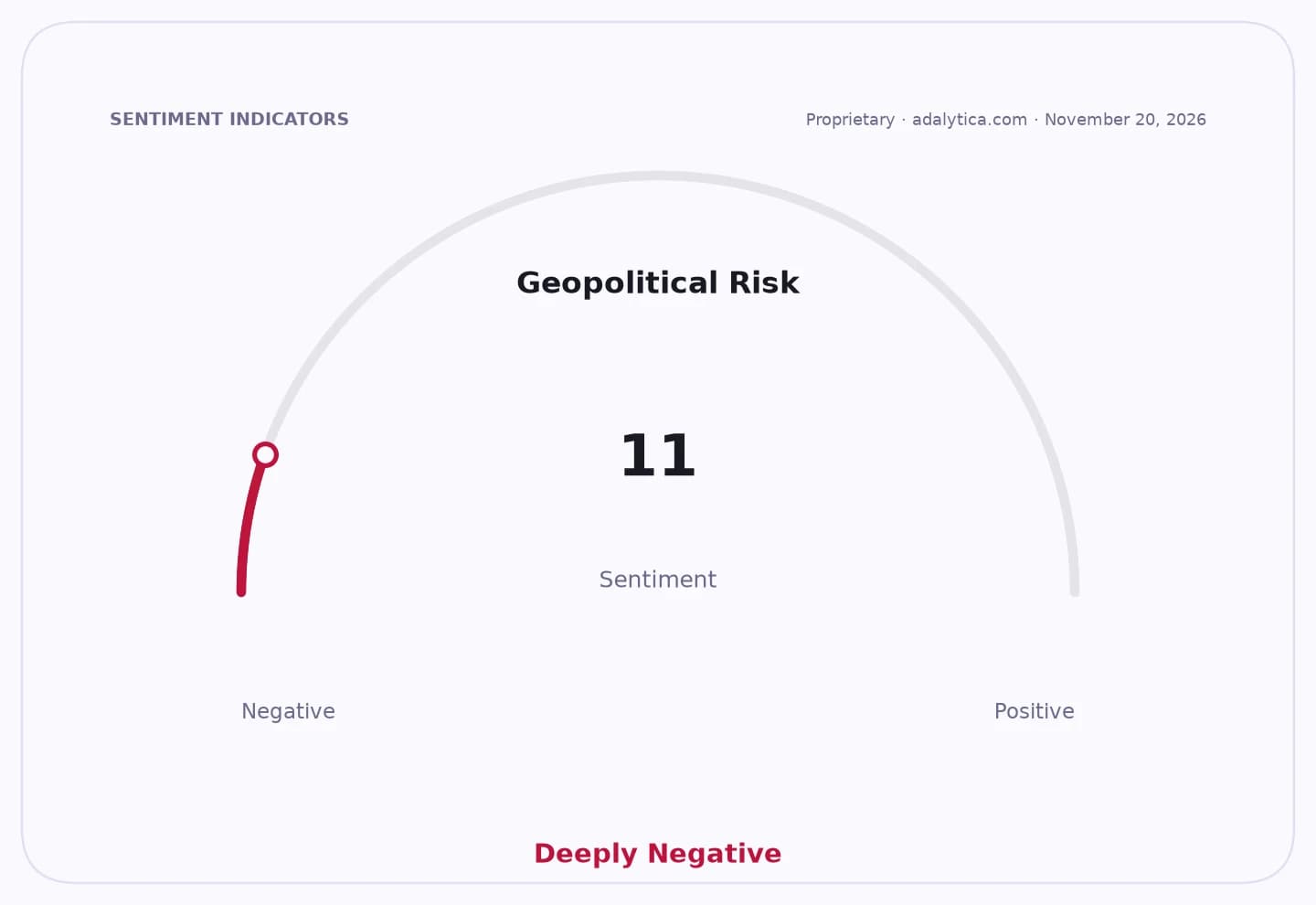
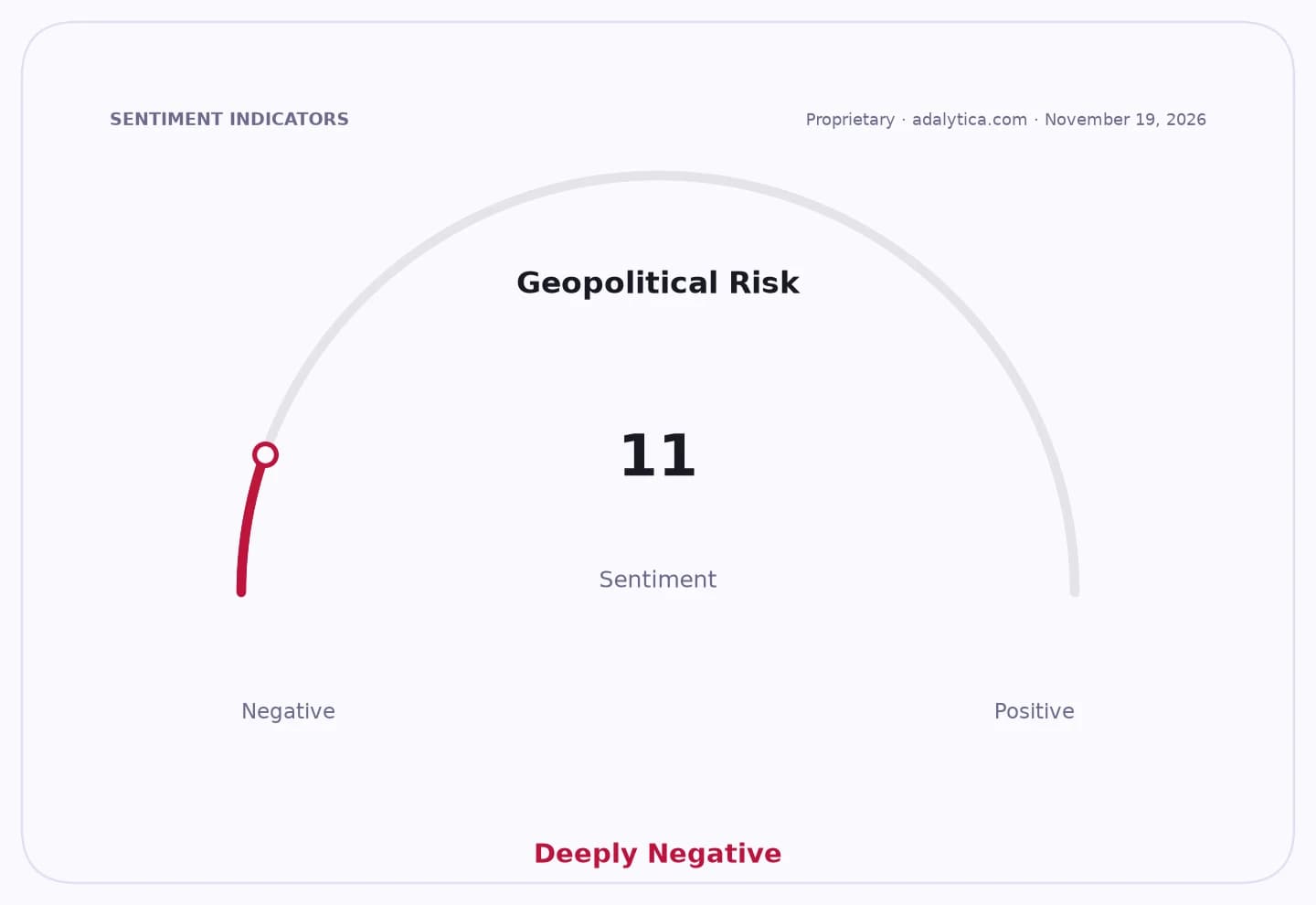
Geopolitical Risk — 30-day sentimentadalytica.com
Explore this data interactively — full history, time series and cross-market comparisons.
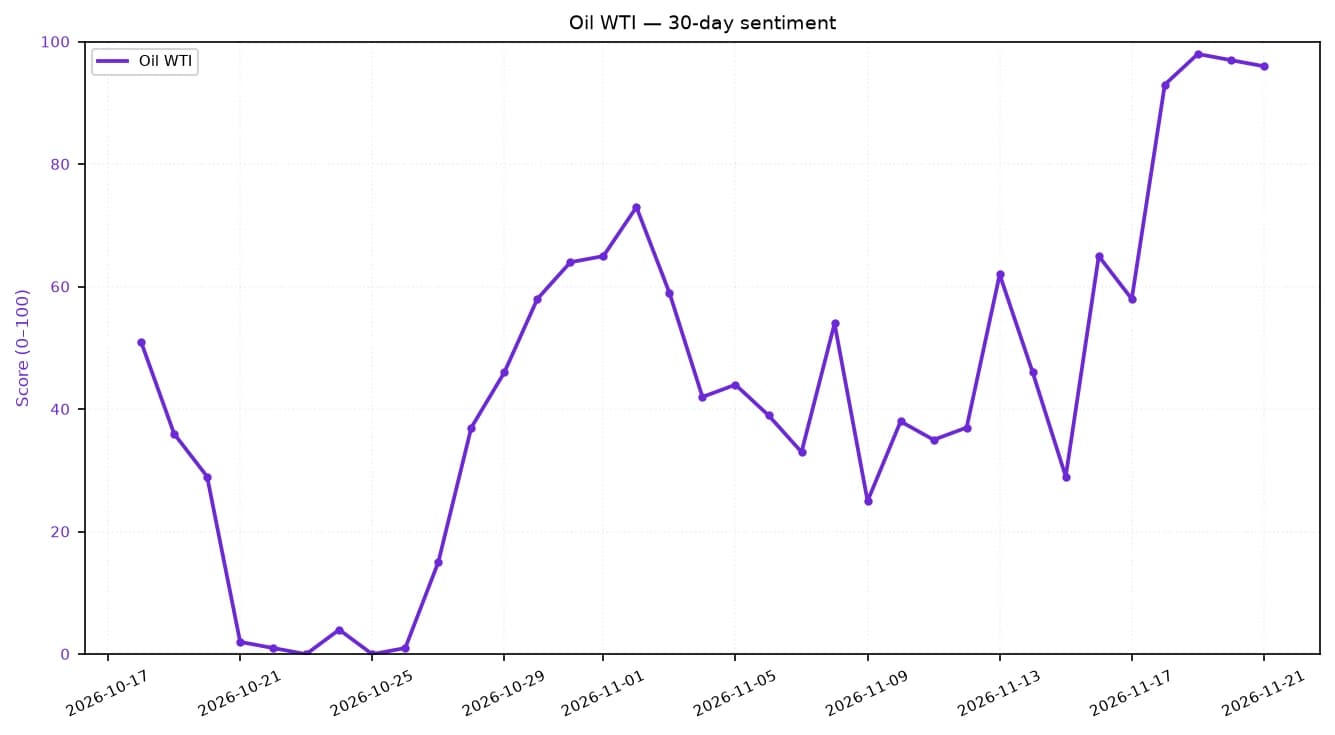
The macro backdrop is consistent with that caution. Adalytica’s Global Stability Sentiment gauge shows extreme greed at 86, while awareness remains in extreme fear at 4, a combination that points to complacent positioning against a still-tense geopolitical outlook. Oil-policy sentiment is neutral, but it has turned sharply higher over the past week, suggesting markets are still sensitive to any sign of disruption in OPEC-related and Middle East supply channels.
For investors, the key question is whether diplomacy can outpace escalation. A credible thaw could pull some of the war premium out of crude, ease inflation pressure and support risk assets; more clashes in or near the Strait would likely keep energy and defense stocks bid while pressuring transport, airlines and consumer-sensitive sectors.
The next catalyst is whether Iran’s outreach translates into formal talks or whether maritime incidents continue to widen the conflict risk around Hormuz.
| Entity | Gains | Losses |
|---|---|---|
| Oil bulls | ▲Higher risk premium | ▼If diplomacy cools tensions |
| Gold holders | ▲Safe-haven demand | ▼If geopolitical stress fades |
| Airlines and shippers | ▲Lower fuel and insurance costs | ▼Higher costs from disrupted routes |
| Iran diplomacy | ▲Chance to de-escalate | ▼Hard-liners if talks stall |