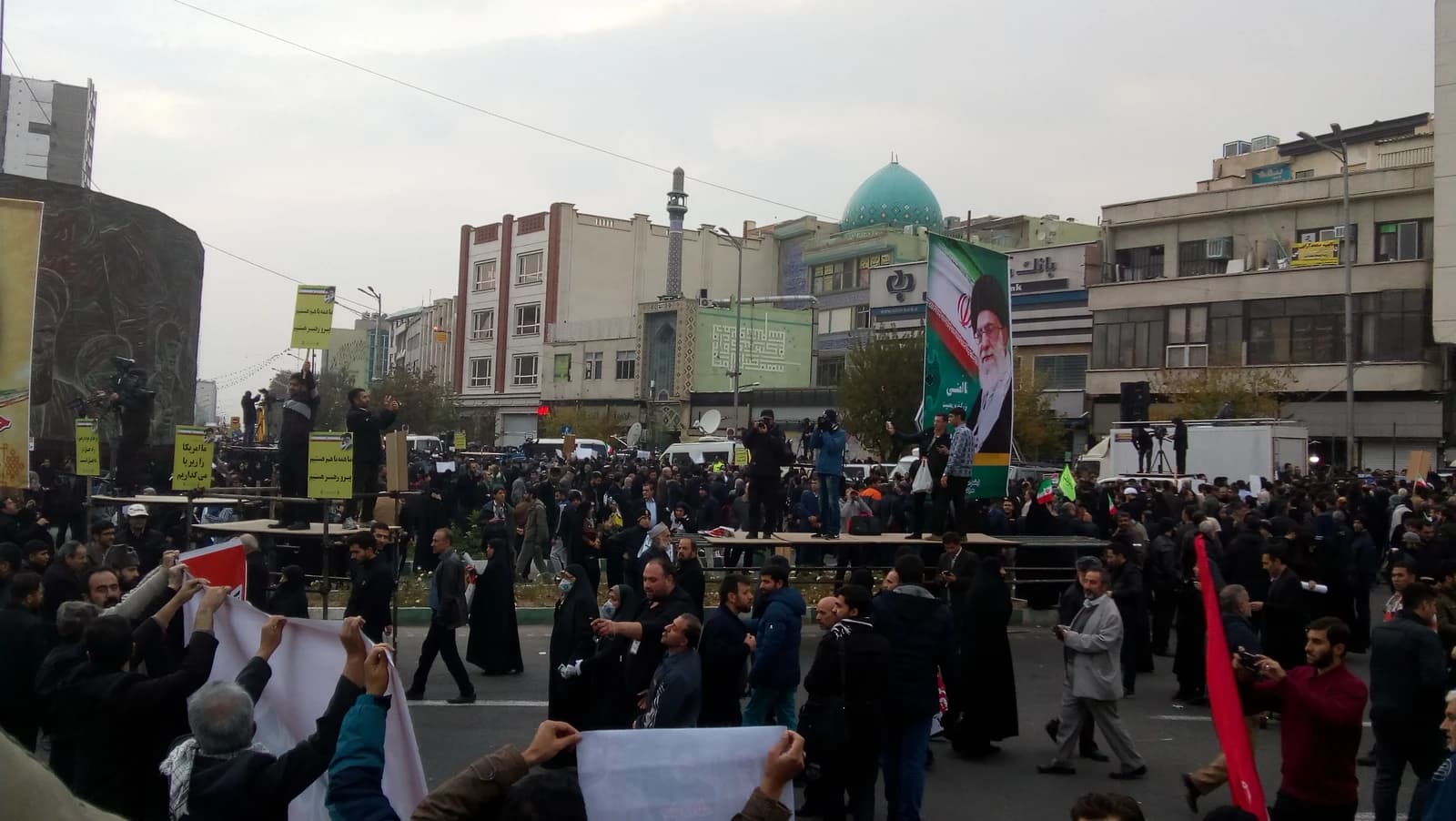
Iran’s parliament is advancing a bill that would criminalize a wide range of contacts with foreigners unless citizens obtain prior approval from intelligence agencies, a move that could further isolate the country’s academics, journalists and business community while exposing deep divisions inside the ruling establishment.
Iran Parliament Advances Bill on Foreign Contacts

The legislation, drafted after wartime security failures that revealed how deeply Israeli intelligence had penetrated Iran, has become a broader test of how far the Islamic Republic is willing to go to police interaction with the outside world. For investors, the issue matters less as a direct market catalyst than as another sign of a more closed, riskier operating environment for trade, education and any cross-border business ties.
Sentiment IndicatorsⓘProprietary · adalytica.com · September 13, 2026
This is a snapshot — live sentiment, awareness and momentum for 130+ markets update continuously in the dashboard.Open AlphaPulse

Under the proposal, Iranians would need advance permission from the Ministry of Intelligence and the Islamic Revolutionary Guard Corps intelligence arm before publishing books or articles, cooperating academically, giving interviews to foreign media deemed hostile, or attending scientific conferences and art festivals. Violations could bring prison terms of up to two years.
Parliament backed the framework in mid-August by 183 votes to four, but the bill has since expanded from 19 to 33 articles and only the first two have cleared plenary review. Parliament Speaker Mohammad Baqer Qalibaf has tried to narrow the draft, sending two key clauses back to committee and warning that the current version goes too far by putting “rights, life and commercial activity” at risk.
Geopolitical Risk — 30-day sentimentadalytica.com
Explore this data interactively — full history, time series and cross-market comparisons.Open AlphaPulse

His stance has laid bare an unusual split inside the establishment. Some hard-liners want sweeping controls, while Qalibaf says the state cannot require permission “at every step” without effectively isolating the country. The government of President Masoud Pezeshkian has also publicly opposed the bill, with officials warning it could stall science and push academics and researchers abroad.
The backlash has reached beyond Tehran. A UN fact-finding mission on Iran called on Sept. 3 for the bill to be withdrawn, saying it could further curtail fundamental freedoms and cut Iranians off from the international community. Iran’s final lawmaking hurdle is the Guardian Council, which would still have to approve any final text before it becomes law.
For markets, the immediate read-through is indirect but important: a tighter legal regime over information flows and foreign contact reinforces the investment case for higher geopolitical risk premia, weaker talent retention and more constrained knowledge transfer in Iran. The next flashpoint is whether parliament hardens the bill further or follows Qalibaf’s push to soften the most intrusive provisions.
| Entity | Gains | Losses |
|---|---|---|
| IRGC and security agencies | ▲Wider oversight powers | ▼Less institutional pushback |
| Hard-line lawmakers | ▲Tighter domestic control | ▼Reform-minded critics |
| Academics, journalists, business contacts | ▲Limited protection from abuse claims | ▼More permits, penalties |
| Foreign firms and universities | ▲Fewer compliance ambiguities if bill is softened | ▼Greater isolation and access risk |