Iraq is pressing OPEC to make room for a far larger oil industry, a move that could add millions of barrels a day to global supply over the next six years and further test a market already wrestling with volatile prices and softening demand forecasts.
Iraq Pushes OPEC for Bigger Oil Quota

The Baghdad government wants output to rise to 8 million to 10 million barrels a day from current levels, a leap that would turn Iraq into one of the biggest expansion stories in the oil patch if it can secure the quota space and infrastructure to do it. A ministerial committee has been sent to Saudi Arabia to argue for a bigger share, underscoring that the bottleneck is not geology so much as politics: OPEC’s production management, designed to defend prices, is now colliding with Iraq’s need for revenue and growth.
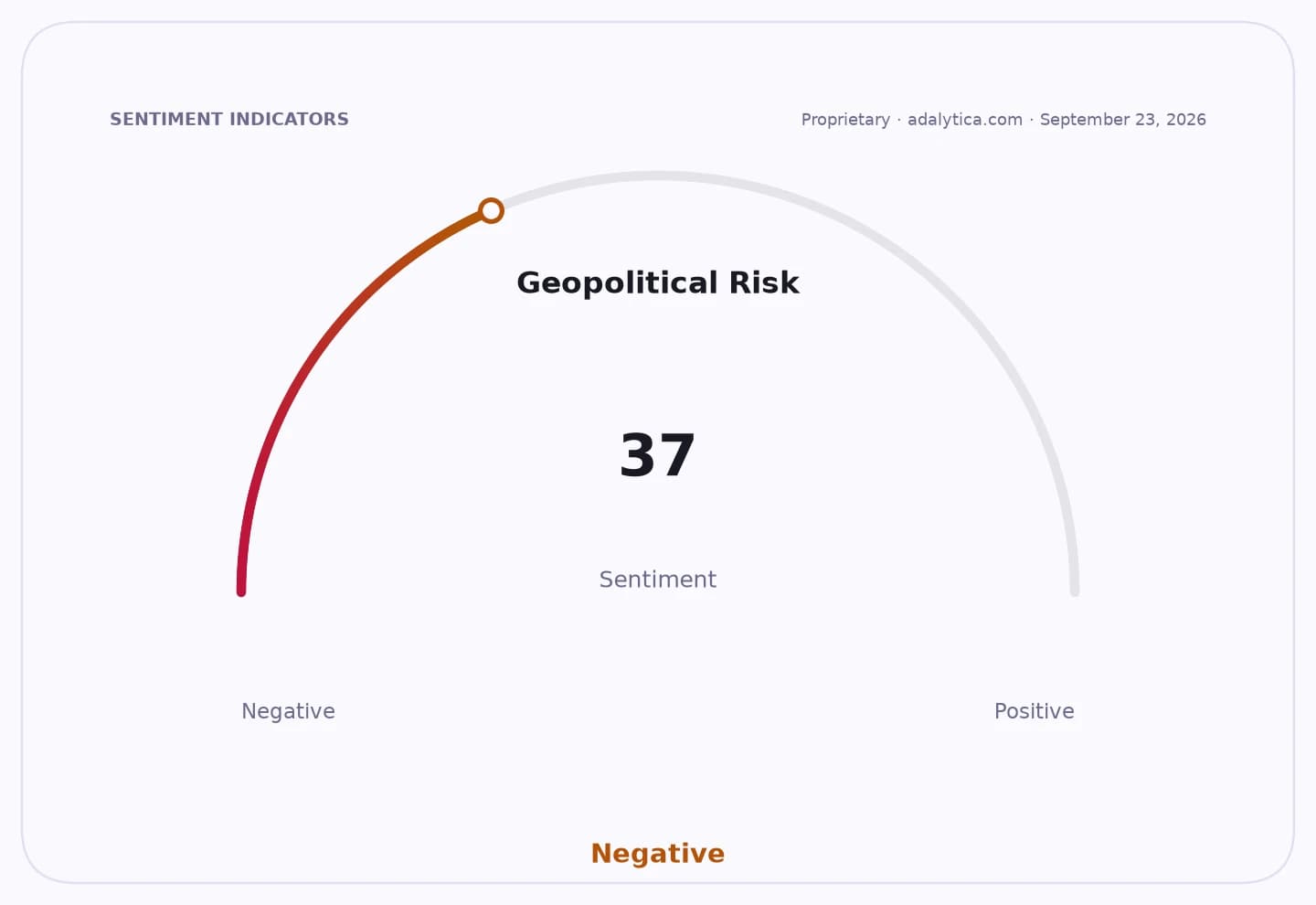
Sentiment IndicatorsⓘProprietary · adalytica.com · August 22, 2026
This is a snapshot — live sentiment, awareness and momentum for 130+ markets update continuously in the dashboard.Open AlphaPulse

That matters because Iraq is one of OPEC’s most important swing producers and one of the group’s most persistent quota headaches. Every incremental barrel it gets approved can reshape intra-cartel bargaining, especially when other members are focused on discipline rather than expansion. If Baghdad succeeds, the extra supply would be a headwind for crude prices and a direct challenge to the market’s assumption that OPEC will continue to tightly police output.
The timing is especially sensitive. U.S. crude futures were trading around $87 a barrel in the latest session, while the broader oil complex has stayed firm enough to keep energy equities elevated. XLE, the Energy Select Sector SPDR ETF, has climbed to about $63.64, near the top of its recent range, and USO, the U.S. Oil Fund, was around $134.64. That tells you the market is still pricing in tightness, not a flood of new barrels. Iraq’s push is therefore a classic asymmetric setup: if OPEC yields, the downside to prices could be larger than the market expects.

Investors should also watch the second-order effect. Higher Iraqi output would not just pressure crude benchmarks; it would also support the case for more spending across pipelines, storage, ports and servicing in the Middle East. Iraq’s interest in alternative export routes through Syria’s Baniyas port and Jordan’s Aqaba is a reminder that capacity expansion is only half the battle — exports need political access, logistics and security. That opens opportunity for infrastructure-linked companies and regional contractors even if headline oil prices come under pressure.
There is also a geopolitical angle. Iraq’s bid for more quota reflects a broader trend among resource-rich producers seeking to monetize reserves before energy transition pressures intensify. But the more it leans on OPEC, the more it exposes the cartel’s central weakness: a system built to restrain supply is increasingly being asked to accommodate growth ambitions. Saudi Arabia, which still anchors the group’s discipline, is unlikely to give away barrels cheaply.
The next catalyst is the negotiation itself. Any sign that Riyadh is willing to revisit Iraq’s allocation would be a warning for crude bulls and a signal that OPEC’s supply ceiling may be more flexible than expected. If talks stall, Iraq may still push ahead with export diversification and field development, keeping the medium-term supply overhang in play. For investors, the key trade is not just whether Iraq produces more oil, but whether OPEC can keep the rest of the market from pricing in that future flood early.
| Entity | Gains | Losses |
|---|---|---|
| Iraq | ▲Higher revenues, bigger quota | ▼OPEC discipline constraints |
| OPEC/Saudi Arabia | ▲Cartel leverage if talks succeed | ▼Pressure to loosen quotas |
| Oil consumers/importers | ▲Lower fuel costs if supply rises | ▼— |
| Crude bulls / energy shorts | ▲— | ▼More supply, lower prices |