Brent crude opened the week higher as traders pushed back into the market, with the move reinforcing a broader rebound in energy prices that has already lifted U.S. oil exposure and the wider energy complex.
Brent crude rises, lifting energy stocks
That matters because oil is once again acting like a macro catalyst rather than a passive input cost. When Brent turns higher, it feeds directly into inflation expectations, transport costs and earnings assumptions across the industrial economy. It also tightens the vice on central bankers and gives energy producers more leverage over cash flow, buybacks and capital spending.

The market backdrop shows why this move matters. U.S. oil proxy USO has climbed to 148.83 from 120.49 in late July, while Brent-linked BNO closed at 60.36 after touching 63.56 on Sept. 15. The sector has already responded: XLE ended at 62.37, down from its September peak but still well above its summer levels, reflecting the durability of the oil trade even after a pullback. Technical gauges remain elevated across the complex, with USO and BNO both sporting strong relative strength readings, which tells you this is not a one-day headline move but a market that has been in a persistent uptrend.
For investors, the key point is that oil strength tends to create second-order winners well beyond the producers themselves. Integrated majors, shale operators, oil services, pipeline owners and select refiners can all benefit from sustained crude firmness, while airlines, shippers, chemicals and other fuel-sensitive sectors face margin pressure. A rising Brent also keeps a bid under energy equities at a time when many broader market participants remain underweight the sector and still chase AI and rate-sensitive names.
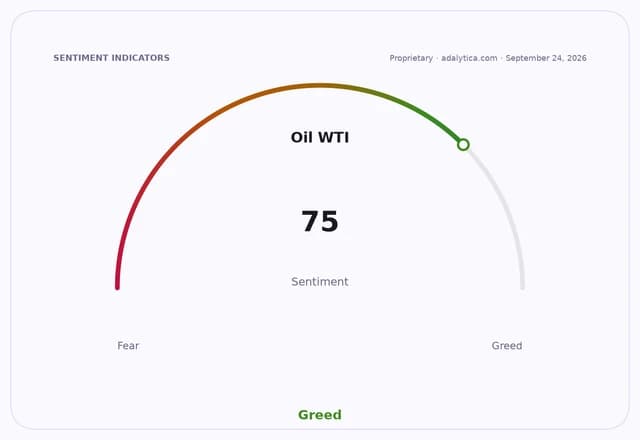
Adalytica’s WTI trade signals show sentiment at 75, labeled Greed, with awareness at a neutral 63, suggesting positioning is warming but not yet euphoric. That leaves room for further upside if the market gets another supply scare, a geopolitical shock or simply renewed confidence that demand is holding up better than expected. The stronger dollar backdrop complicates the macro picture, but it has not stopped crude from attracting buyers.
The investable takeaway is straightforward: the market underestimates how quickly oil can become the next inflation trade. If Brent stays firm above recent levels, energy stocks should keep outperforming, and the best risk/reward still sits with the picks-and-shovels names tied to sustained upstream spending and cash-flow-rich producers that can turn higher crude into capital returns.
| Entity | Gains | Losses |
|---|---|---|
| Energy producers | ▲Higher cash flow | ▼Fuel buyers face higher input costs |
| Oil services firms | ▲More drilling activity | ▼Margin pressure in fuel users |
| Airlines/shippers | ▲Lower fuel volatility only | ▼Higher jet fuel and bunker costs |
| Energy ETF holders | ▲Sector outperformance | ▼Broad-market energy shorts |