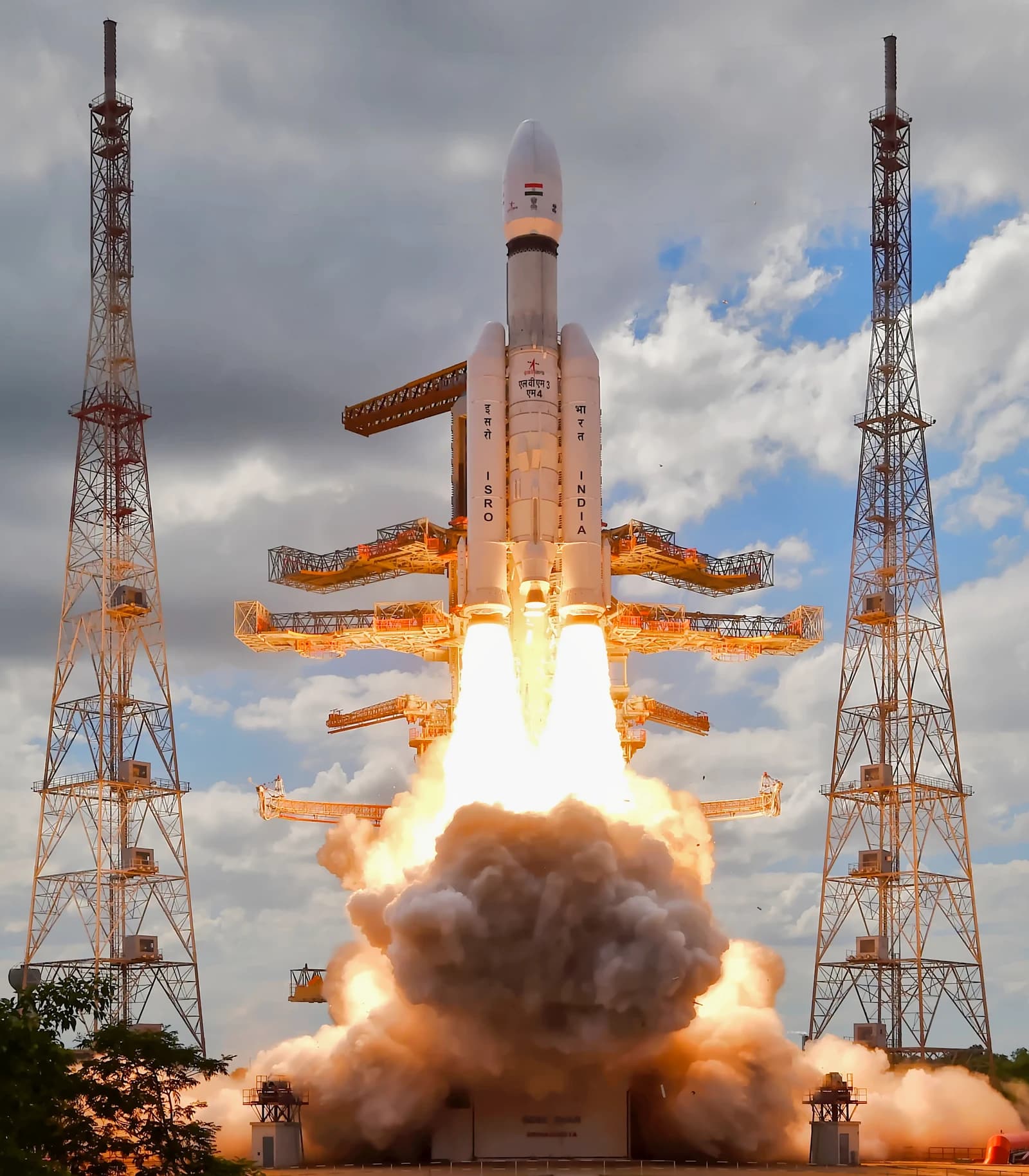
ISRO will remain under government control even as India opens more of the space supply chain to private industry, a policy clarification that matters because the country says it needs about 50 rocket launches a year, far more than the agency can handle alone.
ISRO stays public as India expands private space work

The Indian Space Research Organisation said reports that it was being privatized or stripped of importance were “baseless,” and that it will continue to lead advanced research, human spaceflight and strategic missions. The agency added that private companies will focus on manufacturing and commercializing technologies that have already matured, while ISRO scientists and engineers move to next-generation work such as reusable rockets, an Indian space station and a crewed lunar mission.
Sentiment IndicatorsⓘProprietary · adalytica.com · September 8, 2026
This is a snapshot — live sentiment, awareness and momentum for 130+ markets update continuously in the dashboard.Open AlphaPulse

The distinction is economically important. India is trying to build out a larger space industrial base without weakening the state’s grip on critical infrastructure. That should support domestic suppliers, subcontractors and launch-service providers, while preserving government control over national security, key infrastructure and strategic systems. For the broader economy, the model points to a more scalable space sector that can absorb private capital and industrial capacity rather than relying solely on public spending.
ISRO chief V. Narayanan said the current need is for around 50 rockets a year and that ISRO alone cannot meet that demand. He said private and public-sector collaboration will be required and argued that the arrangement is not new, noting that industry investment already accounts for roughly 80% of the budgets of PSLV and GSLV launches.
That framing is likely to reassure employees and state stakeholders who feared a deeper privatization push, but it also underscores the limits of India’s existing launch capacity. By keeping ISRO focused on frontier missions while outsourcing more routine production and commercialization, New Delhi is effectively trying to turn space into a larger industrial ecosystem. The upside for investors is a clearer role for private vendors in a market with long-duration demand; the risk is that execution, procurement and technology transfer slow the pace of commercialization.
The policy also fits India’s recent push to accelerate space capability after the launch of EOS-05, which expanded the country’s geostationary observation capacity and highlighted how space assets now feed directly into environmental monitoring and national security. In that sense, the message is not just that ISRO will stay public, but that India wants its space program to be both strategic and industrial.
For markets, the key question is whether the government can convert that intent into sustained launch cadence, a deeper vendor base and steady contract flow. If it can, the beneficiaries will be domestic aerospace suppliers and launch partners. If not, ISRO may remain the bottleneck in a sector that is supposed to scale.
| Entity | Gains | Losses |
|---|---|---|
| ISRO | ▲Retains strategic control | ▼Avoids privatization pressure |
| Private space firms | ▲More manufacturing work | ▼Less access to core missions |
| Indian government | ▲Stronger national space base | ▼Must fund oversight and R&D |
| Employees/unions | ▲Job-security reassurance | ▼Fewer control gains |