Italy is moving to prolong its fuel-tax relief after petrol and diesel prices climbed again, a politically sensitive step that would blunt near-term inflation pressure but add to budget questions as higher oil prices filter through to households and transport costs.
Italy Fuel Tax Relief Extension on Rising Prices
Economy minister Giancarlo Giorgetti has signed a decree activating so-called “mobile excises” to pave the way for an extension of the current diesel excise cut, while Adolfo Urso said the government was working on an interministerial measure to keep the relief in place. The proposal hinges on using extra VAT revenue generated by higher fuel prices, effectively recycling part of the windfall back to consumers and businesses.
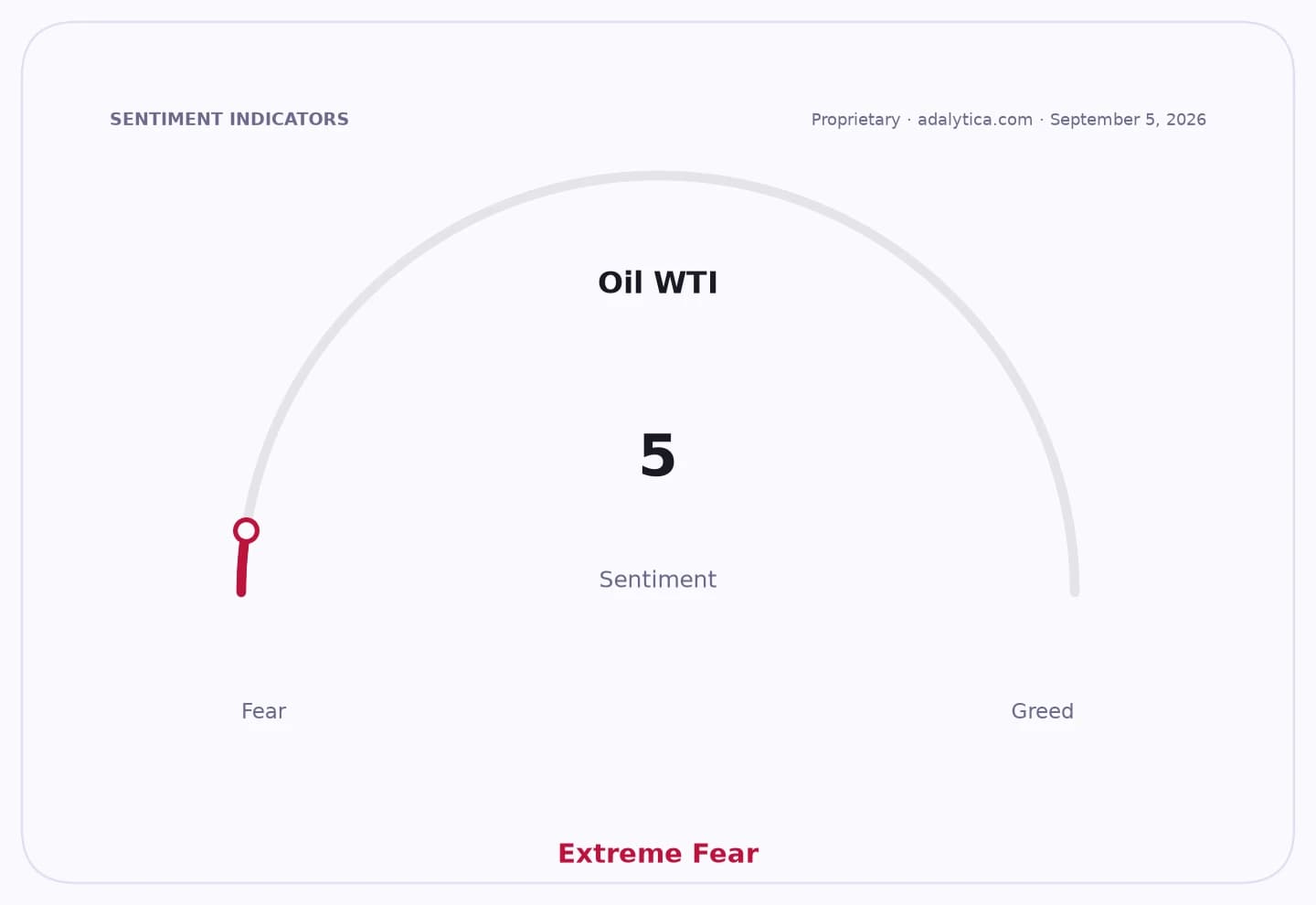
Sentiment IndicatorsⓘProprietary · adalytica.com · September 5, 2026
This is a snapshot — live sentiment, awareness and momentum for 130+ markets update continuously in the dashboard.Open AlphaPulse
The timing matters because fuel remains one of the fastest channels through which crude-price swings hit the real economy. Italy’s economy is heavily exposed to road transport, logistics and energy-intensive manufacturing, so even small moves in pump prices can quickly squeeze disposable income and corporate margins. Urso explicitly linked the measure to support for firms, workers and lower-income households, underscoring the government’s concern that fuel inflation could feed into broader production costs.
The latest readings from the economy ministry showed self-service petrol at an average 2.046 euros a liter on the national road network and diesel at 2.157 euros. On highways, petrol averaged 2.134 euros a liter and diesel 2.233 euros. Consumer group Unc said a 50-liter fill-up had become 1.20 euros to 1.50 euros more expensive in just three days depending on fuel type and location, warning diesel on highways could breach 2.40 euros a liter without the tax break.
DCOILWTICO vs CPIAUCSL — macro contextadalytica.com
Explore this data interactively — full history, time series and cross-market comparisons.Open AlphaPulse
For investors, the immediate implication is that Rome is prepared to lean against another energy-price shock rather than let it pass through fully to inflation. That is supportive for consumer spending and some domestic businesses, but it also means less fiscal room if oil stays elevated. Italy has already spent more than 2 billion euros on previous fuel-duty cuts, and any extension would keep pressure on public accounts at a time when governments across Europe are trying to balance energy support with deficit control.
The move also reflects the wider market backdrop: crude has been volatile, with the U.S. benchmark trading around $91 a barrel after a recent rebound, keeping pressure on refined-fuel prices. Refiners, distributors and fuel retailers may gain from higher nominal prices, but the policy response suggests governments are increasingly likely to intervene if the pass-through becomes politically or economically damaging.
For markets, the key question is how long Rome can fund the relief and whether it broadens the measure beyond diesel, where the political case is strongest. If crude stays firm, the government faces a trade-off between inflation containment and fiscal discipline — and investors in consumer-facing sectors, transport and utilities will be watching for that balance to tilt.
| Entity | Gains | Losses |
|---|---|---|
| Italian consumers | ▲Lower fuel bills | ▼Higher inflation pass-through |
| Transport and logistics firms | ▲Softer operating costs | ▼Margin pressure from fuel spikes |
| Italian government | ▲Short-term political relief | ▼Fiscal flexibility |
| Oil producers and refiners | ▲Higher nominal fuel revenue | ▼Risk of tax offsets |