Germany’s coalition government has reached a fundamental agreement to cut fuel prices by 17 cents a liter and impose a fuel price cap, a move aimed at easing a cost squeeze that has become politically and economically harder to ignore as oil prices stay elevated.
Germany reaches fuel price cut deal
The deal matters because transport fuel feeds directly into household spending power, business logistics costs and broader inflation, and Berlin is now moving to blunt a price shock rather than wait for market forces to do the work. With Brent-linked crude benchmarks still high and U.S. oil prices near recent peaks, the measure could provide near-term relief at the pump, but it also underscores how energy inflation is forcing governments to intervene more aggressively in consumer markets.
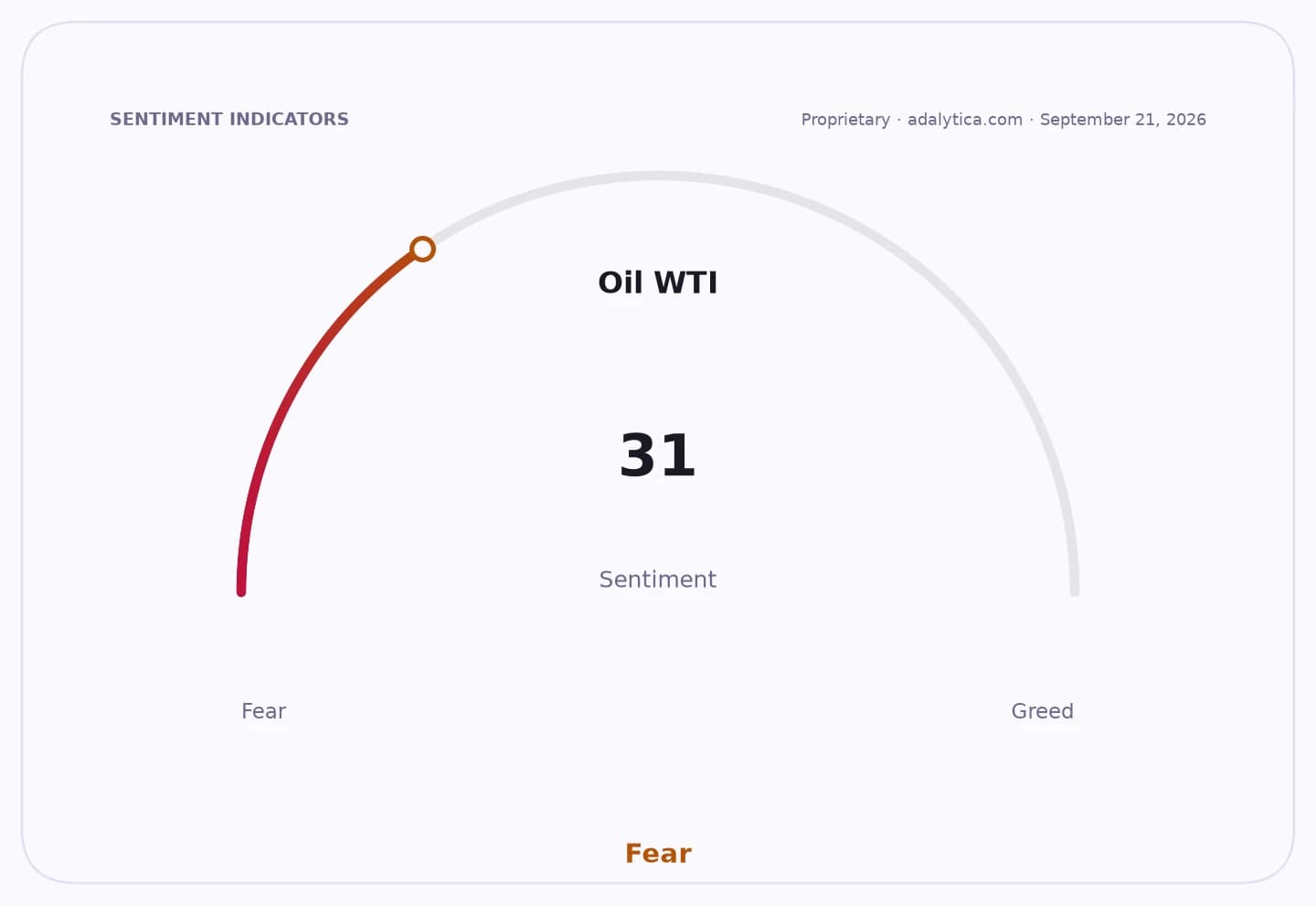
Sentiment IndicatorsⓘProprietary · adalytica.com · September 21, 2026
This is a snapshot — live sentiment, awareness and momentum for 130+ markets update continuously in the dashboard.Open AlphaPulse
The agreement, which would split costs between federal and state governments, comes after growing public pressure and renewed calls for action, including proposals to lower value-added tax on fuel. That political backdrop is important: fuel prices are one of the most visible parts of inflation, and when they remain elevated for long enough, they quickly become a test of coalition cohesion and of the government’s ability to protect purchasing power without worsening fiscal strain.
For investors, the direct market impact is likely to be limited, but the signal is broader. Cheaper fuel would marginally support consumer discretionary spending and ease pressure on freight-intensive sectors, while also trimming some inflation pass-through at the margin. The flip side is that price caps and subsidies can distort demand and complicate the policy mix if crude stays expensive, especially if the state ends up absorbing a recurring share of the cost.
Oil markets remain the larger driver behind the policy response. U.S. crude futures have climbed back above $90 a barrel and energy-linked exchange-traded products have also been firm, with technical indicators suggesting a market that has been overbought at times even after some pullbacks. That means policymakers are responding to a price environment that still looks tight, not to a temporary spike that can simply be ignored.
The central question now is implementation: how quickly the coalition can turn the agreement into enforceable relief, how the costs are allocated, and whether the cap is broad enough to matter without creating supply distortions. If oil prices remain high, the German government may end up in a recurring battle between inflation relief and budget discipline — a dynamic investors will watch closely across Europe’s energy-sensitive economy.
| Entity | Gains | Losses |
|---|---|---|
| German motorists | ▲Lower pump prices | ▼Less household budget pressure |
| Federal and state governments | ▲Political relief | ▼Higher fiscal costs |
| Fuel retailers | ▲Higher-volume sales potential | ▼Margin and pricing constraints |
| Oil producers | ▲Elevated crude prices | ▼Policy pushback on prices |