Itaú Unibanco is moving generative AI from pilot to platform, using its ia.i interface and IARA governance layer to extend the technology across customers and employees in a market where compliance and data controls matter as much as speed.
Itaú Unibanco Expands AI Platform With Governance Layer
The bank’s push is significant because it shows how a major lender in Latin America’s largest economy is trying to scale artificial intelligence without surrendering oversight. In Brazilian banking, where supervisors closely watch customer data, operational risk and model governance, a dedicated control framework can determine whether AI becomes a productivity tool or a liability.
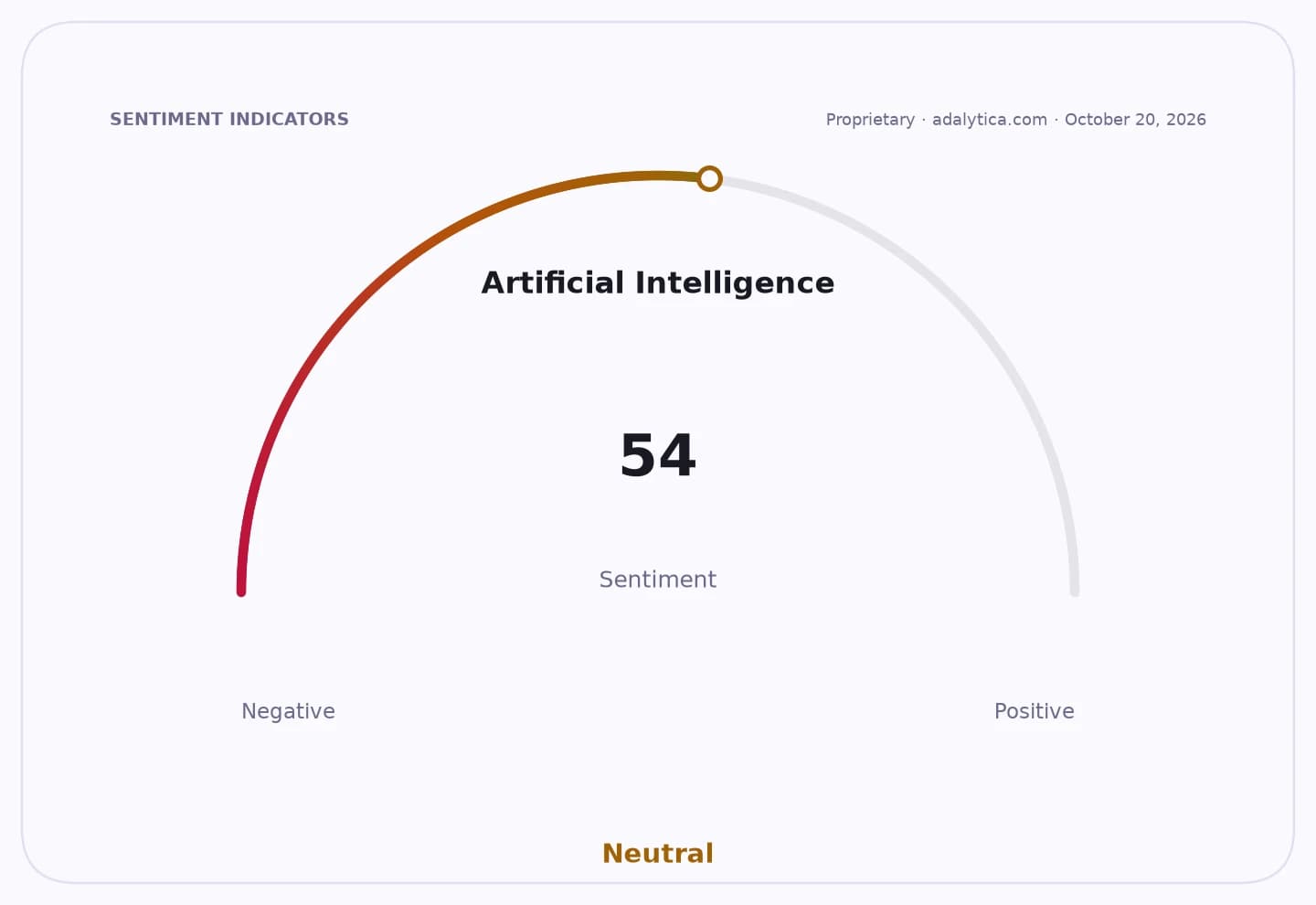
Sentiment IndicatorsⓘProprietary · adalytica.com · October 20, 2026
This is a snapshot — live sentiment, awareness and momentum for 130+ markets update continuously in the dashboard.Open AlphaPulse
According to material published by OpenAI on Oct. 16, 2026, ia.i functions as the conversational front end for Itaú’s AI deployment, while IARA is designed to govern how the system is used. The setup suggests an institution-wide rollout rather than a narrow experiment, with the tools aimed at both customer service and internal employee workflows.
That matters for investors because banks are under pressure to cut costs, improve response times and deepen digital engagement without increasing fraud or compliance risk. A successful deployment could help Itaú widen efficiency gains across a large operating base, while also strengthening customer retention through faster, more personalized interactions.
The announcement lands as the banking sector faces sharper scrutiny over AI agents and account security. Global lenders and digital platforms have been restricting AI access to banking systems amid concerns about fraudulent transactions and credential leakage, even as executives continue to press for AI adoption.
Itaú’s own regulatory backdrop underscores the stakes. Recent filings highlight the bank’s focus on integrated compliance and operational-risk management, reinforcing why governance is central to any broad AI rollout. In that context, IARA is not just a technical feature but part of the bank’s control architecture.
The stock reaction has been supportive. Itaú’s U.S.-listed shares closed at $9.43 on Oct. 19, up from $9.44 on Oct. 16 and well above $7.16 on Aug. 20, with the shares trading above both the 50-day and 200-day moving averages. The RSI remains elevated at 67.7, suggesting the rally has been strong, though not yet in extreme overbought territory.
For investors, the key question is whether Itaú can turn AI deployment into measurable operating leverage without inviting regulatory friction. The next catalyst will be evidence of scale, user adoption and any quantifiable impact on costs, customer engagement or risk controls.
| Entity | Gains | Losses |
|---|---|---|
| Itaú Unibanco | ▲Faster automation, lower costs | ▼Higher governance burden |
| Customers | ▲Quicker digital service | ▼Greater data/privacy scrutiny |
| Employees | ▲AI-assisted workflows | ▼Process disruption |
| Competitors | ▲Pressure to match AI rollout | ▼Risk of falling behind |