Japanese investors are returning to their home bond market in force, and that shift matters because it is helping absorb government supply at a time when the Bank of Japan is stepping back. HSBC Asset Management says local buyers snapped up a net 18.8 trillion yen of Japanese government bonds between April and September, the strongest first-half buying in 17 years, as rising yields made domestic debt attractive enough to pull money home.
Japan investors return to JGBs as yields rise

For investors, the message is bigger than one strong half-year. When yields rise from ultra-low levels, Japan’s insurers, banks and pension-linked credit trusts can finally earn more without leaving the country or paying up to hedge foreign-currency risk. That makes Japanese government bonds more competitive for domestic institutions, even if they still lag higher-yielding markets abroad.
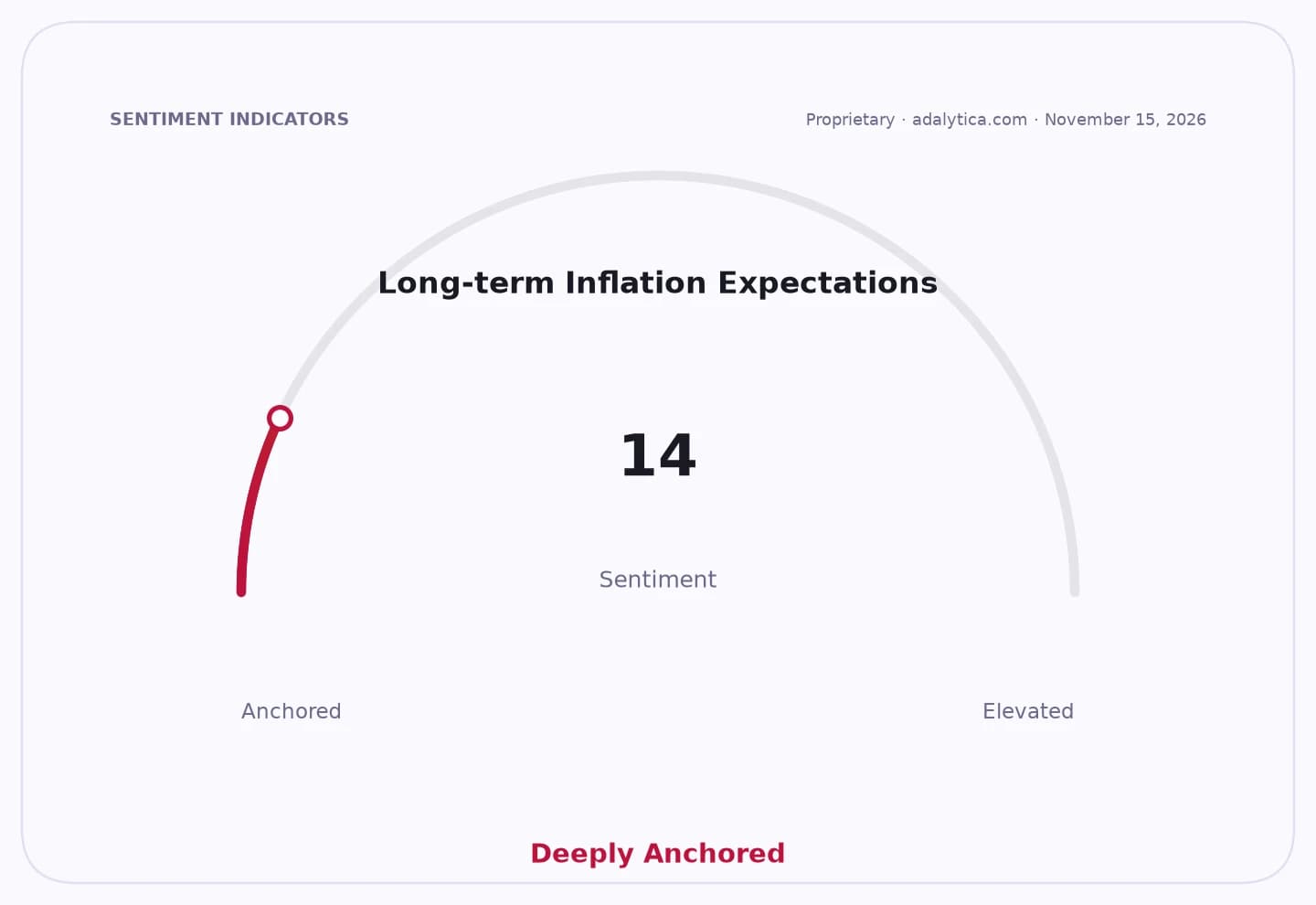
Sentiment Indicators
The buying spree also reflects a structural change in Japan’s fixed-income market. As the BOJ reduces its holdings, local institutions are increasingly becoming the natural marginal buyer of government debt. HSBC said credit trusts backed by pension funds accounted for nearly half of the purchases, underscoring how domestic savings are being redirected toward home assets rather than U.S. or European bonds.
That is important for the economy because it improves the market’s ability to finance Japan’s large public debt without relying as heavily on official support. It also suggests the long era of near-zero yields is ending in a way that could reshape capital allocation across the financial system. A 20-year government bond auction in October drew record demand, with bids about six times the amount offered, a sign that the rally in domestic duration is not just a one-off.
There is a second-order implication for global markets too. HSBC pointed to French fiscal worries as a possible reason some Japanese money may keep coming back home, and that is a reminder that asset allocation is relative. If domestic bonds can provide decent yield without currency hedging costs, Japanese buyers may have less reason to chase overseas debt, especially when foreign sovereign risk or FX volatility looks less appealing.
The caveat is that this is mainly a domestic story. HSBC said Japanese yields are still below those of major overseas markets, so foreign investors may not find the same comfort. But for long-term investors, the trend is clear: Japan’s bond market is becoming investable again for its own savings base, and that could support financial stocks, stabilize government funding, and gradually pull capital back onshore. Worth watching if you own Japan exposure through broad funds, banks or insurers.
| Entity | Gains | Losses |
|---|---|---|
| Japanese banks and credit trusts | ▲Higher domestic yields | ▼Lower need for foreign bonds |
| Japan government bond market | ▲Stronger demand | ▼Less reliance on BOJ buying |
| Japanese investors | ▲Better home-market returns | ▼Fewer overseas yield opportunities |
| Foreign bond markets | ▲Less Japanese demand | ▼Capital repatriation pressure |