The yield on Japan’s benchmark 20-year government bond fell to 3.690% as buyers rushed back into sovereign debt, reinforcing a global bid for safety after weeks of turmoil in longer-dated bond markets.
Japan 20-year JGB yield falls as demand returns

That matters because Japanese government bonds are not just a domestic funding instrument; they are a pressure gauge for global risk appetite and for how much compensation investors now demand to hold long-duration debt. A record-high demand reading at Tuesday’s 20-year JGB auction helped pull yields lower and sent the yen higher, suggesting investors are re-entering a market that had been rattled by inflation worries and expectations of heavy government borrowing.
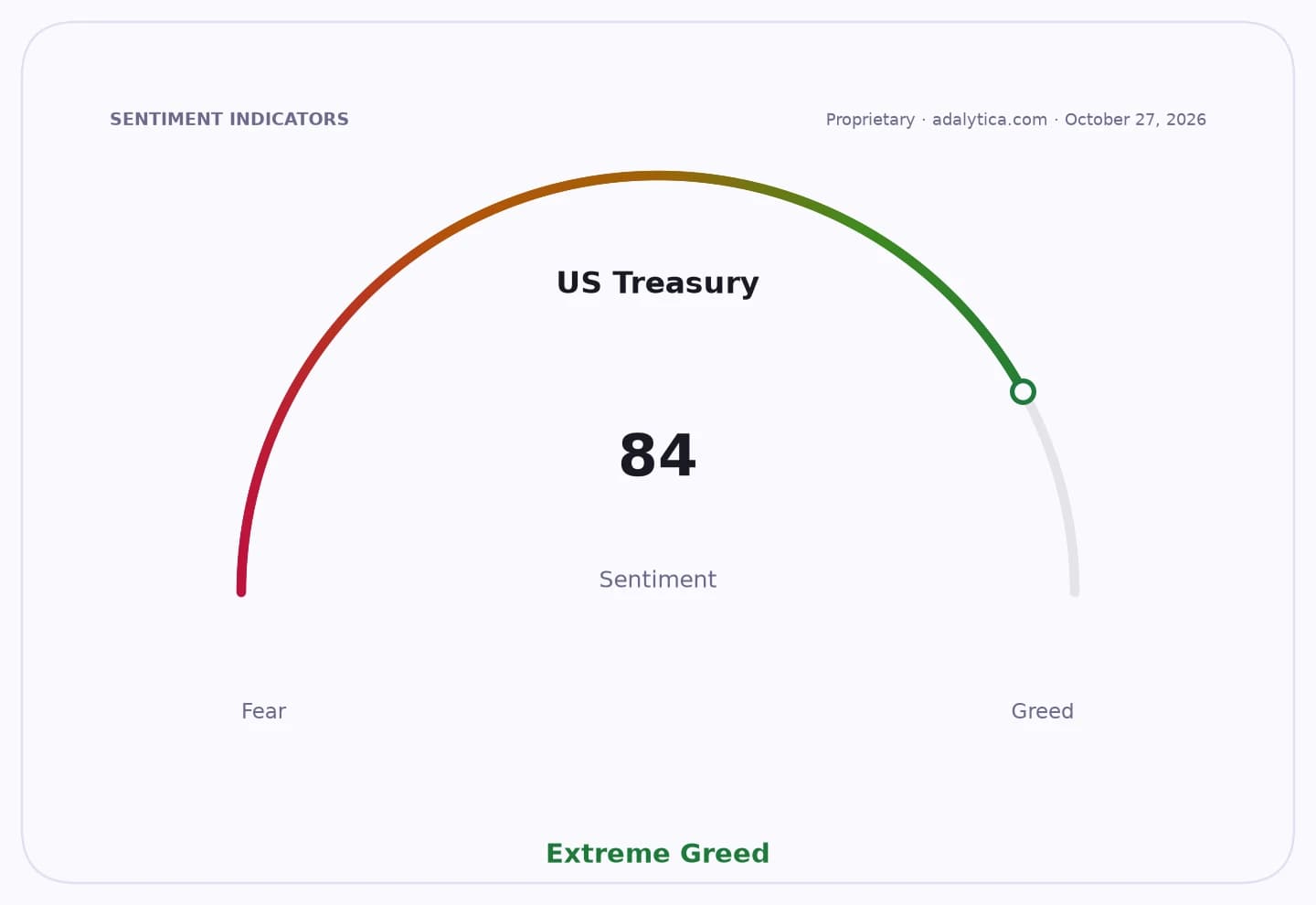
Sentiment IndicatorsⓘProprietary · adalytica.com · October 26, 2026
This is a snapshot — live sentiment, awareness and momentum for 130+ markets update continuously in the dashboard.Open AlphaPulse
The move in Japan echoed a broader shift across developed markets. Longer-dated US Treasury yields fell after weak housing data, while German government bond yields also eased as money rotated into safer assets. After a month-long global bond selloff that pushed long-term yields to multi-decade highs, even a modest reversal is significant: it shows the selloff is no longer one-directional and that duration is starting to attract capital again.
For investors, that is a big clue. When safe-haven demand returns, it usually pressures equities at the margin, supports high-quality bonds and can weaken the case for aggressively shorting duration. The move also matters for currency traders and cross-asset allocators because a stronger yen alongside firmer JGB prices can tighten financial conditions in Japan and affect carry trades built on a weaker yen and higher foreign yields.
The backdrop is a Bank of Japan that is still edging toward higher rates. A Reuters poll found most economists expect the BOJ to lift its policy rate to 1.50% in December from 1.25%, while leaving policy unchanged at its Oct. 30 meeting. That path keeps JGB investors focused on the trade-off between improving domestic demand for bonds and the risk that tighter monetary policy keeps upward pressure on yields over time.
For now, the message from the 20-year sector is straightforward: the market is buying protection again. That favors duration exposure, quality sovereign debt and yen strength, while leaving leveraged rate shorts and risk assets more exposed if the flight to safety broadens.
| Entity | Gains | Losses |
|---|---|---|
| Japanese government bonds | ▲Higher demand, lower yields | ▼Short duration trades |
| Yen | ▲Safe-haven bid, stronger currency | ▼Carry traders |
| US Treasuries | ▲Spillover buying support | ▼Treasury bears |
| Global equities | ▲None | ▼Risk assets, especially cyclicals |