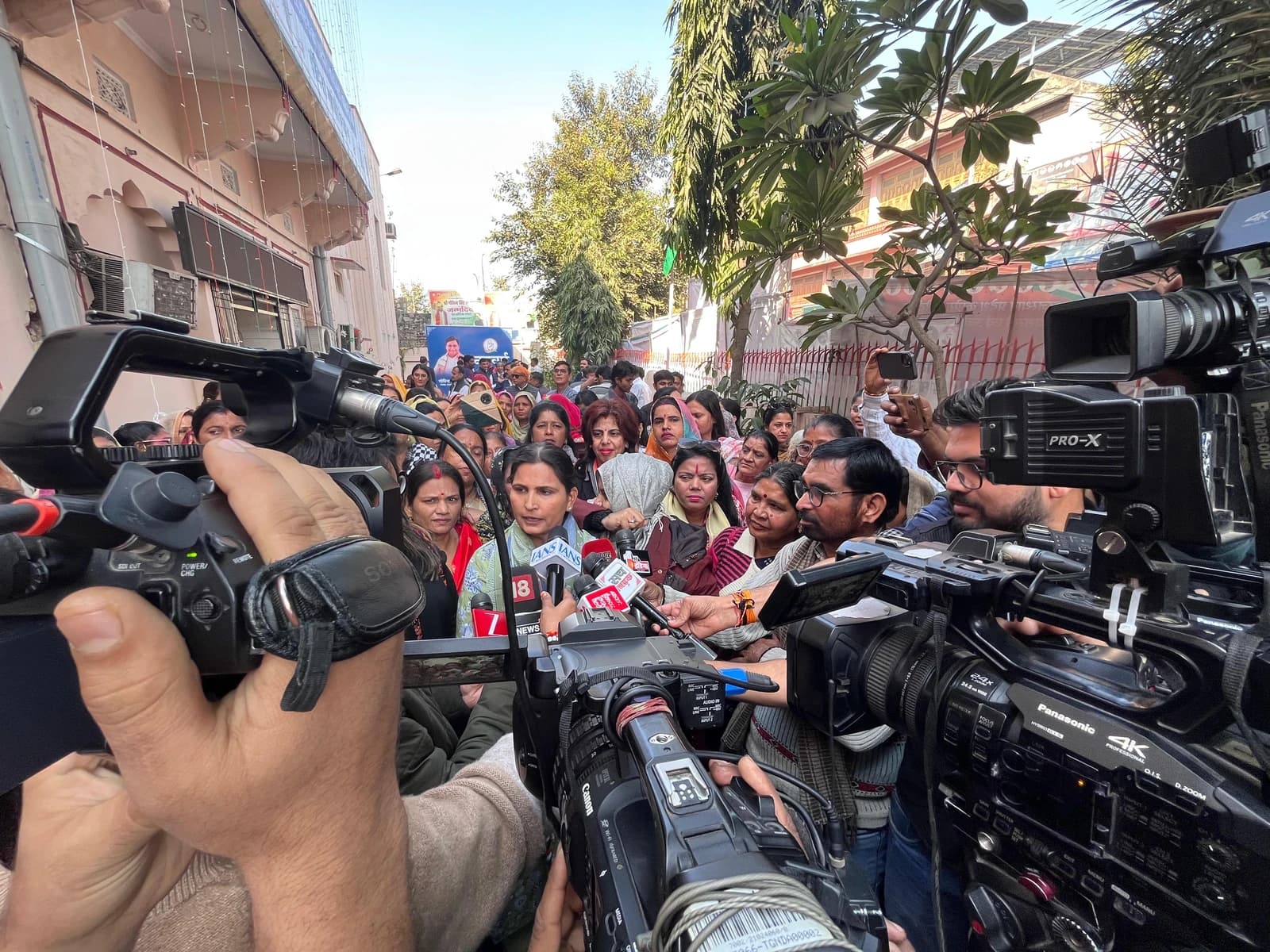
A municipal ward in Rajasthan’s Jhalawar has become a small but pointed illustration of how local elections in India often turn on identity, personal networks and party branding as much as policy, with two cousins — one backed by the BJP and the other by Congress — now contesting the same seat.
Jhalawar Ward 26 BJP and Congress Cousins Contest

The contest in Ward 26 matters because municipal elections are the first layer of political power in a state, shaping who controls basic civic services, local contracts and neighborhood-level influence. In a ward like this, the winner gains not just a council seat but access to local patronage and a stronger base for future political advancement, while the loser risks being pushed back into family or party margins.
The BJP has fielded former student union president Manoj Gurjar, while Congress has nominated former councillor Rajesh Gurjar. Both are residents of Jawahar Colony and are now seeking votes from the same electorate, turning the race into a direct test of party organization and personal reputation. For voters, the choice is narrowed to two familiar faces with overlapping social networks, which raises the stakes in a contest where small margins can decide the outcome.
For the BJP and Congress, the seat carries value beyond one ward. A win would signal local momentum in a town where civic contests can influence perceptions of party strength ahead of bigger electoral battles. A loss, by contrast, would underline how even nationally dominant parties can face localized resistance when family ties, neighborhood loyalties and candidate familiarity cut across party lines.
The broader political narrative is that Indian local elections remain deeply personal, even when fought under national party banners. In Jhalawar, the rivalry is not just between saffron and Congress colors but between two branches of the same family, making the ward a microcosm of how politics and kinship often collide at the grassroots.
For investors and policy watchers, the story matters mainly as a read on political sentiment and organizational reach rather than market impact. The outcome will not move equities or macro indicators, but it offers a reminder that electoral competition in India is still being won and lost at the street level, where candidate selection can matter as much as the party label.
| Entity | Gains | Losses |
|---|---|---|
| BJP | ▲Local visibility | ▼If family ties split votes |
| Congress | ▲Ward-level foothold | ▼If organization looks weak |
| Manoj Gurjar | ▲Party-backed advantage | ▼If personal vote base is thin |
| Rajesh Gurjar | ▲Incumbent familiarity | ▼If anti-establishment sentiment rises |