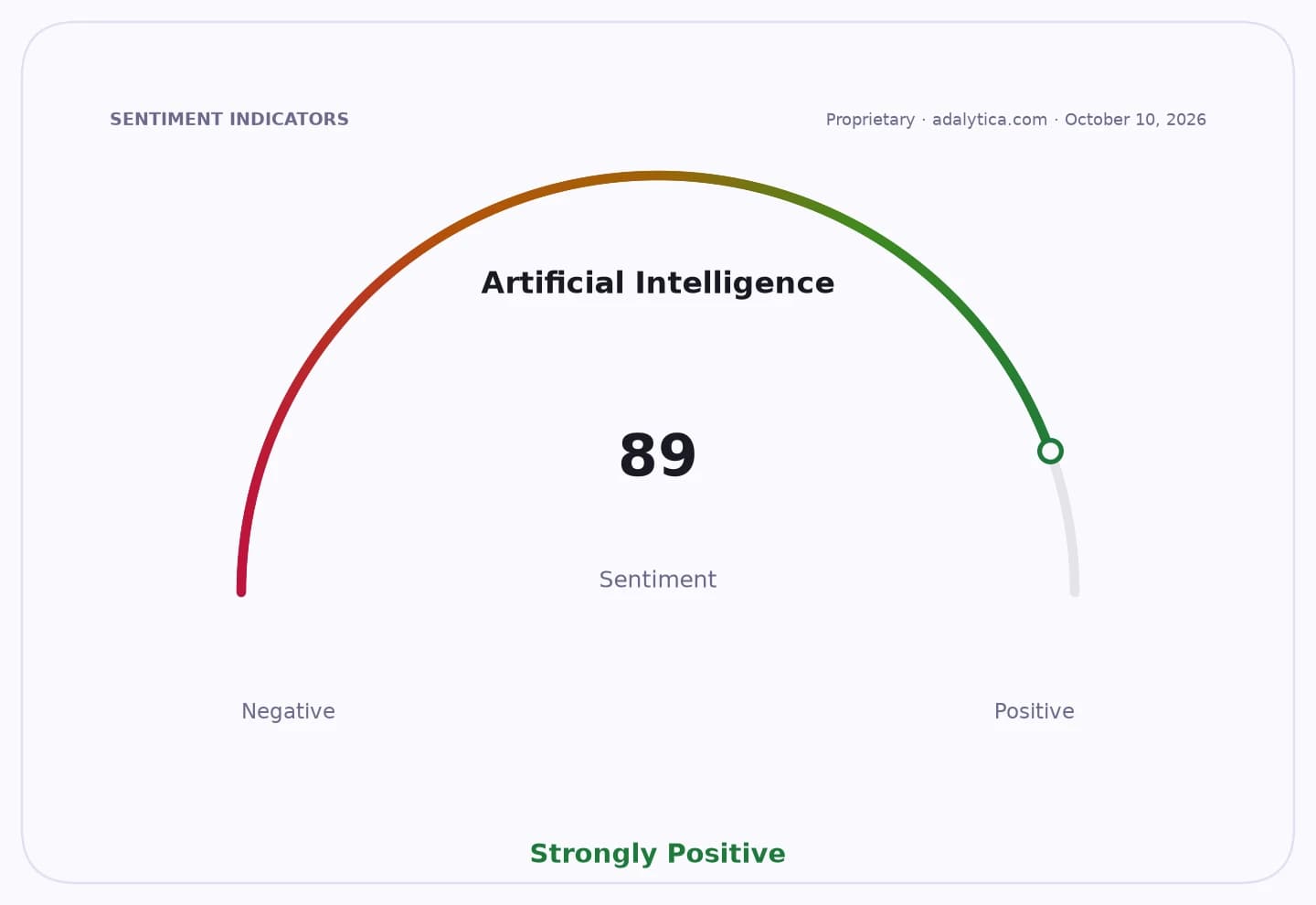
Kazakhstan plans to deploy artificial intelligence to assess how efficiently government buildings, vehicles and other state assets are being used, extending a broader digital overhaul of public finances that officials say is meant to cut waste and improve transparency.
Kazakhstan Finance Ministry to Use AI for State Assets
The move matters because public property is one of the state’s largest balance-sheet items, and a more disciplined approach to utilization could free up budget resources, reduce idle assets and improve procurement and capital allocation across ministries and state-linked organizations. For investors watching Kazakhstan’s reform agenda, it adds another signal that the government is trying to move from paper-based administration toward data-driven fiscal management.
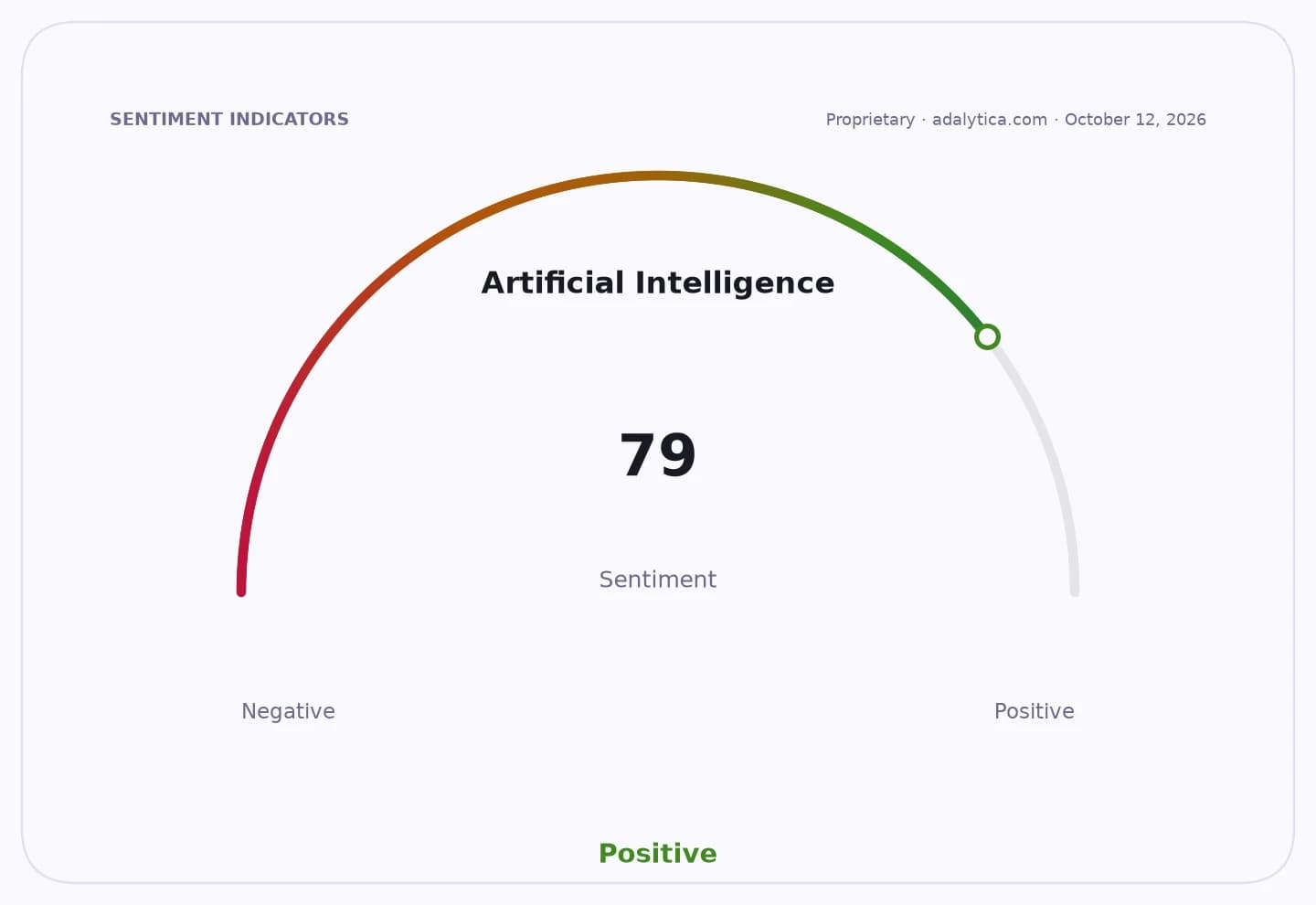
Sentiment IndicatorsⓘProprietary · adalytica.com · October 12, 2026
This is a snapshot — live sentiment, awareness and momentum for 130+ markets update continuously in the dashboard.Open AlphaPulse
Vice Finance Minister Aset Turyssov said the AI tools will be applied under the Digital Qazyna framework to measure the efficiency of state property and determine what benefits it can generate. The system already contains information on 25.6 million state assets held by 19,000 organizations, he said. Transfers of buildings and other property between agencies have been moved from paper to electronic format, allowing ministries to identify unused assets and request them from other departments.
Officials said nearly 4,000 transfers involving more than 56,000 assets worth over 433 billion tenge have already been completed since the project launched. That suggests the state has already begun surfacing underused property and moving it to where it can be deployed, a process that can reduce duplication and limit the need for fresh budget spending on offices, vehicles and equipment.
The initiative also fits a wider effort to digitize Kazakhstan’s public finances. The finance ministry is pushing ahead with digital tenge pilots, with 20 projects totaling 339 billion tenge already tested across areas including infrastructure and agriculture. Eight budget categories have been identified for possible use of digital tenge, which officials want to deploy on projects costing more than 100 million tenge once implementation rules are approved.
If executed well, the combination of AI asset review and programmable public spending could improve monitoring of how taxpayer money moves through the system, reduce leakage and make state investment more traceable. That would be supportive for sovereign credit fundamentals over time, especially if the reforms translate into lower waste and better project execution.
For investors, the near-term relevance is less about a direct market trade and more about the credibility of Kazakhstan’s governance and fiscal modernization drive. A state that can better measure and reallocate its own assets is more likely to execute infrastructure spending efficiently, while tighter controls on cash flows can be positive for lenders, contractors and development partners. The risk is that the technology layer outpaces institutional follow-through, leaving the reform as a reporting exercise rather than a budget-saving tool.
The broader narrative is clear: Kazakhstan is using digital tools not just to modernize government services, but to treat the state itself like a balance sheet that can be audited, optimized and, in some cases, slimmed down. The key test now will be whether AI-driven oversight produces measurable savings and faster decision-making, or simply adds another layer of software to an already complex bureaucracy.
| Entity | Gains | Losses |
|---|---|---|
| Kazakhstan finance ministry | ▲Better asset visibility | ▼Administrative inertia |
| Taxpayers | ▲Lower waste, higher efficiency | ▼Inefficient legacy spending |
| Contractors and lenders | ▲Clearer project tracking | ▼Slower or tighter approvals |
| Idle state asset holders | ▲Pressure to redeploy assets | ▼Loss of underused property |