Kyrgyzstan’s cost of servicing its public debt is set to rise sharply over the next four years, adding pressure to state finances even as the finance ministry says the country’s debt burden remains manageable.
Kyrgyzstan debt service set to rise through 2029
The ministry says total public debt stood at $10.2 billion at the end of July, with almost half of it domestic and the rest external. Debt service spending, covering interest and principal repayments, rose from 77.1 billion soms last year to a planned 99.3 billion soms this year, then is projected to climb to 135.2 billion in 2027, 149.8 billion in 2028 and 144.5 billion in 2029.
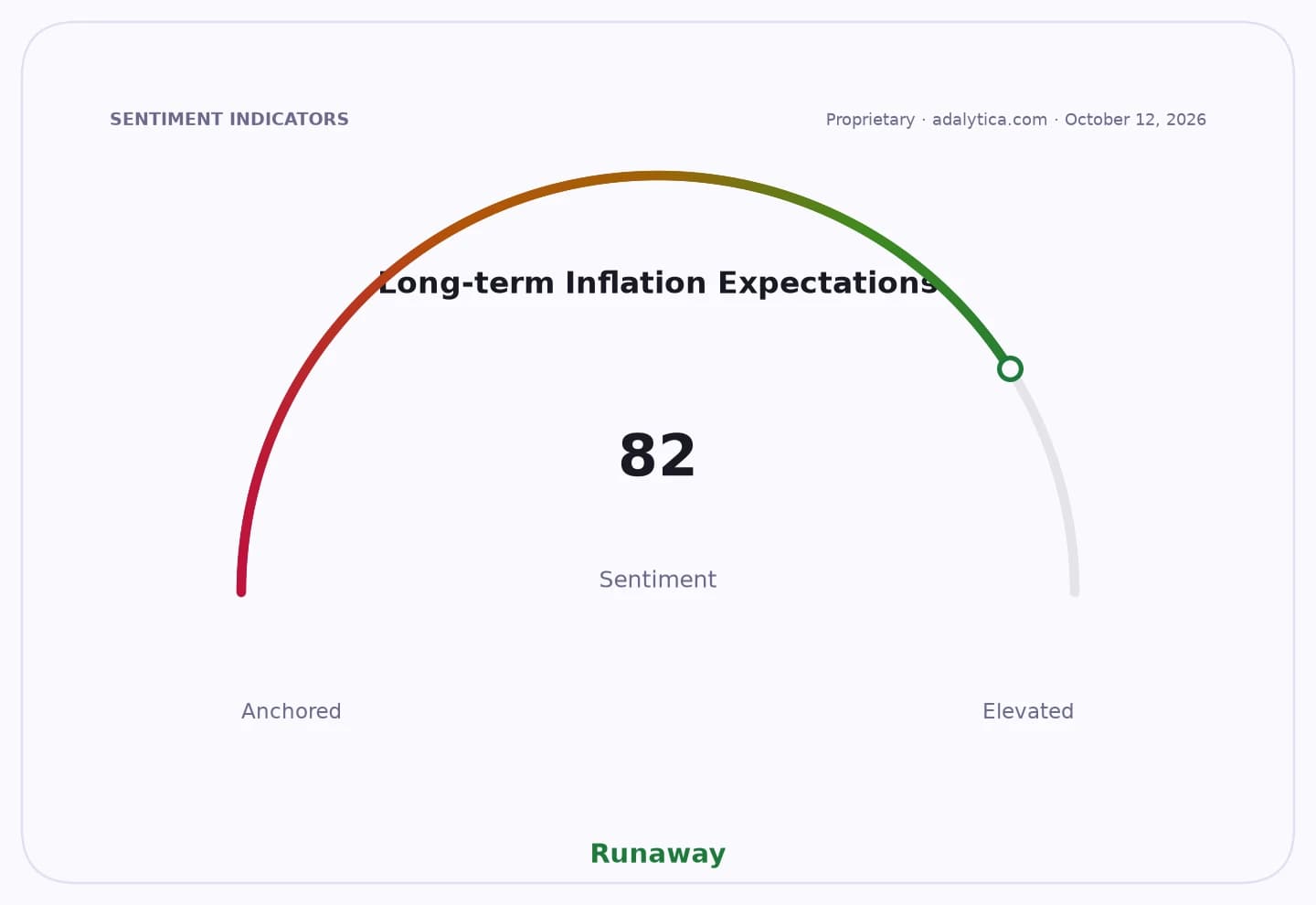
Sentiment IndicatorsⓘProprietary · adalytica.com · October 13, 2026
This is a snapshot — live sentiment, awareness and momentum for 130+ markets update continuously in the dashboard.Open AlphaPulse
That trajectory matters because higher debt service crowds out room for infrastructure, social spending and other budget priorities. For a developing economy that relies on fiscal flexibility to cushion shocks, the jump suggests borrowing costs and refinancing needs are becoming a bigger constraint even before any new spending plans are taken into account.
The finance ministry still describes the debt position as sustainable, pointing to public debt at 39.5% of gross domestic product, well below a 70% threshold it considers risky. But the warning that the balance sheet remains vulnerable to external and internal shocks underscores how quickly the arithmetic can worsen if growth slows, the som weakens or interest rates rise.
For investors and creditors, the issue is less the headline debt ratio than the pace of repayment obligations. A heavier debt-service schedule can increase pressure on reserves, complicate budget execution and raise the premium demanded on future sovereign borrowing, especially if global rates stay elevated.
The story also fits a wider emerging-market pattern: governments that borrowed to fund spending or stabilize economies during earlier shocks are now facing a bill that is getting more expensive to carry. For Kyrgyzstan, the next test will be whether fiscal revenue can keep pace with rising repayments without forcing cutbacks or fresh borrowing.
| Entity | Gains | Losses |
|---|---|---|
| Kyrgyz government | ▲debt sustainability if growth holds | ▼budget flexibility |
| Bondholders/lenders | ▲more repayment visibility | ▼higher default risk if shocks hit |
| Taxpayers | ▲continued state financing | ▼pressure from higher servicing costs |
| Public spending priorities | ▲possible protection if revenues rise | ▼infrastructure and social budgets |